
A Mother's Knowledge, A Child's Recovery

Every two weeks, Kamila walks through her community with a small Mid-Upper Arm Circumference (MUAC) tape in her hand. Being a mother of nine is actually interesting enough to carry more weight. But one task has become especially important to her: checking children for signs of malnutrition. "Before I received the Family MUAC training, I did not know what was happening to my child when he became sick," Kamila recalls. "If my child were not well, I would give home remedies at home. If the child did not improve, then I took him to the health extension worker."
World Vision, through its Joint Emergency Operations, nutrition programme and local health systems, is shifting malnutrition detection closer to households, equipping mothers with practical skills to identify risk early, seek care sooner and help other families do the same. Kamila was one of the selected community members and joined the Family MUAC training.
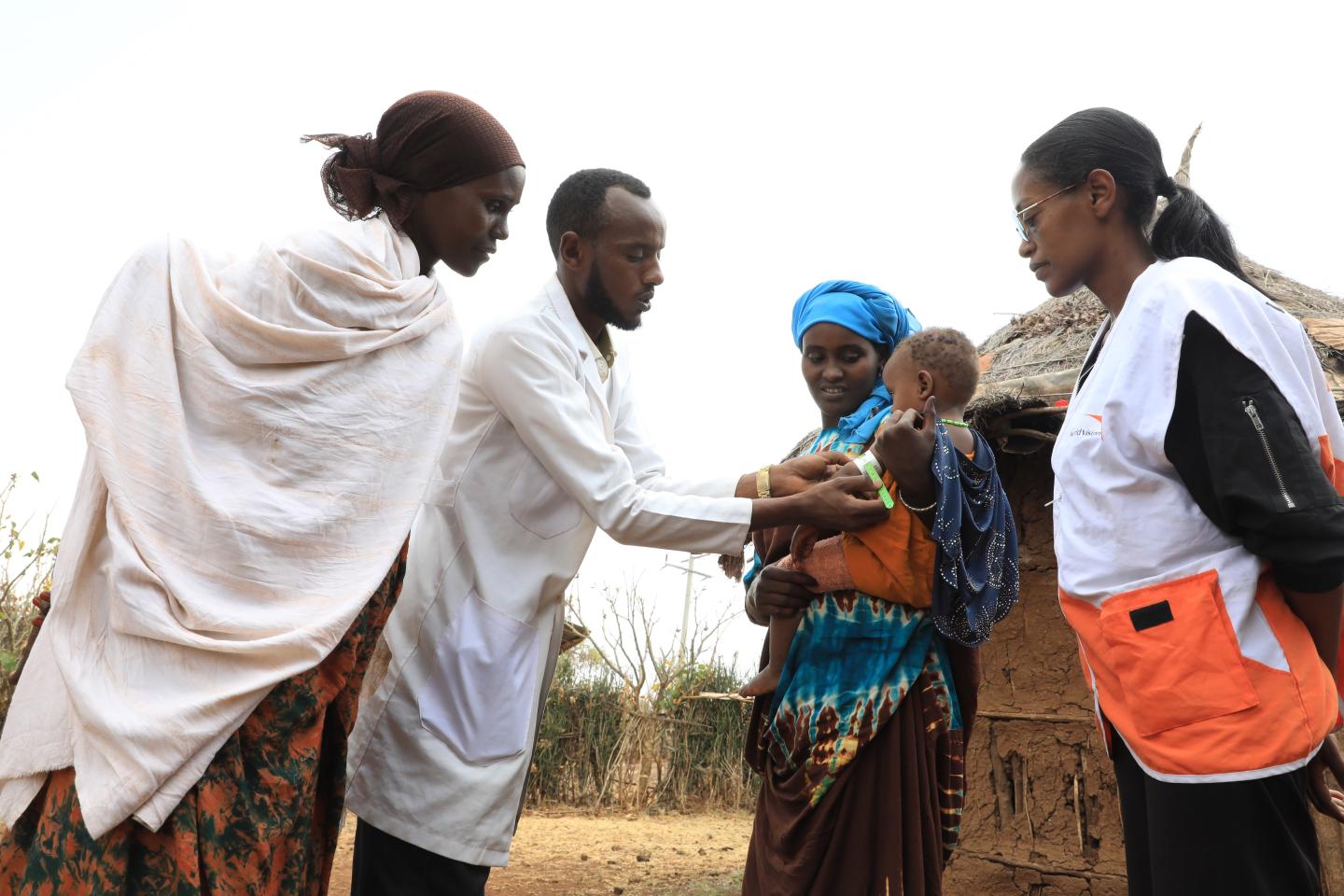
During the training, mothers learned how to use a colour-coded MUAC tape to assess the nutritional status of children. "Through the training, we learned how to identify malnutrition using the MUAC tape, by number and by colour," Kamila explains. "Those who can read numbers use the figures, and those who cannot read numbers can use the colours. If it is red, it is Severe Acute Malnutrition. If it is yellow, it is Moderate Acute Malnutrition. If it is green, it is Normal nutritional status "Not long after completing the training, Kamila put her new knowledge into practice. " After getting home from the training, I checked my child with the MUAC tape; the result was in the yellow zone. I immediately took him to the health extension worker."
After bringing her child to the health post, Kamila learned that he was suffering from moderate acute malnutrition. The health extension worker linked him to the targeted supplementary feeding programme (TSFP), implemented by World Vision. “After three months of supplementary food support, he recovered," Kamila says with a smile.
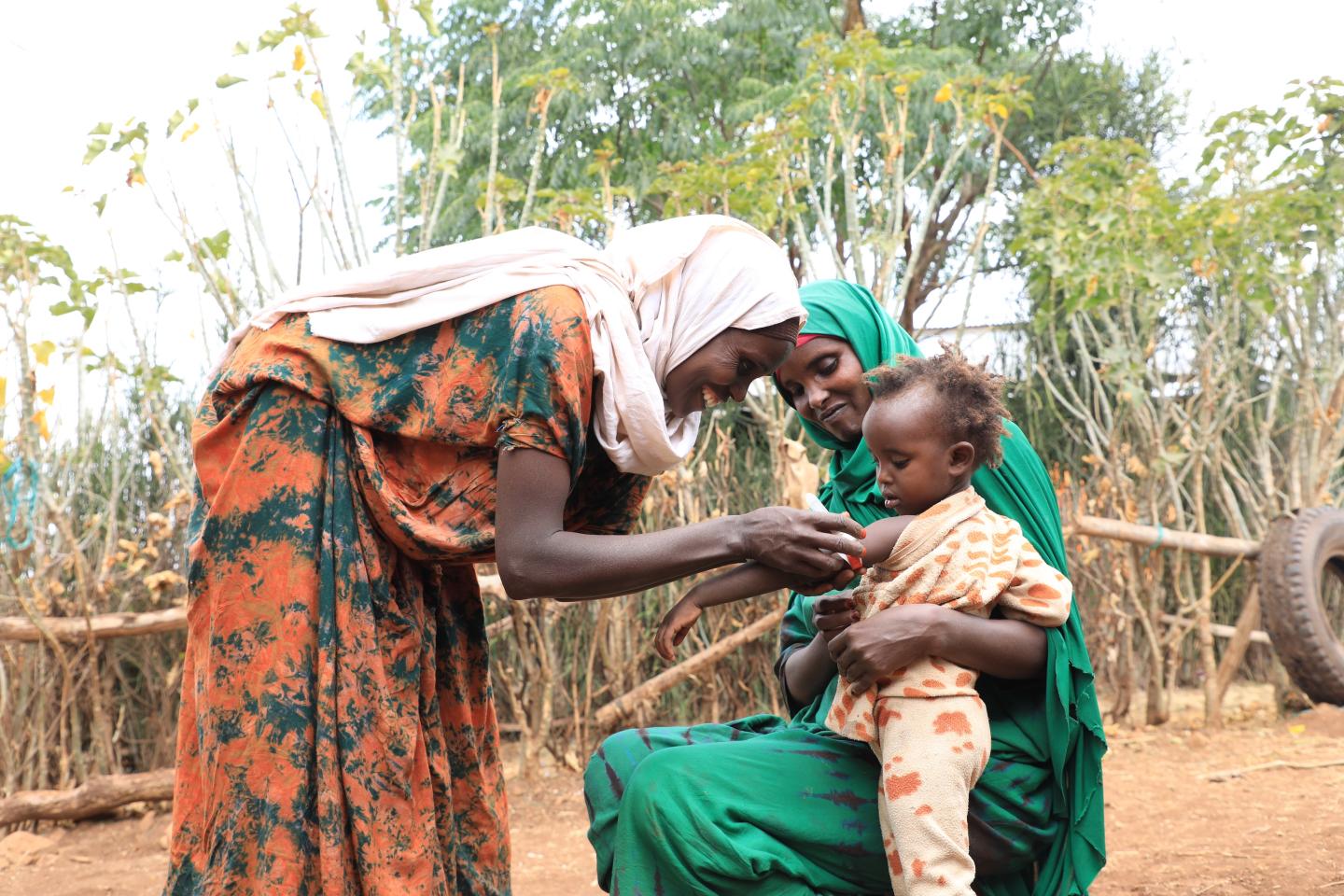
Since receiving the training, Kamila has referred 14 children with signs of malnutrition to health services. She now regularly screens her own children and those of neighbouring families, helping identify malnutrition early. "The MUAC tape has helped us a lot," she says. "Before, we didn't know which children needed help. Now we can identify them early and refer them to the health extension worker."
Kamila explains that family MUAC training has also reduced unnecessary journeys and expenses for families."Before, we travelled long distances to health facilities without knowing what the problem was," Kamila explains. "It cost us time and money. Now we can check children first and know when they need treatment."
Her knowledge is spreading beyond her own household. Kamila now shares what she has learned with other parents in the community. Kamila not only screens her own children, but she also checks the children of her neighbours and encourages families to seek help early when a child is at risk.
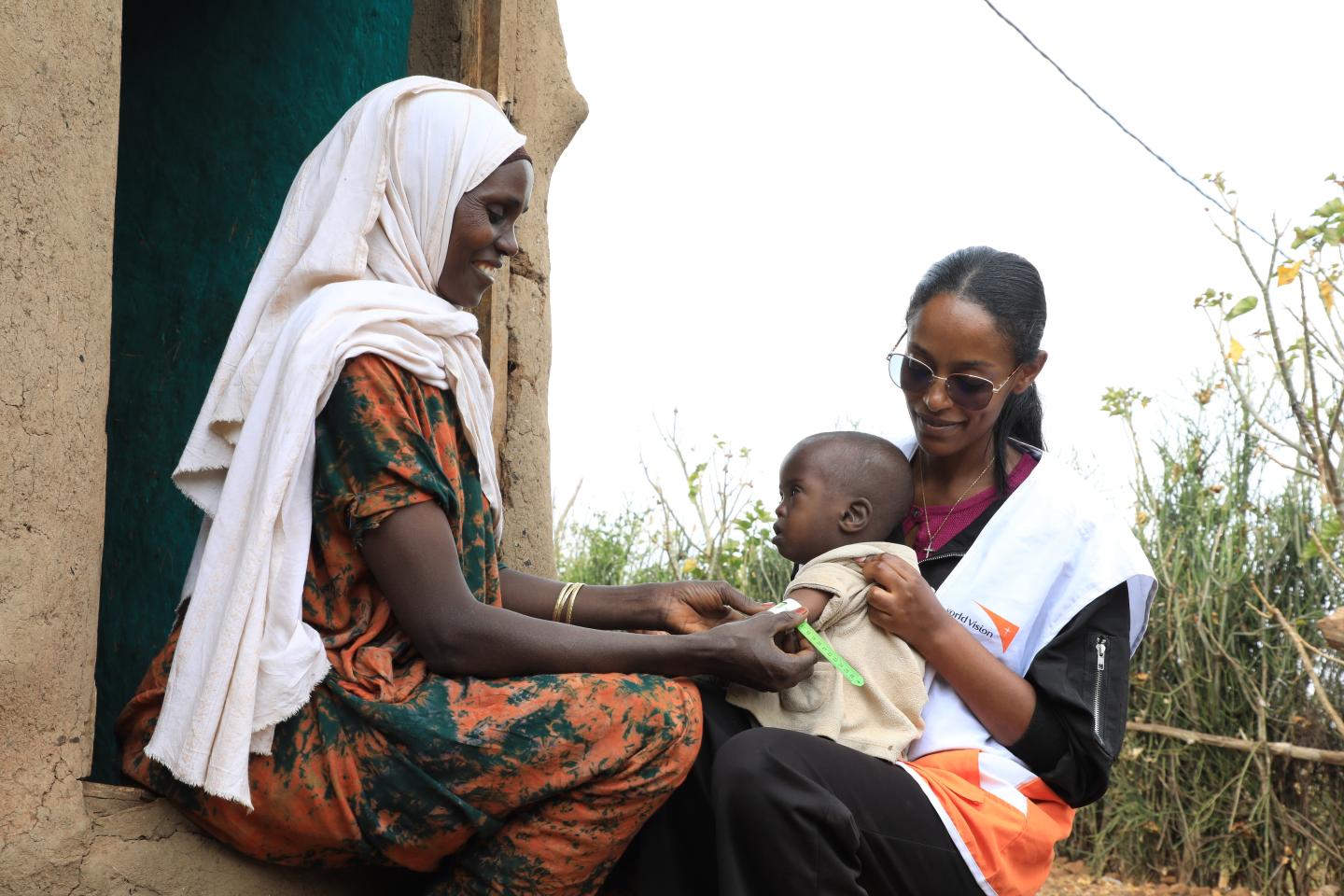
"I encourage families to bring their children for screening and get help before their condition worsens," she says. For Kamila, the ability to protect children's health brings a deep sense of pride. "Checking the status of my children makes me very proud," she says. "It makes me happy."
Mohammed Amin, a health extension worker at Behima Health Post, has witnessed the difference the Family MUAC approach is making. He has received Family MUAC training and now supports mothers in applying the skills in their communities. “Fifty mothers with children under five in the village were trained," he explains. "Before, health extension workers had to go into the villages to identify malnourished children. Now trained mothers can identify their children themselves and bring them to the health post."
According to Mohammed, the results are clear and visible. "The Family MUAC training has brought a huge impact," he says. "Because mothers are screening children early and bringing them for treatment immediately, the number of complicated cases has decreased."
Across East Bale, 720 trained mothers are now able to recognise the early signs of malnutrition, helping ensure that more children are identified, referred and treated before their condition becomes severe.
By Samuel Zerihun, Storytelling Specialist, World Vision Ethiopia