
Restoring Land, Restoring Dreams

At an age when many young people are planning their future, Fami was struggling to keep her family fed. After losing her father, she became the main provider for her mother and seven younger siblings, carrying responsibilities far beyond her years. With limited education and few livelihood opportunities, the future looked uncertain.
More than building a business, Fami wanted to ensure her younger brothers and sisters could stay in school and have opportunities she herself had never been able to pursue.
Fami and seven youth members established Ifabass Youth Group in February 2023 as a Youth Village Economic and Social Association (VESA), determined to build a better future through saving, learning, and collective action. The group began meeting weekly, pooling small savings and steadily building discipline and trust. Through targeted training in shoat fattening, financial management, and business development, members gained practical skills that transformed ambition into opportunity.
For Fami, the group became more than a savings association. It created a space where young people could learn from one another, build confidence, and turn shared challenges into shared opportunities.
While Fami was searching for ways to support her family, another transformation was taking shape in her community. The Oda Leku watershed in Daro Labu Woreda, once degraded and less productive, was being restored across 15 hectares through public works carried out by Productive Safety Net Programme (PSNP) participants. Under the PSNP, vulnerable households receive food or cash assistance in return for participating in public works that benefit the wider community, with Strengthen PSNP Institutions and Resilience II (SPIR II) supporting implementation in Daro Labu Woreda.
Rehabilitation of the Oda Leku watershed began in 2022 and has benefited 215 households in Fami’s village. The restoration activities improved water availability, restored natural vegetation, and increased fodder supply, creating new opportunities for local livelihoods.
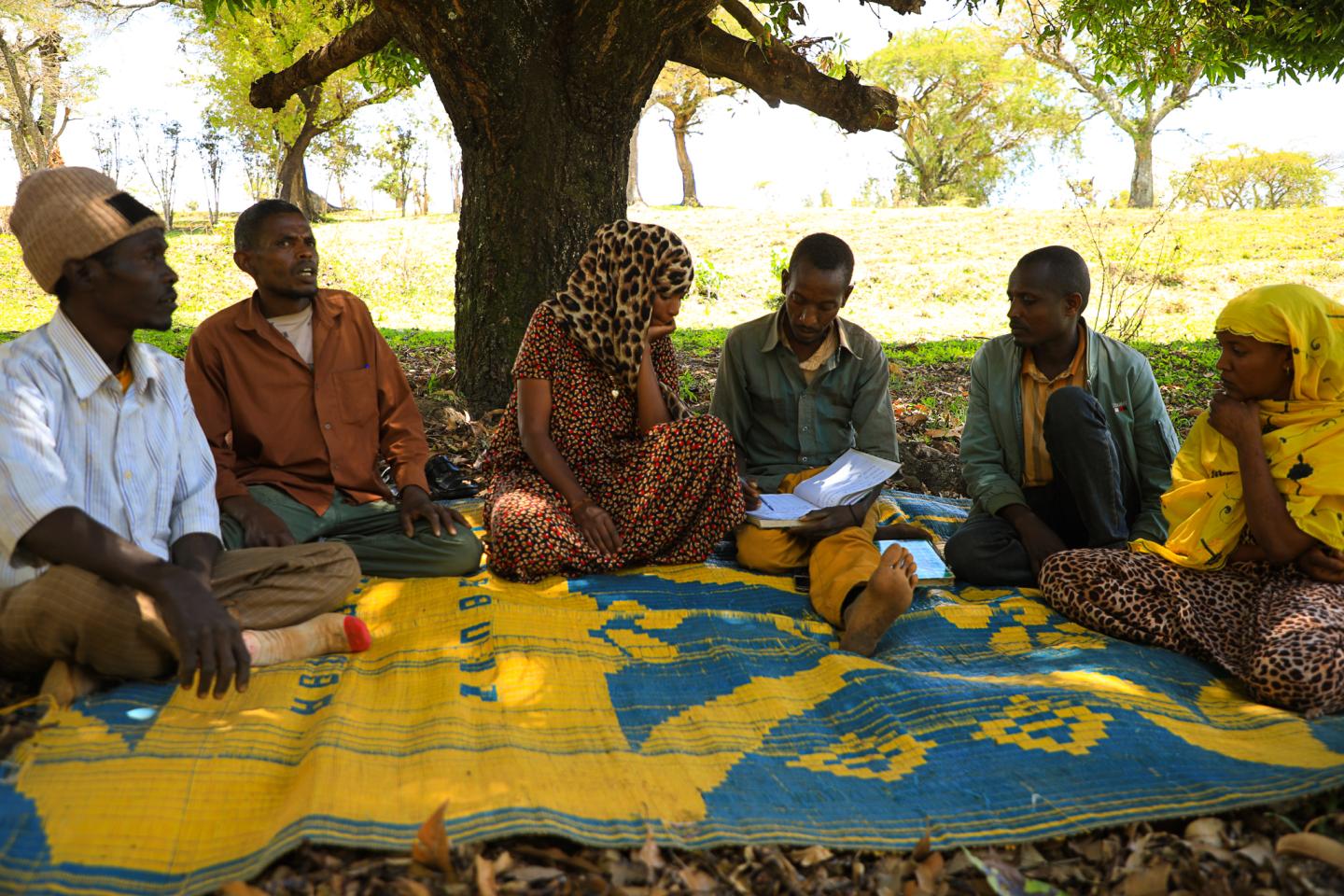
These environmental improvements became the foundation for the Ifabass Youth Group’s enterprise. Through the integration of livelihood support and environmental work, restored natural vegetation provided abundant fodder. At the same time, business training and access to finance enabled the group to turn this resource into income. Members adopted a cut-and-carry feeding system that allowed them to fatten goats while protecting the rehabilitated landscape from overgrazing. In this way, the group transformed a restored watershed into a productive asset that supports both livelihoods and long-term conservation.
What changed Fami’s future was not a single intervention, but a combination of restored natural resources, access to financial services, practical business training, and the support of a youth-led savings group. Together, these opportunities enabled her to turn responsibility into resilience and ambition into action.
As their confidence grew, the group established a small enterprise. After securing a business licence and a loan of 175,000 birr ($1,112) from Sinqee Bank, they purchased 14 goats to begin goat fattening. The investment quickly paid off, with the goats selling for 300,000 birr ($1,900). Rather than spending the profit, the group reinvested in another 14 goats, strengthening their business. Today, the Ifabass Youth Group has accumulated 140,000 birr ($890) in savings and grown its total capital to 320,000 birr. Their next goal is to expand into ox fattening and grow the business to more than one million birr ($6,657).
Alongside her siblings, Fami continues to cultivate the family’s one-hectare farm, growing coffee and khat as cash crops while producing maize and sorghum for household consumption. She also started saving income from her small retail activities, including selling coffee. Using VESA loans and applying the skills she gained through the youth group, she invested in goat fattening. The combination of access to fodder from the restored watershed, financial services through VESA, and business training enabled her to increase her income steadily.
Through disciplined saving and reinvestment, Fami opened her own shop with a starting capital of 170,000 birr ($1,080), creating another source of income for her family.
As her income increased, Fami was able to better support her younger siblings with school materials, nutritious food, and other household needs, helping them remain in school and look to the future with confidence.
Looking back on the change, Fami connects her progress directly to the restoration of the land around her community. “Because the Oda Leku watershed was rehabilitated and its natural vegetation restored, we were able to fatten goats, earn income, and easily access fodder and water,” she says.
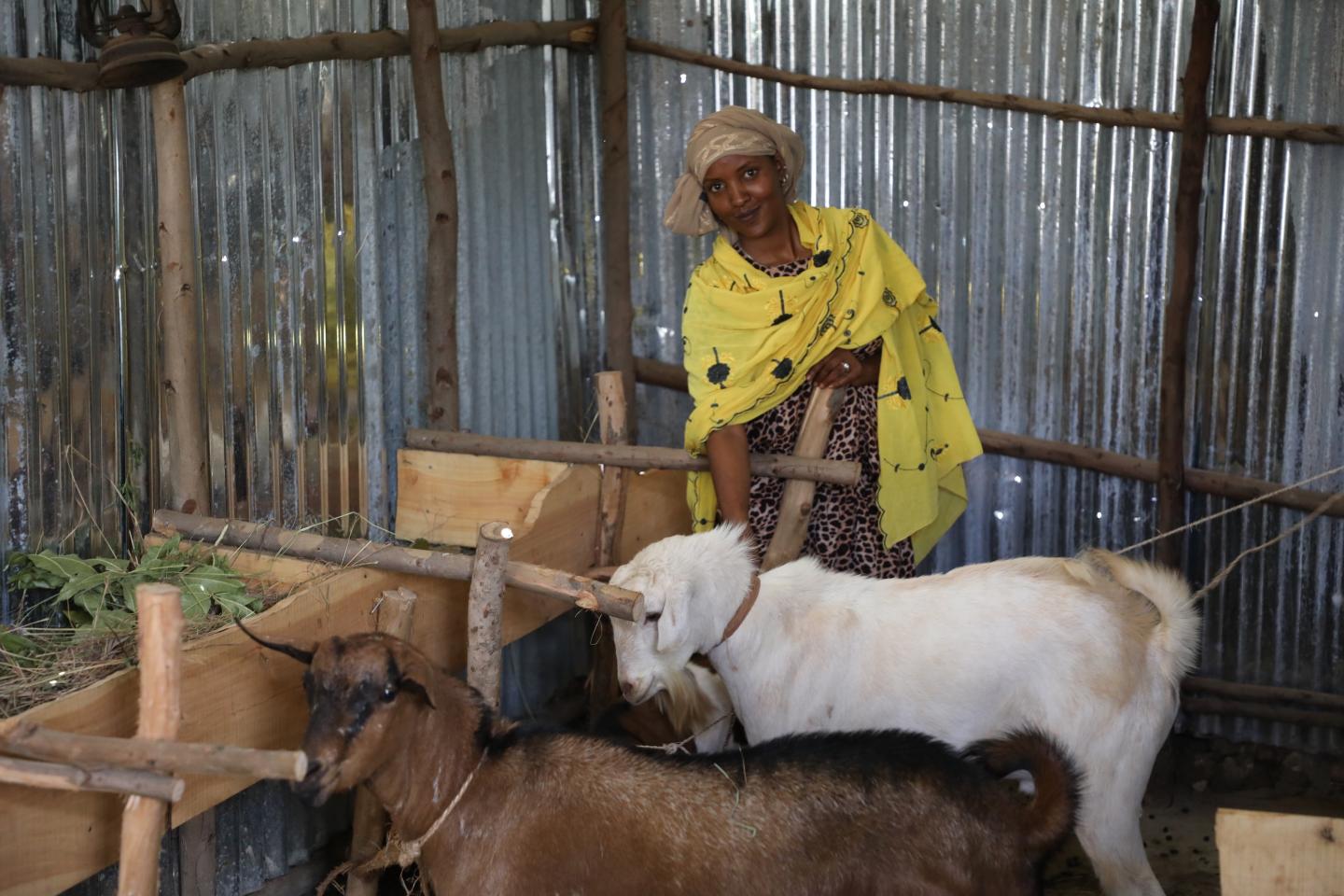
Fami dreams of opening a larger shop in a nearby town while continuing to expand her goat-fattening business. Fami’s story reflects a wider transformation taking place across Oromia, Amhara, and Tigray. Through SPIR II, 2,656 young people have turned opportunities into thriving businesses, while more than 1,000 youth are now earning a living from agriculture. At the same time, the rehabilitation of over 46,000 hectares of degraded land has restored natural resources, improved environmental health, and created the conditions for sustainable livelihoods to flourish.
The young woman who once worried about how to feed her family is now employing business skills, managing investments, and planning future expansion.
As the world marks International Youth Day 2026 under the theme “Different Contexts, Common Aspirations,” Fami and the Ifabass Youth Group remind us that, regardless of the challenges they face, young people share a common aspiration: the opportunity to build dignified, prosperous, and sustainable futures. Once forced to set her dreams aside, Fami is now creating opportunities for herself, her siblings, and her community.
By Emnet Dereje, Communications Specialist (SPIR II), World Vision Ethiopia