
Ten Days That Changed Efrahe's Life

Sada has eight children. She never imagined she would one day fight to save the life of another little girl she had taken into her care after a family tragedy. Two-year-old Efrahe became part of Sada's family after the death of Sada’s sister. Sada raised her as her own child, giving her the love and care every child deserves. For a long time, Efrahe was healthy and active. However, Sada observed that her condition began to change gradually.
Efrahe started to experience a loss of appetite and developed bilateral pitting oedema on her feet and dermatosis. She suffered from diarrhea and vomiting. "She could not eat properly and had no appetite," Sada recalls. "She became too weak to stand and walk. I was worried about her."
As Efrahe's condition changed, neighbours urged Sada to seek medical help. She took her to a nearby health post, where health extension workers identified signs of complicated severe acute malnutrition and referred her to the Stabilisation Centre at Harodumal Health Centre, where children with severe acute malnutrition and medical complications receive specialised care.
When Efrahe arrived, her condition was critical. "She had bilateral pitting oedema, dermatosis, and she was very weak," says Mekdes, a nurse and Stabilisation Centre focal person at the Health Centre. "The oedema was severe. Even finding a place to give an injection was difficult."
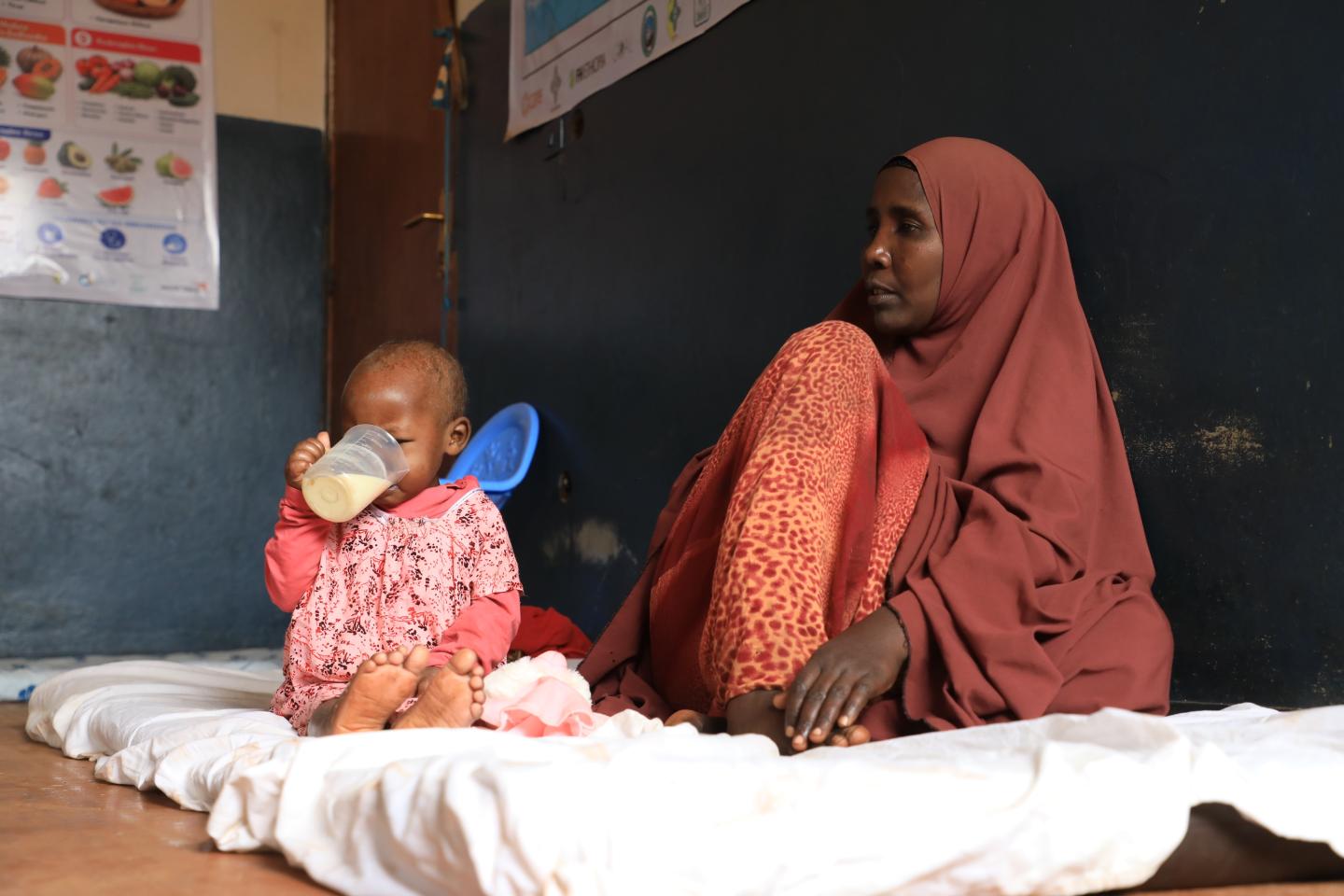
For the first seven days, Efrahe received F-75 therapeutic milk as part of her stabilisation treatment with two-to-three-hour intervals at the centre. “She was too weak to take the therapeutic food properly, so we started her on F-75 therapeutic milk to help stabilise her condition and support her recovery,” says Mekdes.
After a week of treatment and staying at the stabilisation centre, the oedema began to reduce, and Efrahe's appetite started to return. The improvement allowed health workers to move her into the transition phase of treatment, where her feeding was changed from F-75 to F-100 therapeutic milk to support further recovery and weight gain. "She is responding well to treatment. Her appetite has returned, and her overall condition has improved significantly," says Mekdes.
Efrahe and Sada stayed at the Stabilisation Centre for ten days. Throughout the treatment period, Sada remained by her side, caring for her day and night. In addition to the treatment for Efrahe, the centre also provides food service for caretakers during their stay. "I stayed with her the whole time," Sada says. "The health workers treated her and monitored her closely. The food provided for caretakers helped me stay with my child and focus on supporting her recovery."
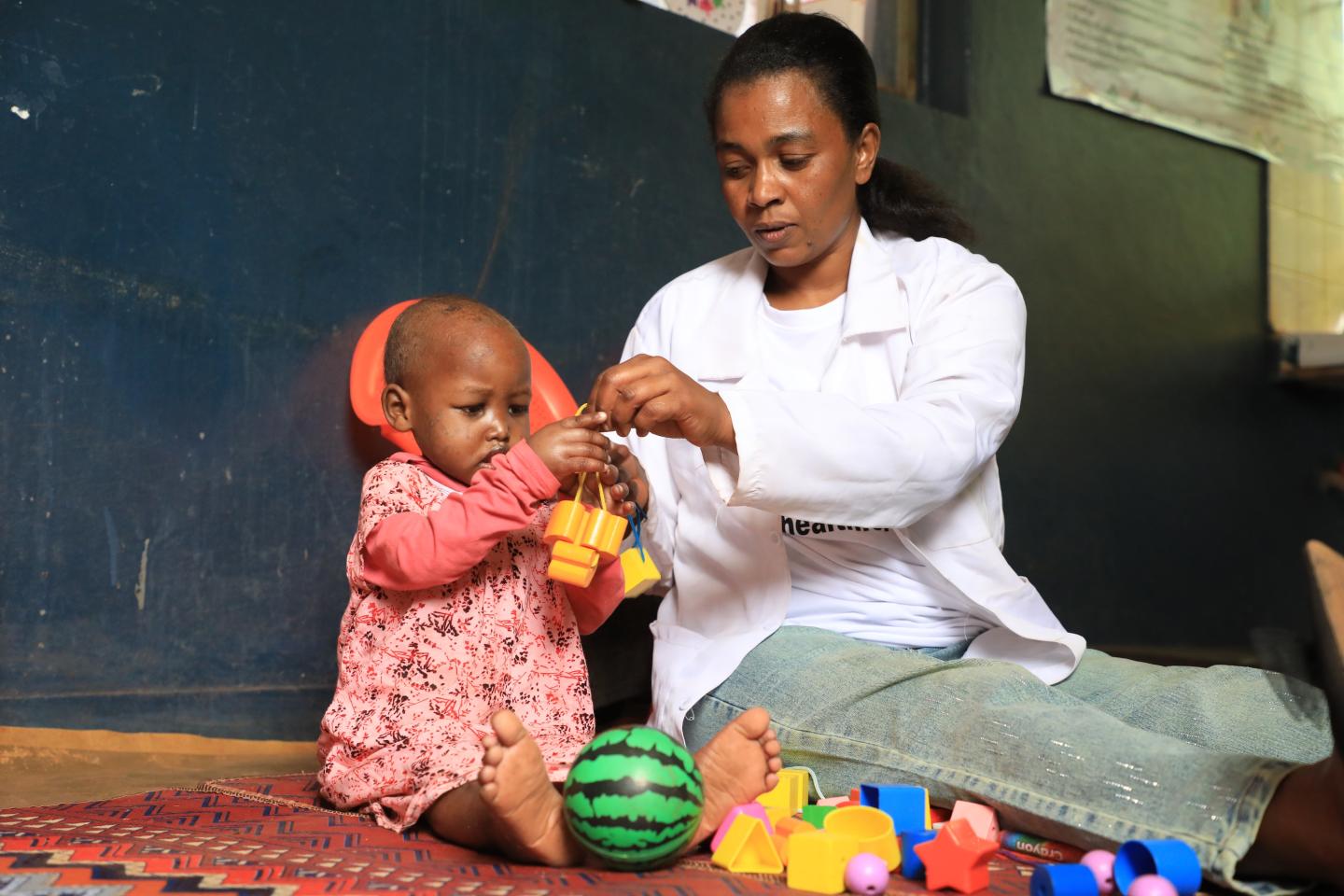
After ten days at the stabilisation centre, Efrahe regained her strength and smile. No longer spending her days sleeping, she now asks for food when she is hungry, walks on her own, and enjoys playing again. As Efrahe
takes small steps around the stabilisation centre room, Sada watches with a smile and hope. "Now she has improved, thanks to God," she says with a smile. "She is getting stronger, eating better and smiling again. I am grateful to see her feeling well again. That makes me very happy."
For Sada, the recovery of her child means everything. When she speaks about what it means to get the treatment and support, she says, "Without the support, I feared her condition would become much worse.
Behind Efrahe's recovery is a wider effort to strengthen the treatment of severe acute malnutrition in the area. According to Mekdes, since the establishment of the stabilisation centre, World Vision, through its Joint Emergency operations, provides supplies used in the Centre, including therapeutic milk, ready-to-use therapeutic food (RUTF), and provides caretaker meals for those who stay at the stabilisation centre with their children. "The support is critical for the functioning of the Stabilisation Centre," says Mekdes. "Without this support, it would be much more difficult to provide the treatment children need. Providing meals for caretakers ensures children receive continuous care until they recover "
World Vision has also trained health workers on community-based management of acute malnutrition and Infant and young child feeding in emergencies, on-the-job technical support, and also provided caretaker meals and therapeutic food for the centre, helping more children to receive quality treatment services.
Over the past eight months, 918 children suffering from complicated severe acute malnutrition were admitted, treated, and stabilised across 29 stabilisation centres in Bale, which were supported by World Vision.
By Samuel Zerihun, Storytelling Specialist, World Vision Ethiopia