
When the Funding Ends, What Remains?

When I planned my visit to the communities we serve, one word stayed with me: legacy.
The Strengthen Productive Safety Net Programme( PSNP) Institutions and Resilience II (SPIR II) project, launched in September 2021, is approaching its conclusion. As the final months approach, I found myself asking difficult questions: what happens after the project vehicles leave, the trainings end, and the funding cycle closes? What would remain long after the project ended, not in reports or indicators, but in kitchens, classrooms, and everyday choices?
What endures when families are left to face the future on their own?
Reports and indicators can tell us how many people were reached and what changed. But they cannot reveal whether parents feel more hopeful about the future, whether children eat better meals, or whether families can withstand the next shock on their own.
I wanted to understand whether the changes we talk about in reports had taken root in people’s everyday lives.
I travelled to Boke Woreda in West Hararghe to find those answers. Here, SPIR II supports some of Ethiopia’s most vulnerable households, families facing chronic food insecurity and extreme poverty, who are enrolled in the Government of Ethiopia’s Productive Safety Net Programme (PSNP). As the largest social protection initiative in Sub-Saharan Africa, PSNP provides a vital baseline, while SPIR II works alongside it to strengthen livelihoods, improve nutrition, and build lasting resilience against shocks.
But what does that really look like in people’s lives?
Boke district is remote, marked by water scarcity, limited services, and poor road access. The district has been designated as an area for the PSNP due to vulnerabilities to drought and climate-related crop failures. I have come to believe that even small opportunities can transform lives when placed in determined hands.
And often, it is the children who feel that change first, in the meals they eat, and the hope reflected in their parents’ eyes.
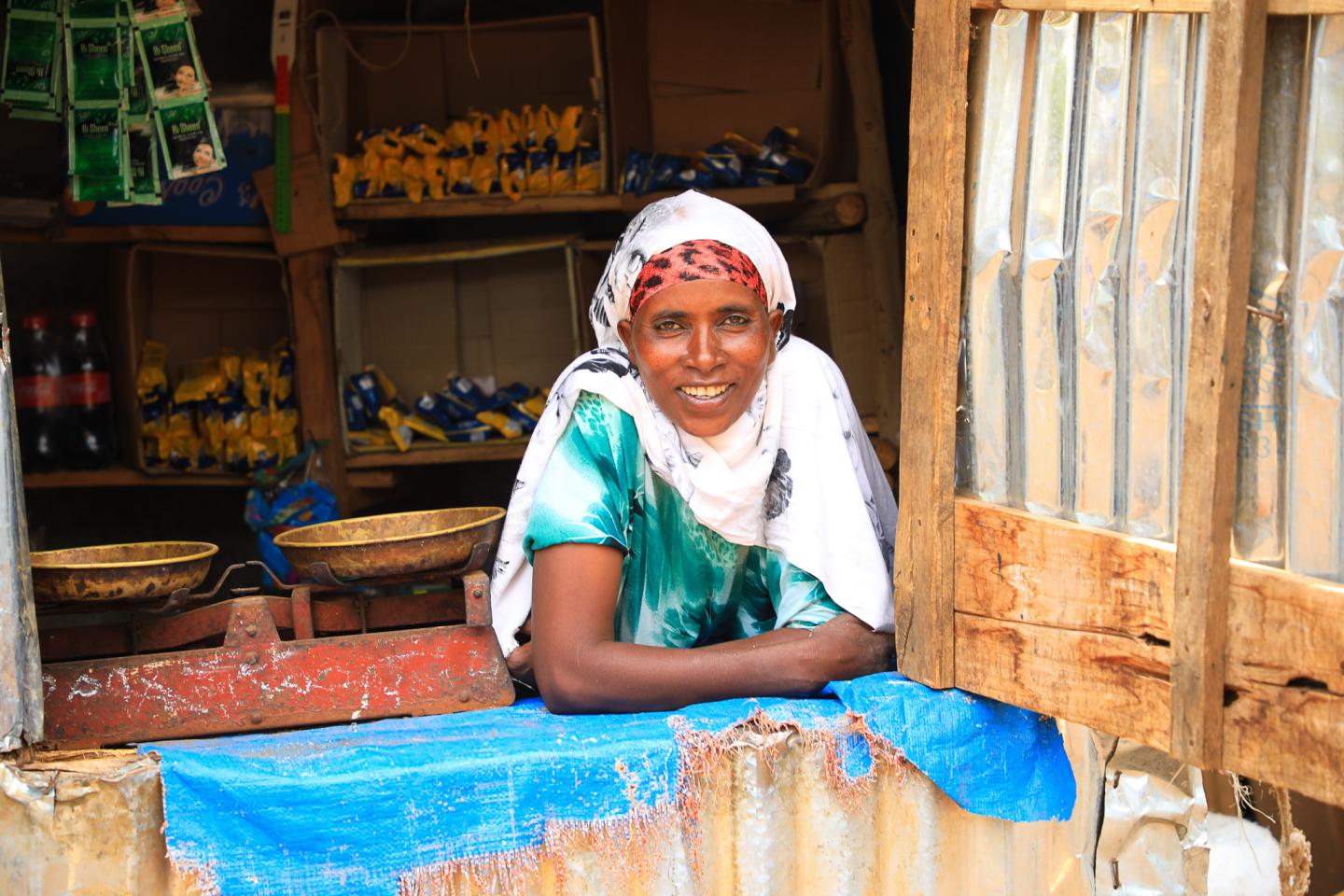
You understand this best when you meet Firi.
Firi is a mother of six who lives in Boke with her husband, Jemalo. For years, their lives revolved around survival. With just half a hectare of land, they grew sorghum, beans, maize, and Khat. The food crops fed the family, while Khat, sold as a cash crop, helped cover urgent expenses. Even then, providing daily meals was a struggle, and sending their children to school often felt out of reach.
“Those were very hard days for my family,” Firi told me. “Seeing my children struggle was painful”
In 2023, things began to change. Firi’s household enrolled in PSNP, receiving food or cash support in exchange for participating in public works. Through SPIR II, she joined a Village Economic and Social Association (VESA).
Through VESA, members save, access small loans, and support one another. They also become platforms for learning, discussion, and collective action.
For Firi, it started with a simple step: saving.
After six months, she took her first loan and bought ten chickens.
“Being part of VESA not only helped me save money and take a loan,” she said, “but it also opened my eyes to what was possible for my family.”
That small step changed everything.
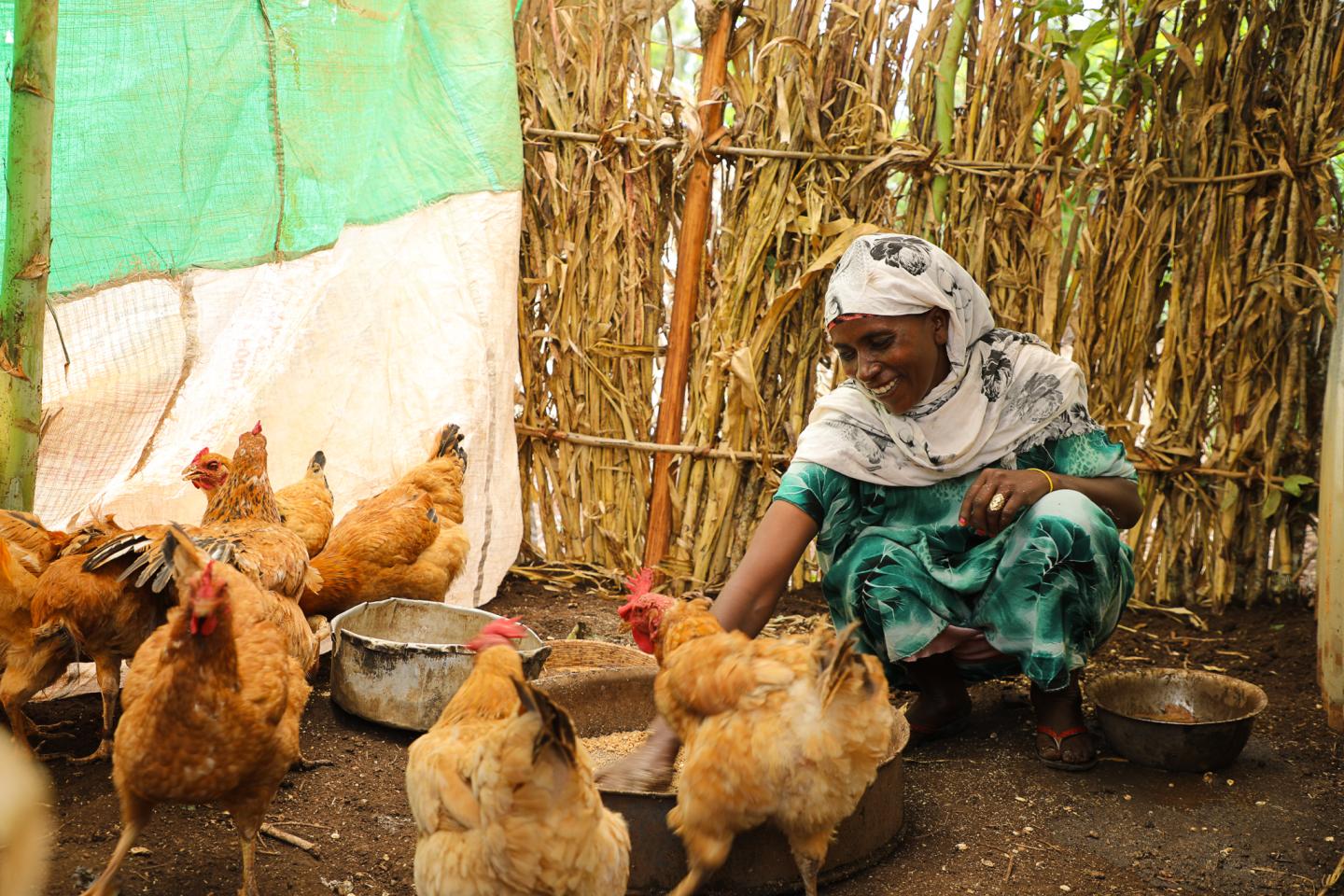
Firi later joined a Producer Market Group (PMG), where farmers work together to improve production and market access. Today, she produces around ten eggs a day, creating a steady source of income.
But she didn’t stop there.
Income from poultry helped her expand her goat herd, secure a loan from Siinqee Bank, and open a small. Today, she sells household items, vegetables from her garden and honey.
Training on producing nutritious mixed flour gave her another source of income while improving children’s diets. Firi now prepares and sells this flour both in her shop and door-to-door.
What struck me most, however, was not just her economic progress but also her leadership.
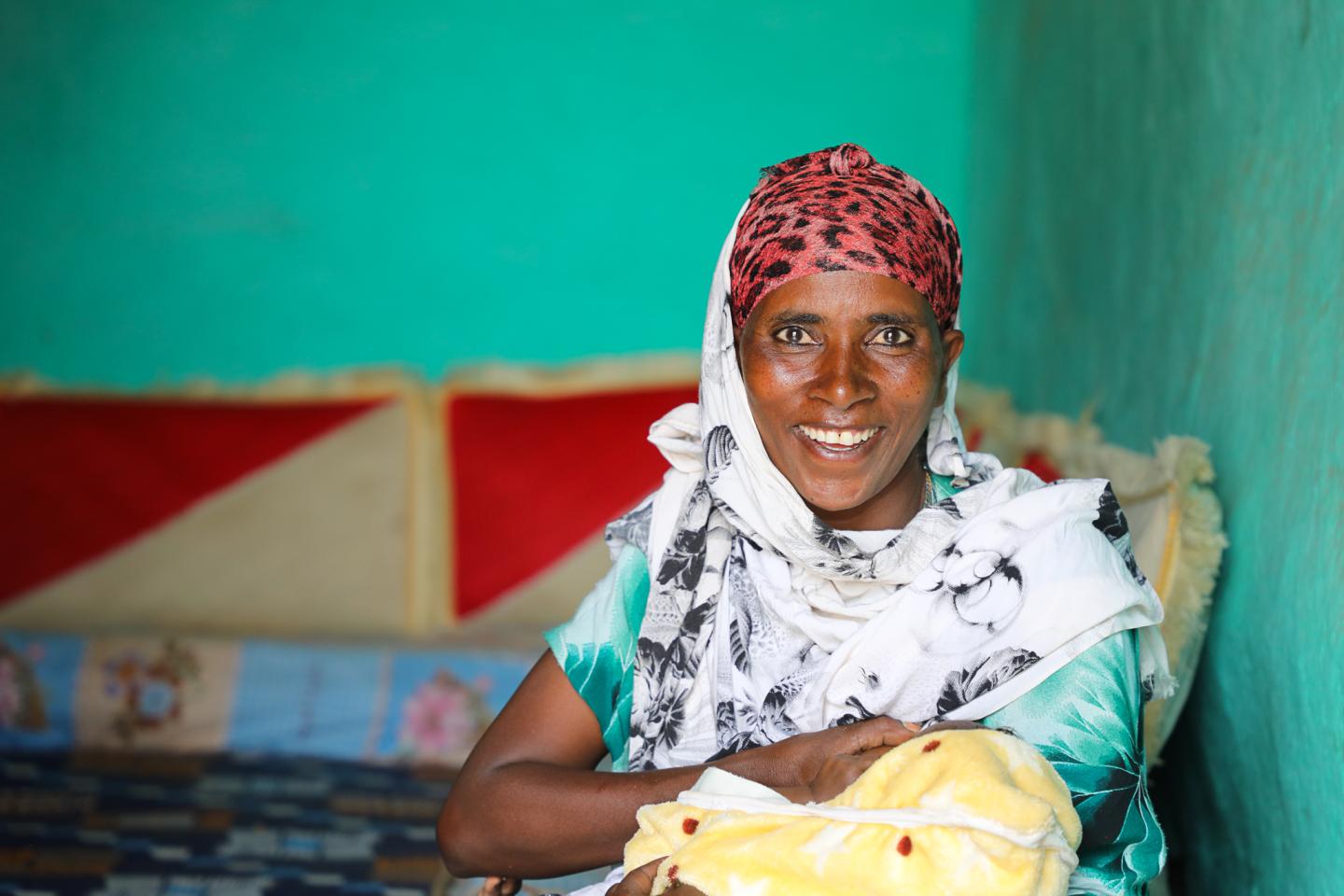
Firi now volunteers in a Nurturing Care Group (NCG), where she supports pregnant women and mothers of young children. She shares practical knowledge on child feeding, early development, and maternal health, helping other families make informed decisions.
“When I help another mother better feed her child,” she told me, “I feel like I am caring for my own children as well.”
Today, Firi is She is a businesswoman, a farmer, a community advocate, and a role model.
In Firi, I found my answer.
This is the legacy SPIR II leaves behind.
Legacy is not only about systems or infrastructure, but it is about confidence, capability, and resilience taking root in communities. It is about people like Firi, who turn opportunity into lasting change, not only for themselves but for others around them.
When the project concludes, Firi’s work will not end. If anything, it will continue to grow.
SPIR II may be ending, but Firi’s impact is only beginning. In Ethiopia, there is a saying: እንቁላል ቀስ በቀስ በእግሯ ትሄዳለች — an egg moves slowly, but it moves on its own. As I listened to Firi's story, I realised that her journey began the same way: with ten chickens and a small opportunity that grew, step by step, into lasting change.
By Emnet Dereje, Communications Specialist (SPIR II), World Vision Ethiopia