
Writing the First Word of a New Future

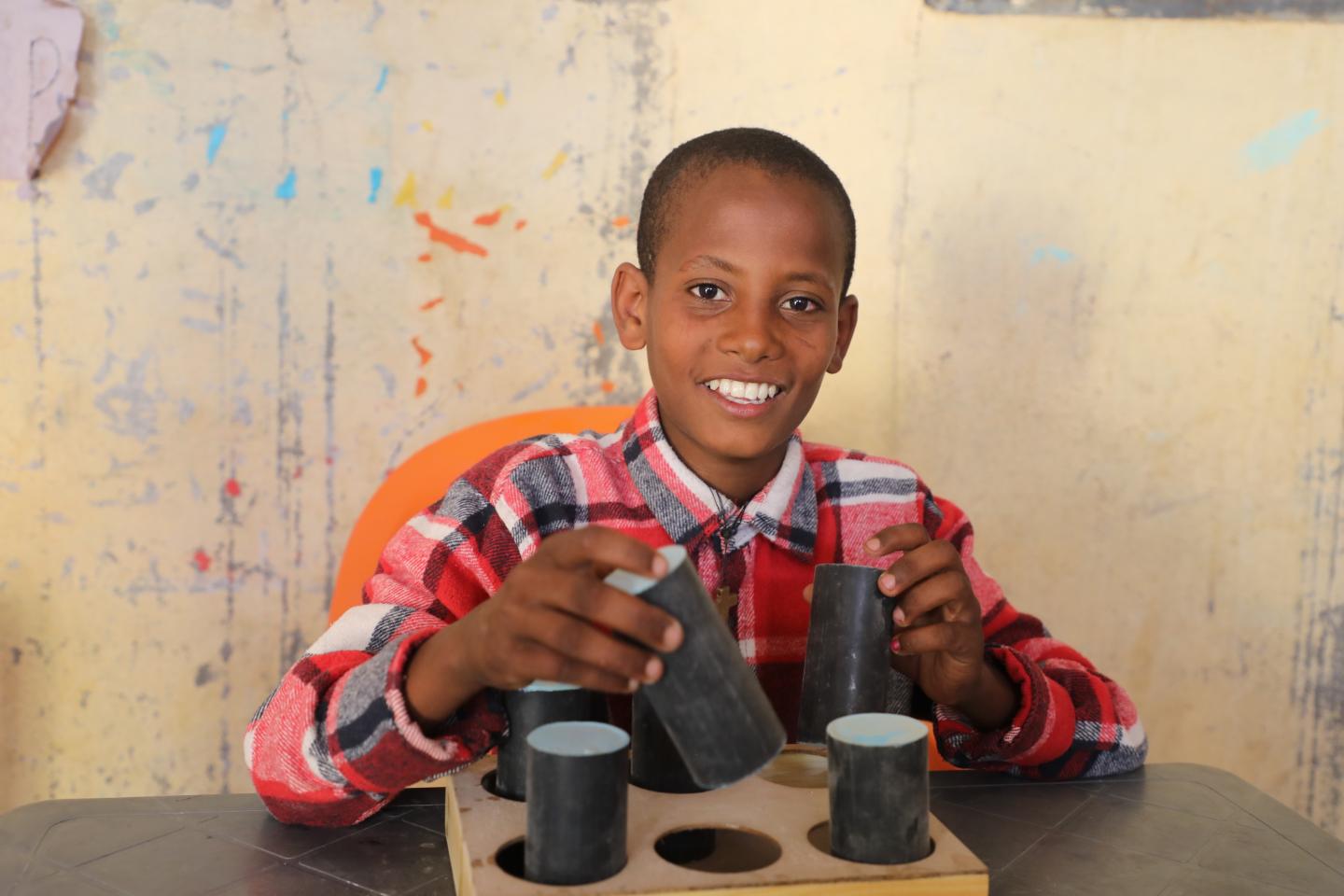
Before a child opens their first textbook or writes their first sentence, something much smaller but deeply powerful happens: they write their name. For 12‑year‑old Bereket, that moment arrived only recently, far later than it should have, but exactly when his life was finally safe enough to begin.
In a classroom filled with students, Bereket walked in for the first time. He hesitated at the doorway, unsure if he belonged at his age. But the teacher smiled warmly, handed him a pencil, and said, “You can start today.” With those words, the world opened for him.
A pencil rested in his hand, unfamiliar and slightly awkward to hold. His teacher gently encouraged him to try, and he lowered the tip to the page. Slowly and carefully, he wrote his name for the first time: B-E-R-E-K-E-T. When he finished, he stared at the word for a long moment. It was perfect for him. His name. His beginning. His step into a world he had waited years to enter.
Bereket had never been inside a classroom until a few months earlier. Conflict had disrupted his childhood, closing schools, displacing families, and leaving children like him with no safe place to learn. For more than four years, schools in his area remained closed. Whenever he thinks about children in other places going to school, he wishes he could be like them one day. He wanted what they had, but the conflict in his community made school impossible. “I always dreamed of holding a bag and going to school. After some time, I started believing school was not meant for children like me. This made me so sad”, he said.
Days turned into months, months into years, and eventually he stopped asking when he would begin. Life became about survival: fetching water, collecting firewood, helping his mother, and caring for his siblings. Education slipped further out of reach.
The moment That Changed Everything
When peace slowly returned and families began rebuilding, the IHOPE project, funded by the European Union, began helping communities reopen pathways back to learning. The project helped thousands of children return to learning by supporting both schools and communities. Across the project area, 6,792 children were enrolled in formal education, and 503 more joined non‑formal programmes such as Accelerated Learning Programmes. Many of these children had been out of school for more than three years, while some, like Bereket, had never attended school at all.
They were given a pathway back into learning, with support tailored to their level. To make this possible, learning spaces were restored and strengthened. In Bereket’s community and the adjacent district , 28 classrooms were rehabilitated, repaired, and furnished, creating safe and welcoming environments for children returning after years of instability. His classroom was among those that received new desks, repaired windows and doors, and fresh paint. The transformation meant children could finally learn in dignity and safety.
The project made sure he had the materials he needed. More than 9,000 children across the intervention areas received scholastic supplies, including exercise books, pens, pencils, sharpeners, and erasers. For Bereket, these were the first learning materials he had ever owned, and he carried them with the same pride other children reserve for prized possessions.
From First Letters to Bigger Dreams
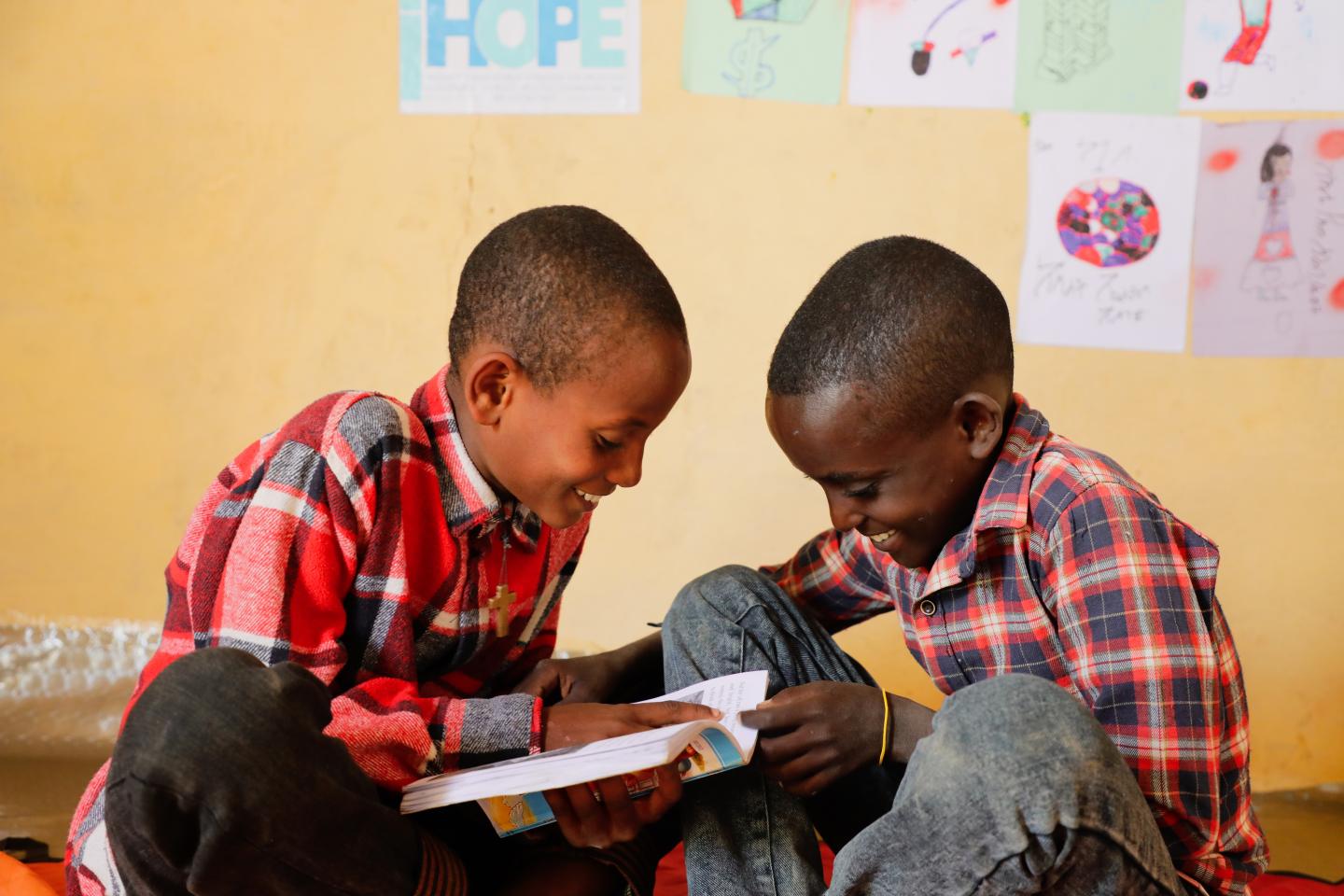
His first goal as a student was to write his name on all these exercise books. The moment he wrote his name for the first time was one of the best moments of his life. He quickly ran home to show his mother. “Look, Mom, I can now write my name in both Amharic and English,” he said, his face bright with excitement. His proud mother held the exercise book in her hands and smiled in a way she had not in years.
From that day forward, everything changed. Bereket started reading simple words, counting confidently, and answering questions with his hand raised high. He began forming friendships with other children who also joined late because of the conflict. Many of them, like him, were enrolled through the project’s back‑to‑school campaign, which reached 1,173 out‑of‑school children across the targeted districts of Abergelle and Tsegbeji.
Bereket now dreams of becoming a teacher so he can help other children who have lost years of learning to conflict. “I want them to feel what I felt when I wrote my name,” he said. “I want them to know they can learn anything.”
Writing his name was not just a personal achievement. It was a turning point, a declaration, and a quiet but powerful moment that signalled a new chapter. For many children in crisis, it is the first sign of confidence. For Bereket, it is the first step toward a life filled with possibility, identity, and dignity. More than 8 million children in Ethiopia are still waiting for the same opportunity, and continued support is essential to help them return to learning safely and with dignity.
By Bethel Shiferaw, Humanitarian Storytelling Specialist, World Vision Ethiopia