
How a Promised Job Became Trafficking in Persons: Mampho’s Story of Survival

By Reentseng Phephetho, Communication and Digital Officer
“I thought this was finally a breakthrough for me, but trust me when I say poverty led me into things that almost ended my life,” echoes Mampho (not her real name), as she recalls the darkest chapter of her life.
In 2019, Mampho separated from her husband. Left with the responsibility of raising one child on her own, she knew she had to find work to provide for her family. Like many women in desperate situations, hope came unexpectedly, through a Facebook post.
While scrolling through her newsfeed one day, Mampho came across an advertisement for a bartender position in Carletonville, South Africa. The post required women, and she was asked to recruit two others to work alongside her. “I was really excited, and I just couldn’t believe I was getting a job,” she recalls.
Early one sunny morning, Mampho packed her belongings and left Lesotho via Van Rooi Bridge, passing through Wepener. She was to meet a Mosotho man she had been chatting with—someone she trusted because they spoke the same language, Sesotho. By around 11:00 pm, they arrived in Carletonville. That night, Mampho was told she had been booked into a guesthouse and that her employer would collect her the following day. The man left. At reception, her cellphone and identification documents were taken.
The next day, two men came to her room. They told her the job she had been promised was no longer available but assured her they would look for another one while continuing to pay for her accommodation. On the third day, another man arrived—a Black man who did not speak Sesotho. He offered her a drink.
“It had a very weird taste, but I could not tell what they put in it,” Mampho remembers.
Within minutes, she felt dizzy and intoxicated. The man forced himself on her. Within two hours, another man came and sexually assaulted her as well. That marked the beginning of six months of captivity. Mampho received no salary. Her “job” had become sleeping with different men every day. “I was stranded. I was terrified and felt like God was failing me,” she shared.
“I was stranded. I was terrified and felt like God was failing me,”
Every single day, Mampho thought about her child—the very reason she had left home to seek a job. Instead of building a better future, she had been trapped in exploitation and violence. Any attempt to resist was met with threats. She was told she would be killed, and no one would ever know what happened to her.
One day, during a rare moment outside her room, Mampho met another woman about her size. The woman revealed she was from Matelile, Lesotho, and had also been promised a job—only to find herself trapped as a sex slave, unpaid and powerless. The realization was devastating. Mampho was not alone, and the system exploiting her was much bigger.
Her ordeal came to an end one morning when police raided the premises. “I was surprised by the huge number of women who were locked in that place,” she said. The men were ordered to return all identification documents. The women were then transported to their respective border gates. Mampho had survived.
Back in Lesotho, Mampho reported her case to the Migrant Workers Association Lesotho, where she received psychosocial support and was later linked to World Vision Lesotho. Through the Promotion and Protection of Human Rights (PPHR) project, funded by the European Union, World Vision visited Mampho to understand her needs and explore a sustainable way for her to earn a living.
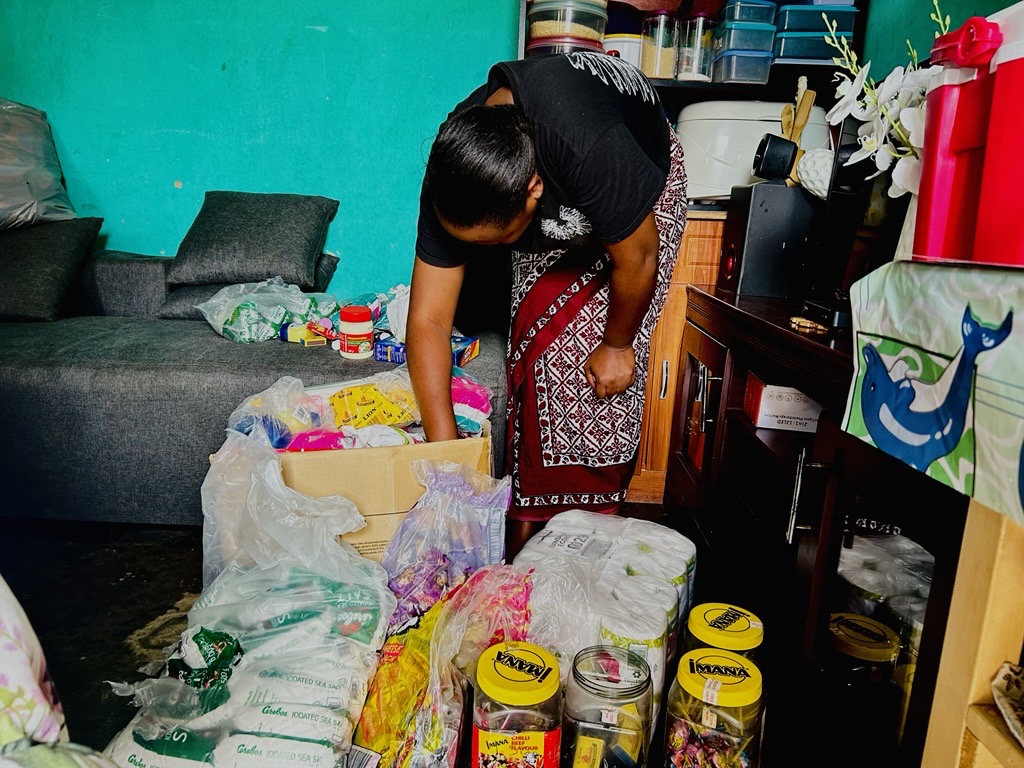
Mampho checking her spaza shop stock bought by World Vision Lesotho
Before leaving for South Africa, Mampho had been running a small business selling fat cakes and sliced potatoes, though it had not been doing well. Since she already owned a shack, she requested support to start a spaza shop.
In November 2025, World Vision provided her with start-up stock, including maize meal, cooking oil, rice, toile roll, beans, peas, tinned fish and beef, spices, mayonnaise, salt, sugar, matches, candles, cosmetics such as (soap, Colgate, glycerine, lotion), sweets, peanuts, biscuits, and other basic household items.
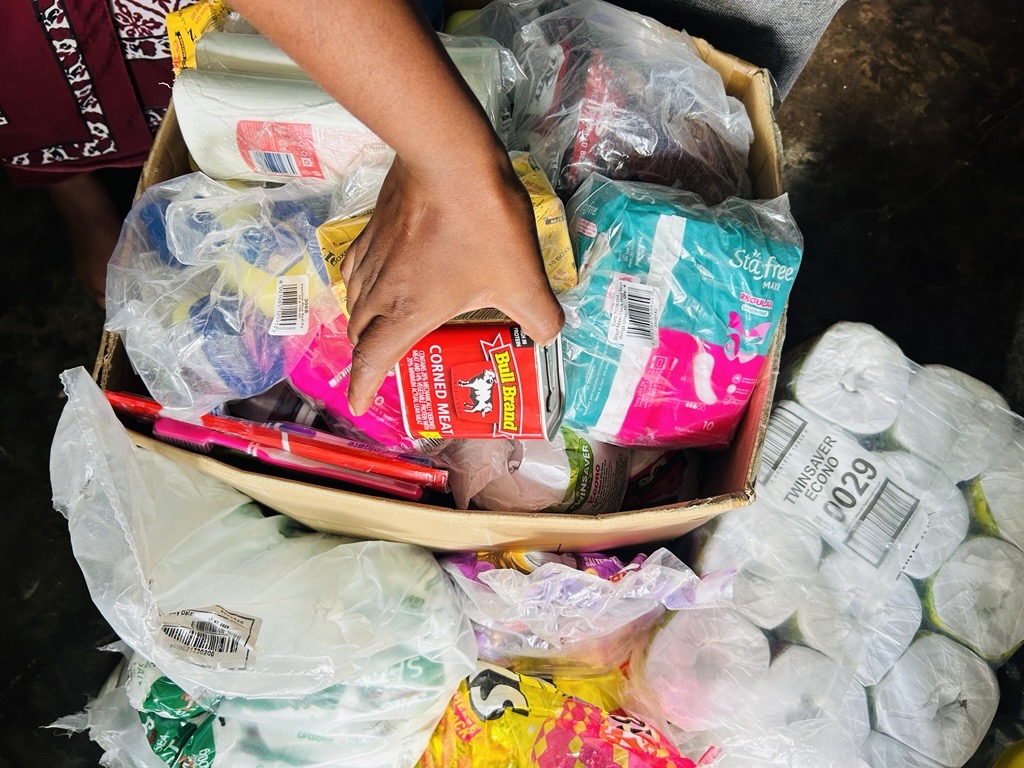
Today, Mampho’s business is still operating well.
“I am now able to provide for my child, which was my dream then. Little did I know I was being trafficked,” she reflects.
Mampho now dreams of growing her spaza shop into a bigger business—one that can supply every basic household need in her community. Her journey is a painful reminder of the realities of Trafficking in Persons, but also a testimony of resilience, survival, and the power of timely support.