
A Child Is Born Amid Disaster (Floods) in Gaza, Mozambique

As communities sought shelter from the devastating floods that swept away homes and livelihoods in late January, a baby girl entered the world under extraordinary circumstances, born on January 17, on the roof of her mother’s house in Guijá District, Gaza Province.
“We thought everything was lost, but God gave us this child in the middle of all the chaos. The Lord showed us mercy, and that gave us hope,” said Laura, mother of the newborn, who is less than a month old.
This was far from the birth Laura had envisioned. She expected to deliver her child in a health facility, supported by trained professionals, an essential recommendation from health authorities to reduce maternal and infant mortality.
But the heavy rains flooded health units, destroyed access roads, and cut off all routes to medical assistance. With no way to reach a clinic, Laura was forced to give birth in precarious conditions, without immediate professional care. Only her courage, the solidarity of the community, and her faith ensured the safe arrival of her child.
The baby was named Cleiny das Cheias (from the floods) Pedro Zitha, a name chosen to preserve the memory of a day marked by adversity, but also by resilience and victory.
Once the roads became passable, mother and child received medical assistance at the earliest opportunity. Support continues to ensure that both remain healthy and safe.
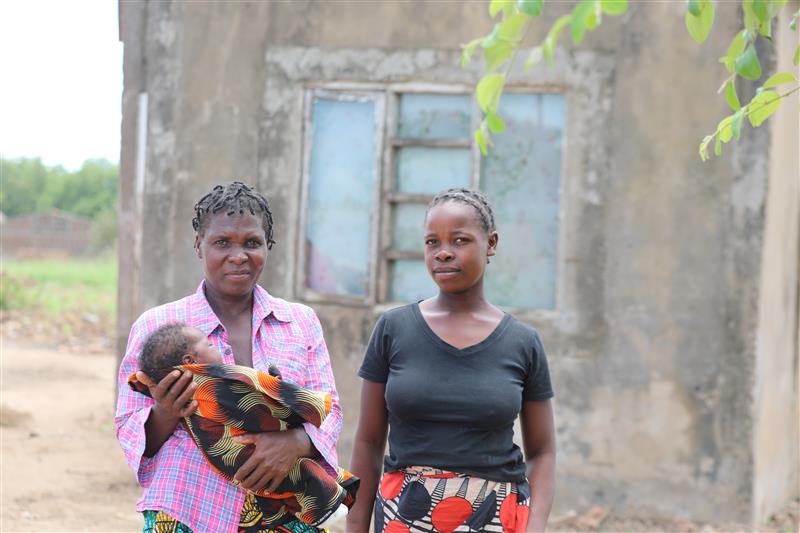
“The child came into the world under extremely adverse circumstances, born on a rooftop in the midst of the floods. We are providing a layette for the baby, along with basic hygiene and child care materials,” said Simione Mhula, World Vision Mozambique’s Child Protection Manager.
The floods brought with them an invisible risk: stagnant water, mosquitoes, and more threats. The danger of seeing an increase in malaria cases and deaths has become real. For newborns like Cleiny, malaria is not just an illness, it is a life‑threatening risk.
Under the programme implemented by World Vision with funding from the Global Fund to Fight HIV & AIDS, Tuberculosis and Malaria, a campaign to distribute Insecticide‑Treated Nets is planned.
Cleiny’s family is among over one million six hundred thousand people who will benefit from over nine hundred thousand next‑generation Insectide Treated Nets, designed to protect against mosquito bites and prevent malaria.
World Vision is also responding to the broader impact of the floods in Guijá District, having reached more than 9,500 people so far with life‑saving kits including Water, Sanitation and Hygiene (WASH) kits, and plans to support over 75,000 people severely affected by flooding.
The response will continue across the sectors of food security, WASH, livelihoods, education, and child protection, ensuring that not only Laura and her newborn daughter, but also thousands of other families affected by the floods, can begin rebuilding their lives.