
Transforming the large flooded areas as a source of livelihood: A Father’s Daily Risk to fight hunger

Unable to return to neighboring South Africa, where, for years, several men from the country’s southern region have worked to make ends meet—household heads Joaquim and Noé have turned the vast flooded areas of Guijá District into a source of income to secure food for their families. After losing everything to the fury of the waters that swept through their communities, survival has become a daily struggle.
Joaquim and Noé returned home at the end of the year to celebrate the festive season with their families. As they prepared to resume their work abroad, devastating floods forced them to remain far longer than planned. Without homes, livelihoods, or much of what they had brought with them, they were compelled to find alternative ways to survive, determined above all to ensure that no family member, especially their children, would go hungry.
Relentless rains caused rivers to burst their banks, sweeping away everything in their path. The small farms where their wives grew food to sustain the family were completely submerged. Hunger followed swiftly.
“It hurts to see my children hungry,” says Joaquim, his eyes heavy with sadness and helplessness.
The floods cut off all land routes to South Africa, leaving families isolated and with few alternatives. As options rapidly dwindled, Joaquim and Noé turned to what the floods themselves had created: a much larger river for fish, yet an adventure fraught with danger. Using a small, improvised boat built from locally available materials, the two young heads of household venture onto the water every day, navigating strong and unpredictable currents in search of food.
Asked about the danger they face, Noé does not hesitate: “If we don’t take the risk, our children may die of hunger.”
His words reflect both courage and fear, the determination to protect his children, coupled with the constant awareness of the river’s deadly power.
With the small amount of fish they manage to catch, Joaquim and Noé feed their families and, when possible, sell a portion to earn money for basic necessities such as maize flour, salt, and soap. It is a daily struggle for survival, lived on a fragile line between hope and risk.
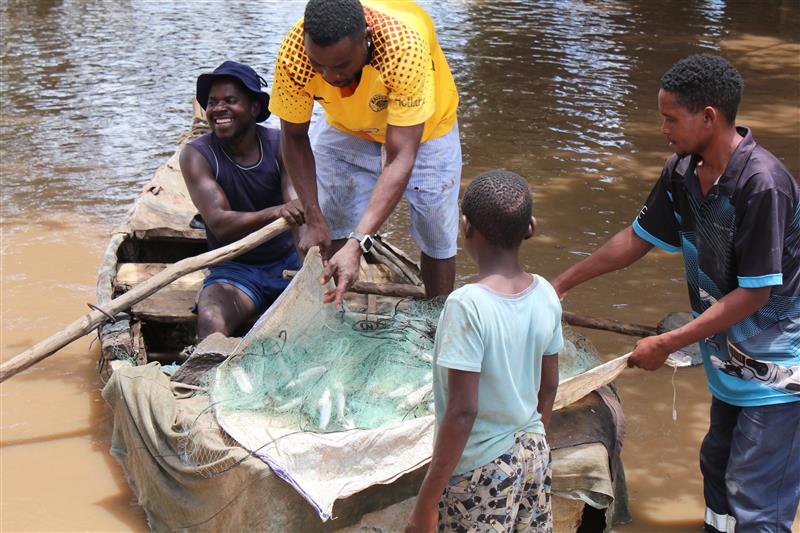
Stories like those of Joaquim and Noé are echoed across Guijá District, where many families affected by flooding continue to face hunger, disease, and unsafe coping mechanisms. Without urgent and sustained support, these risks will only intensify.
World Vision’s response plan prioritizes sectors aimed at strengthening community resilience, including livelihood initiatives that support affected households such as those led by Joaquim and Noé. These interventions aim to reach an estimated 75,000 people, particularly in the provinces of Gaza and Zambézia.
World Vision is working alongside local authorities and partners to address the crisis faced by vulnerable families through food assistance and protection services. Continued action from government, partners, donors, and communities is critical to restoring dignity, safety, and hope to families who have lost everything.