World Vision Supports Families Rebuild Amid Growing Climate Impacts in Southern Mozambique

Climate change is often discussed in official speeches, international conferences, and the news. Yet in places such as Guijá District and Mabalane District, in the remote areas of southern Gaza Province, this phenomenon is more than a concept, it is a lived reality. In communities where access to the internet, radio, or television is limited, people may not be familiar with the term “climate change,” but they recognise its effects all too well: land that no longer responds, rains that arrive too late or in excessive amounts, and uncertainty that has become part of daily life.
For decades, these communities depended on subsistence farming and could predict the seasons well enough to plan their work in the fields. Today, that predictability is gone. At times, severe drought scorches crops before harvest; at others, intense rainfall floods the fields and destroys what little remains. Nature, many say, “no longer follows the same rhythm.”
“After a long period of severe drought, we had waited so long for the rains, but when they came, they washed away everything. The few remaining crops in the field were destroyed,” shares a farmer from the region, echoing a sentiment common among many households.
With empty granaries and destroyed fields, the most immediate consequence is hunger. A simple word, yet one that carries deeply complex realities. In conversations with families, hunger is always part of the story. But it is children who reveal it most clearly, without words: through their frail bodies, silent faces, and eyes that reflect empty stomachs.
Among these stories is that of Salfina, a grandmother who has already faced the greatest fear of any caregiver: seeing a child on the brink of malnutrition. Her grandson, Diogo, was diagnosed with acute malnutrition in his early months of life.
“I did everything I could to save him. Today he has recovered,” she says.
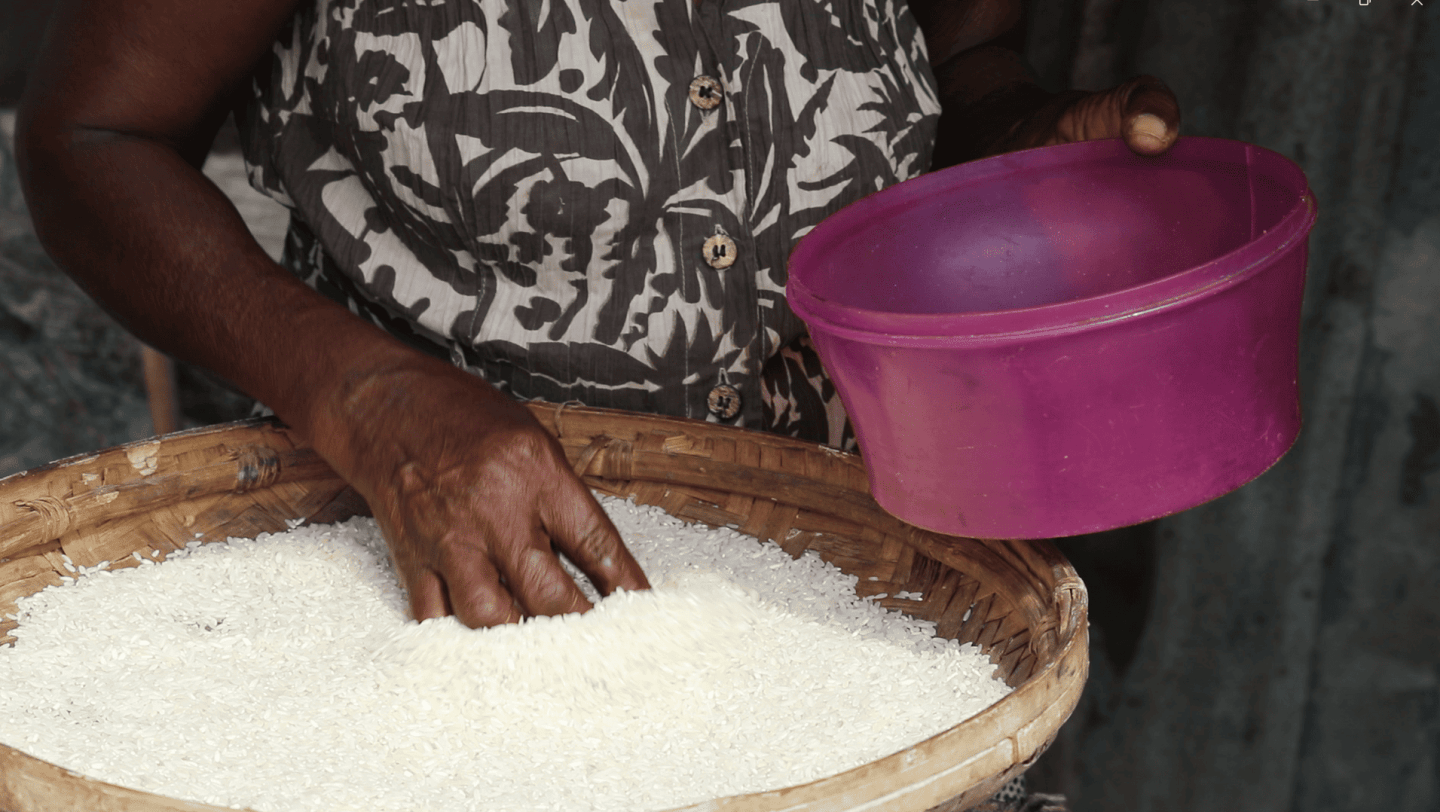
Today, for the first time in a long while, Salfina breathes with some relief. For two months, she and other families in her community received food assistance under an intervention funded by ExxonMobil, which supported around 450 households with essential commodities such as rice, beans, oil, and salt. Simple in form, but significant in immediate impact.
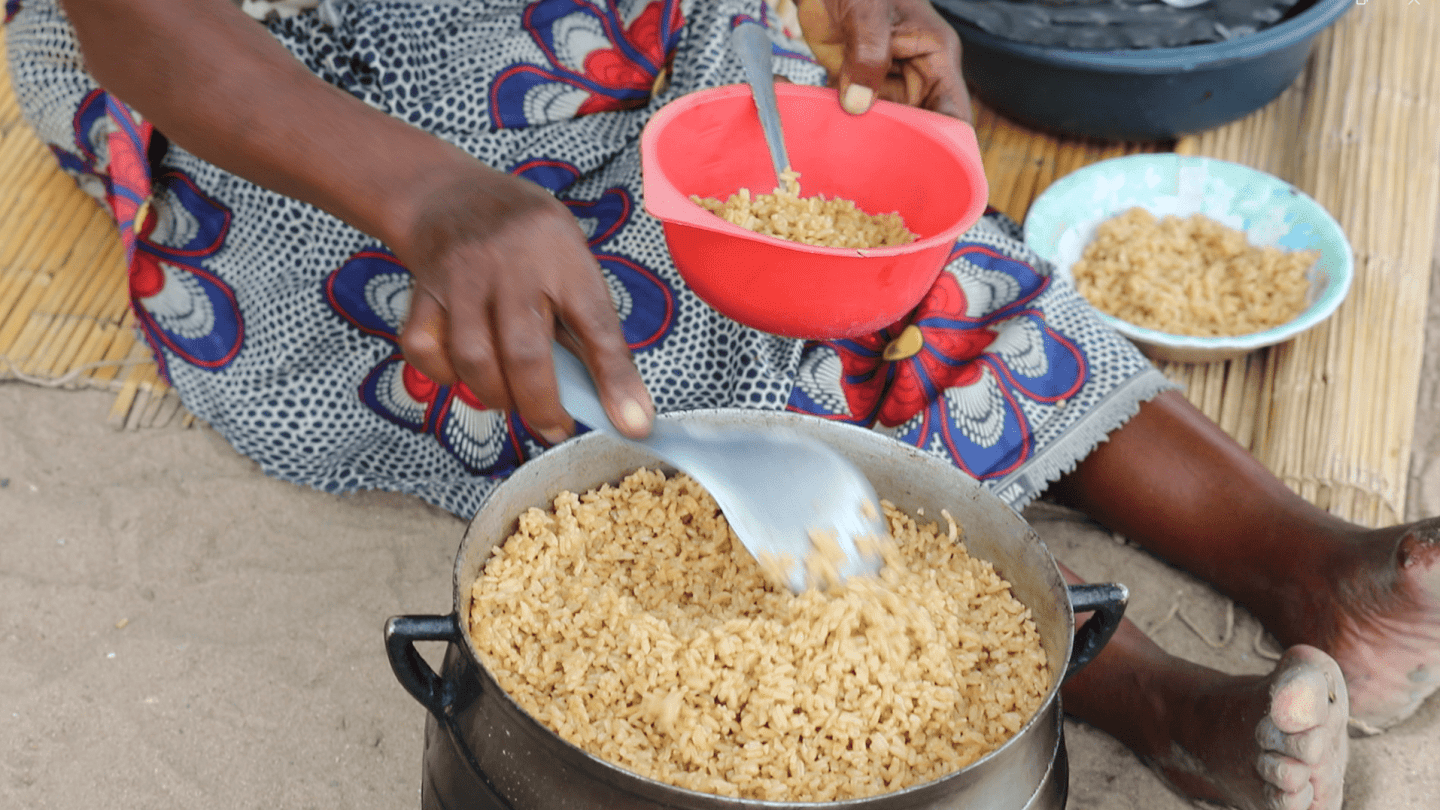
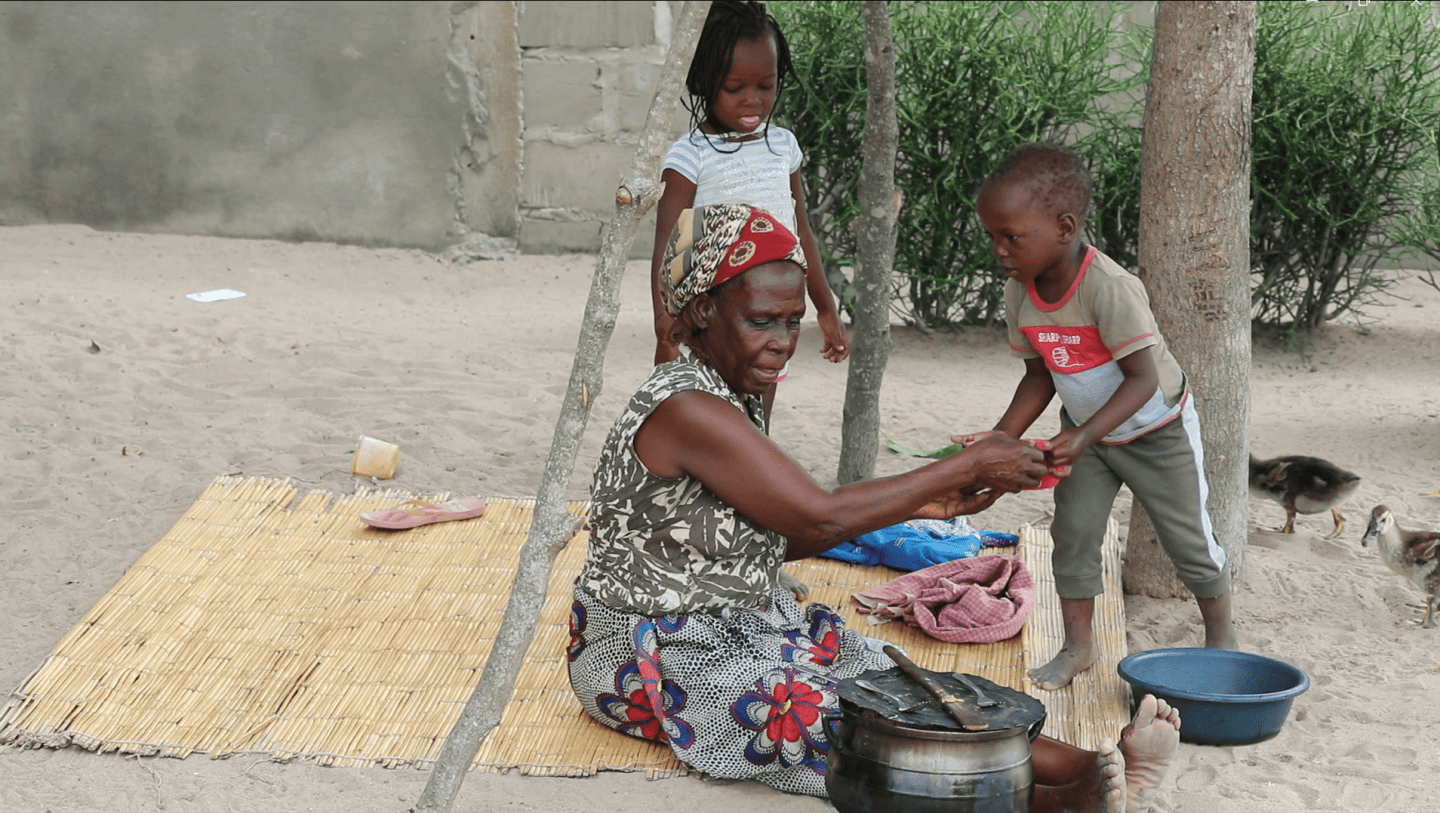
That morning, under the shade of a tree, Salfina calls her grandchildren for their first meal of the day. There is no luxury, only the basics: rice cooked with oil and onions, what her community calls “onion rice”. The children eat with joy, the kind that comes from having something in the stomach again.
“The children are playing and they are happier because they have something to eat. That was not the case before,” says Salfina as she watches her grandchildren.
Yet the reality remains fragile. The same food that brings relief also brings concern. With limited dietary diversity and restricted quantities, families are forced to manage every kilogram as though it were the last. What should be an emergency response gradually becomes a daily survival strategy.
“We have four sacks of 25 kilograms, but it may not last long. It is what we have to eat every day, breakfast, lunch, and dinner,” explains Salfina.
This story, like many others in Guijá and Mabalane, is not only about food assistance. It is about the thin line between survival and continued vulnerability. While children like Diogo still depend on external support for their daily meals, the challenge goes beyond immediate relief. It demands longer-term solutions capable of protecting livelihoods and securing the future.