
Growing Hope, Building Futures: Livelihood Success in North Malaita

For years, families in the remote villages of Kwene and Sulagwalu (Matakwalao) in North Malaita have carried the daily struggle of trying to earn enough to send their children to school and provide for their homes. With few opportunities to build a sustainable livelihood, many parents feared their children's dreams would remain out of reach.
Today, those fears are giving way to hope, as new livelihood projects bring opportunity, resilience and the promise of brighter futures.
Through the Climate Action for a Resilient Asia (CARA) Project, funded by the UK Foreign, Commonwealth and Development Office (FCDO) and implemented by World Vision Solomon Islands (WVSI), communities are embracing climate-resilient livelihoods that are creating new pathways to income, strengthening food security and building hope for generations to come.
The introduction of tilapia farming in Kwene and beekeeping in Sulagwalu (Matakwalao), alongside strengthened Savings for Transformation (S4T) groups and environmental restoration activities, is equipping families with practical skills to improve their livelihoods while becoming more resilient to the impacts of climate change.
For the young people of Kwene, tilapia farming is opening doors they had never imagined.
"This is the first project of its kind in our community," said James Laloga, youth representative from Kwene. "It will help young people and our children because the income we earn can pay for school fees. Through the training and skills we have gained, we can now build our own tilapia ponds in our backyards. We are very happy about this project because we can sell the fish to earn income and support our families."
Community elder Samuel Lakana believes the project will leave a lasting legacy.
"As an elder, I am very happy to see tilapia farming introduced in our community. It is something new for us," he said. "The income from selling fish will help parents pay school fees, buy household necessities and improve the lives of our children.
Women, who often carry the responsibility of managing household expenses, also see the project as a source of renewed hope.
"We are very happy with this project because it will help our children and future generations," said Janet Elosina, Chairlady and women's representative in Kwene. "Parents often struggle to pay school fees, buy uniforms and meet household needs. Now we have hope that our future will be brighter. As Chairlady, I am proud to see this opportunity come to our community."
In neighbouring Sulagwalu (Matakwalao), families are benefiting from both tilapia farming and beekeeping, creating new opportunities to diversify household incomes while strengthening resilience to climate change.
The community has received training in modern beekeeping practices and honey production, supported by the distribution of twenty beehive boxes to establish bee farms. The initiative complements the community's mangrove restoration efforts, creating healthier ecosystems that support bee populations, improve biodiversity and strengthen coastal protection. Alongside this, tilapia farming is providing families with a reliable source of nutritious food and an additional source of income.
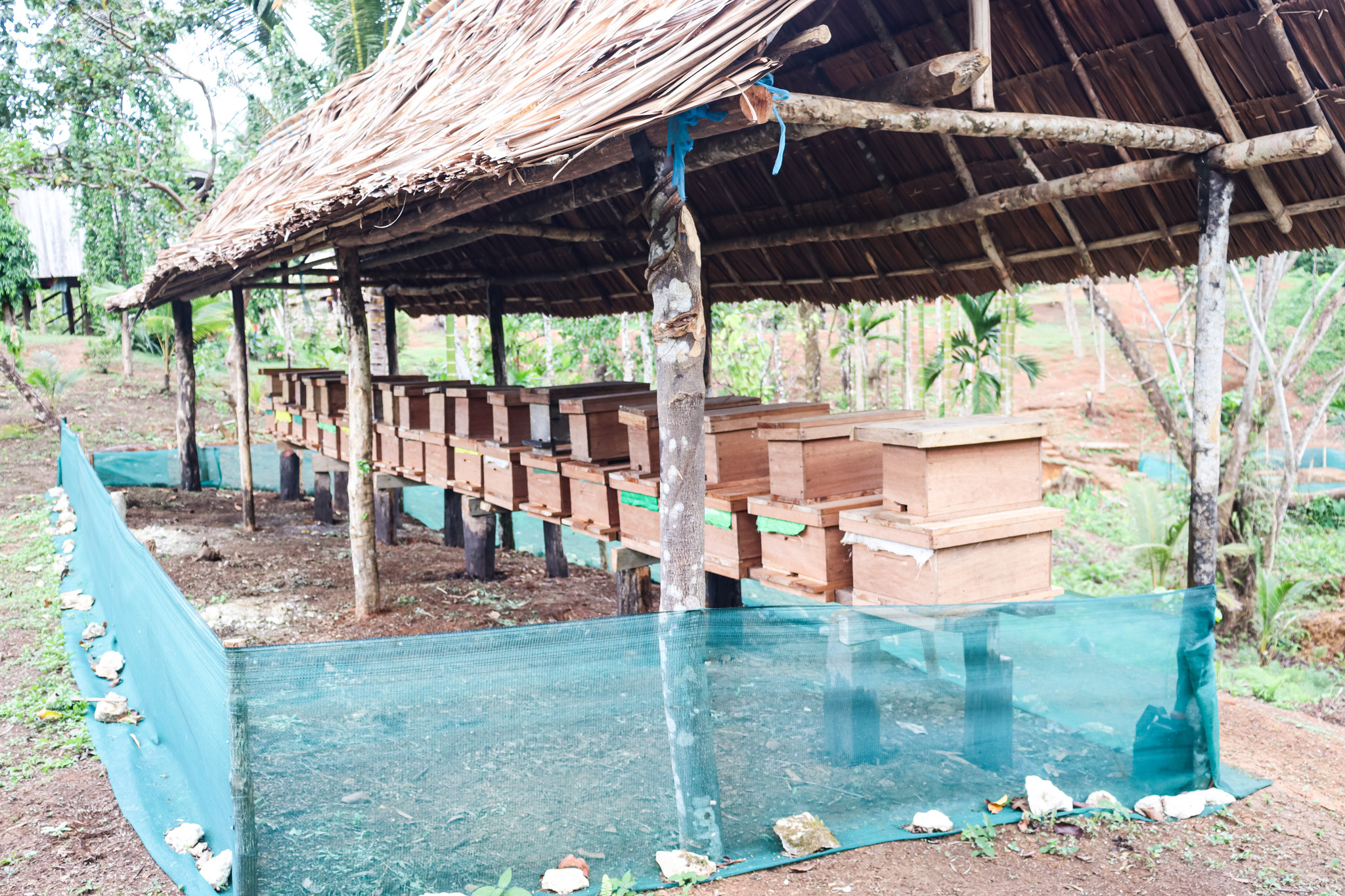
(Photo Caption: Beehive boxes installed in Sulagwalu (Matakwalao) are creating new opportunities for honey production, income generation and climate-resilient livelihoods.)
For Joshua Tagini, a 16-year-old youth representative, the projects are inspiring young people to look to the future with confidence.
"On behalf of the youth, we are very happy about the tilapia and beekeeping projects," Joshua said. "These projects will help us continue our education and support our families with school expenses and household needs. This is the first time our community has received projects like these, and they will benefit us for many years to come."
Women's representative Anna Saelane said the excitement has spread throughout the community.
"We women are very happy because this is the first time we have received both beekeeping and tilapia farming projects. Our children are also excited. We thank World Vision and the British Government for supporting these projects.
Lasting change happens when communities are empowered to lead their own future. Through the CARA Project, families in North Malaita have strengthened climate-resilient livelihoods, restored vital mangrove ecosystems, and built greater food and income security. Women, through Savings for Transformation (S4T) groups, have gained financial confidence, expanded their economic opportunities, and taken a stronger role in household and community decision-making.
As the project concludes, its impact will live on in stronger livelihoods, healthier environments, and more resilient communities equipped to face climate challenges with confidence. World Vision Solomon Islands gratefully acknowledges the generous support of the UK Foreign, Commonwealth and Development Office (FCDO), whose investment has helped create lasting opportunities and a brighter future for generations to come.