
Humanitarian Support in Ukraine: Mobile Teams Bring Hope to War-Affected Communities

In Bucha, a suburb northwest of Kyiv, reminders of the war remain visible. Many residents remain in distress by the images of destruction, loss of loved ones, and the constant threat of renewed attacks. Living amid ongoing war, residents and internally displaced persons (IDPs) endure deep psychological distress, social isolation, and complex legal ambiguities – conditions that necessitate immediate, specialised support to prevent long-term harm and facilitate recovery.
Supported by the U.S. Government, Ukraine Response Consortium, and Acted, World Vision's local partner, Ukrainian Foundation for Public Health, deploys six Multidisciplinary Mobile Teams (MMTs) on a daily basis, ensuring that vulnerable populations across Ukraine receive essential support and services where access is most challenging.
These teams operate across key cities and oblasts, including Kyiv, Kharkiv, Mykolaiv, Lviv, and Uzhhorod, delivering essential services such as psychosocial support, legal advice, case management, and needs assessments.
“This support has given me hope again. I never thought I could talk about my feelings, but now I feel less alone in this difficult time. The art therapy helped me express my fears, and I found a way to breathe again.”
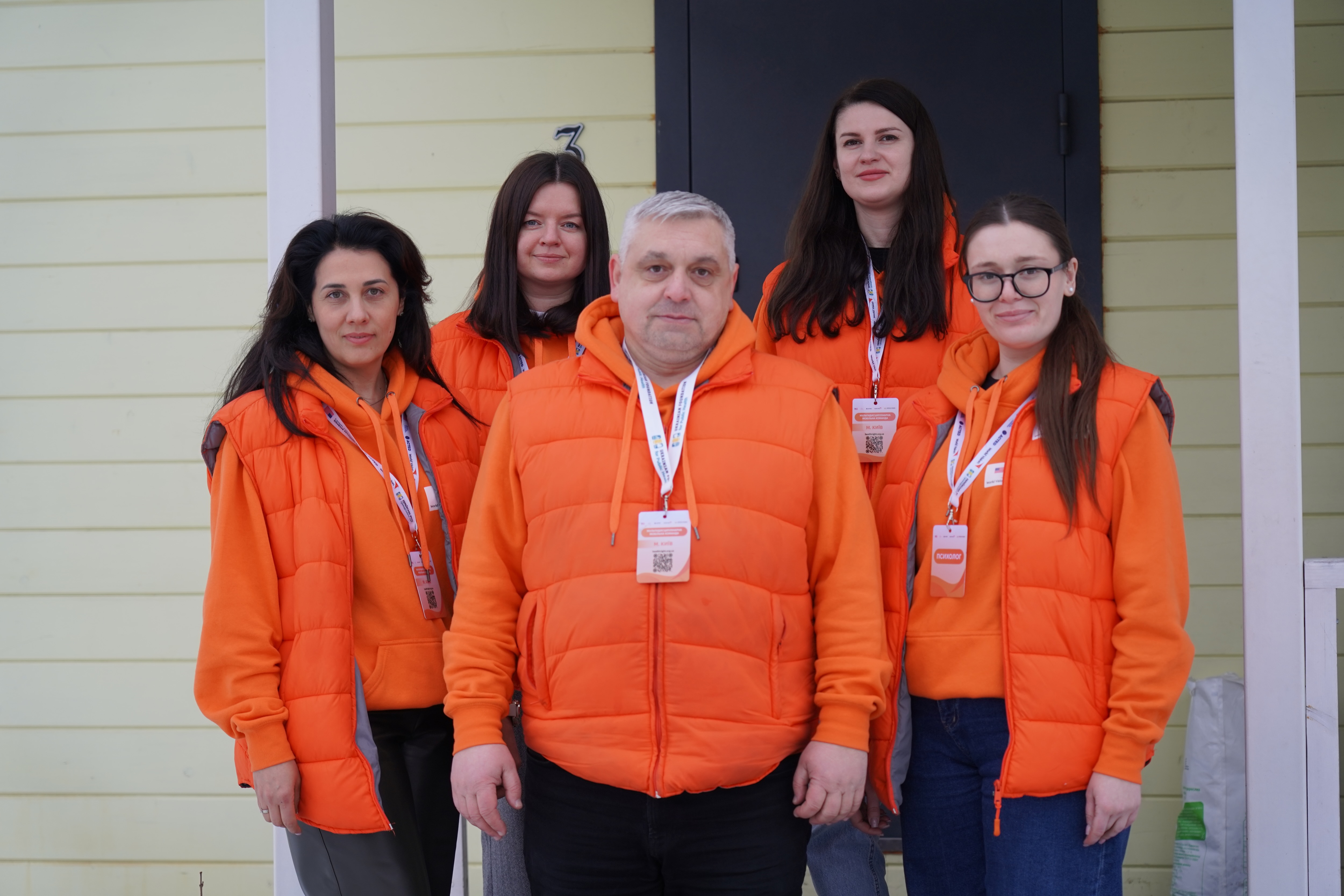
Each team includes a coordinator, social worker, psychologist, lawyer, and driver. Together, they identify families who need assistance, assess their needs, and provide tailored support. Their mobility allows them to respond quickly to evolving circumstances, especially in regions where infrastructure damage and security concerns restrict access to formal services.
The importance of this approach is evident in a district of Bucha where families displaced from frontline areas now live in modular housing. Many residents continue to grapple with distress, loss of property, and uncertainty about the future. Having fled their homes, they often face challenges related to documentation, employment, and access to essential services.
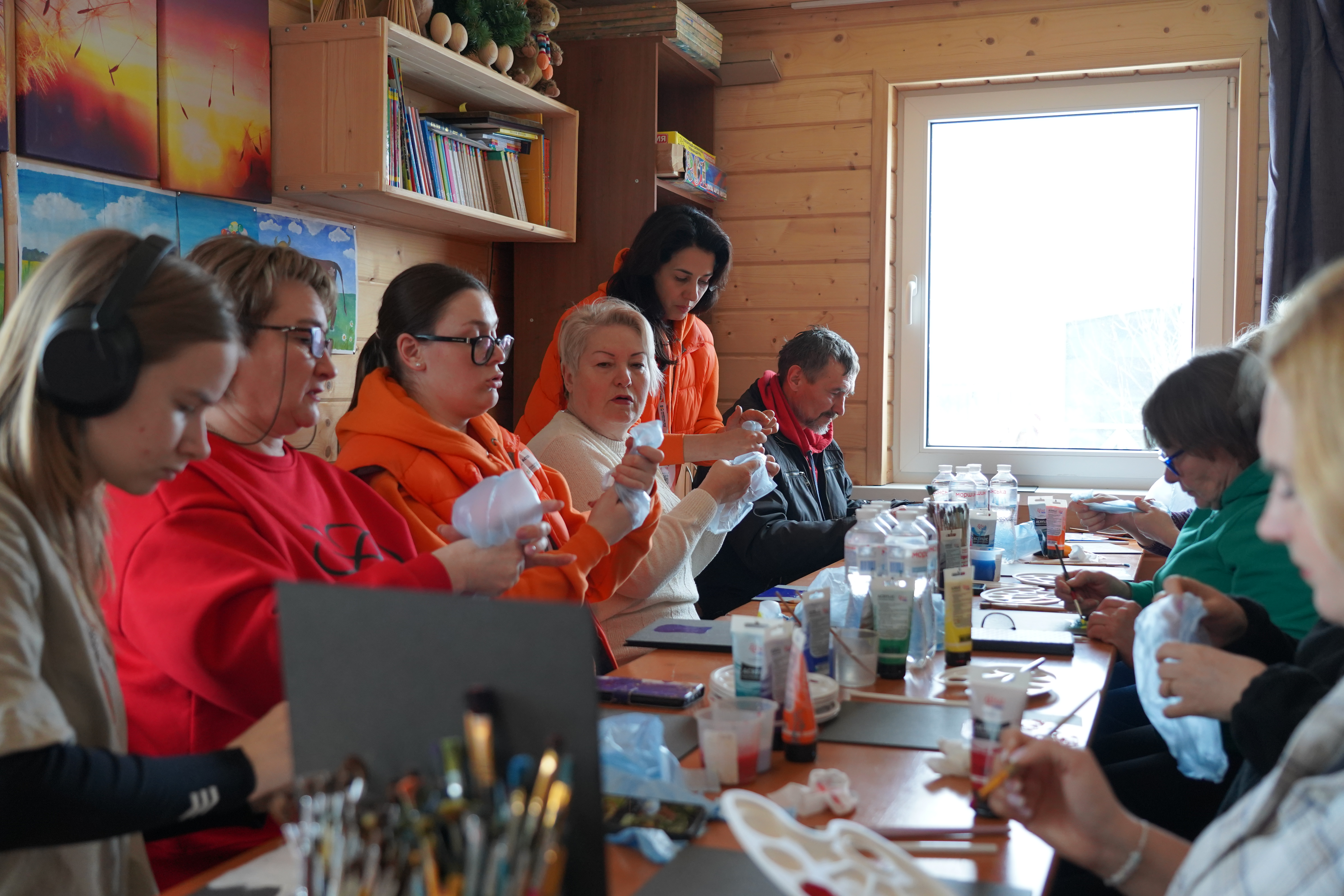
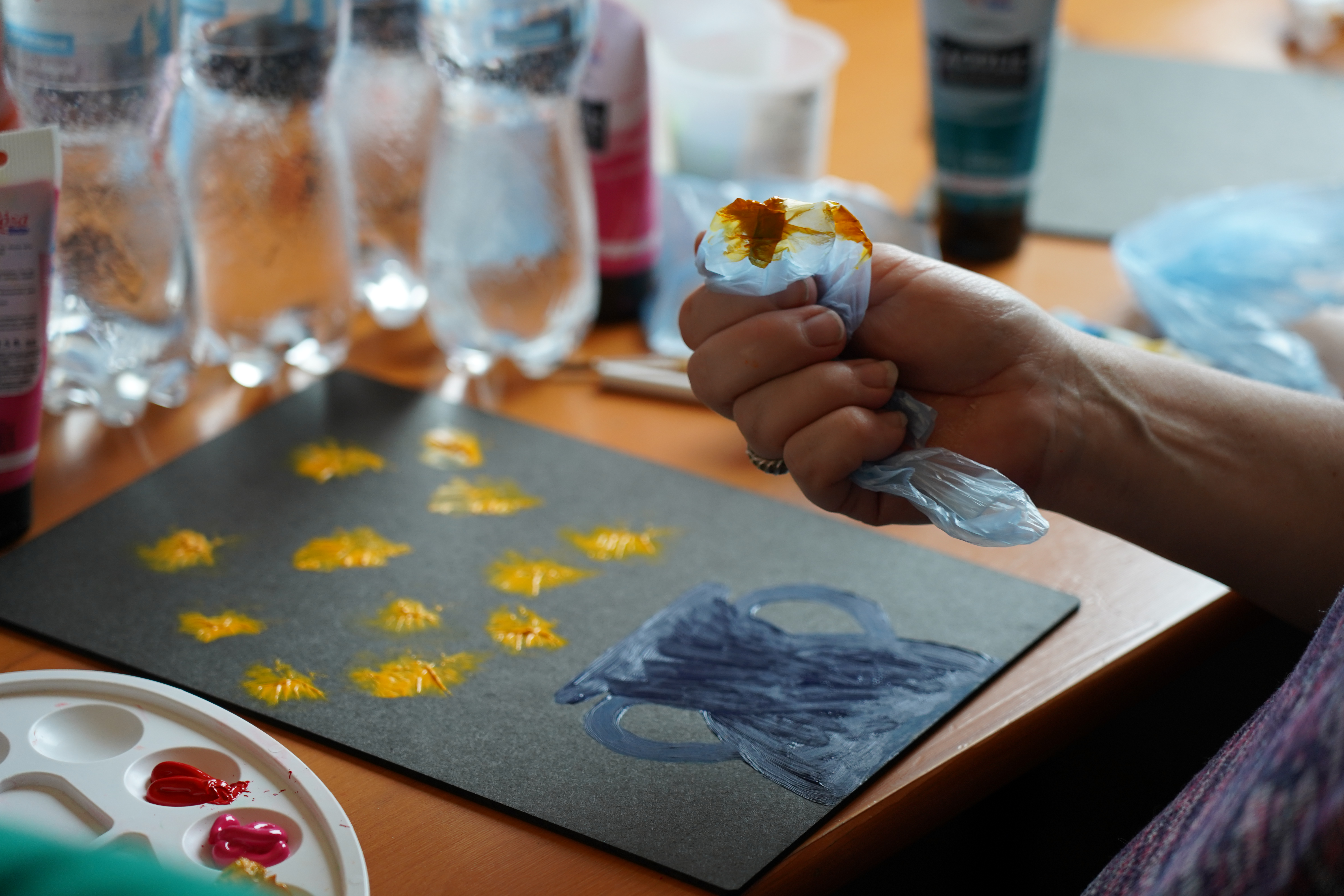
The mobile teams offer a range of assistance, from legal consultations on property rights and displacement documentation to psychosocial support aimed at reducing anxiety and strengthening coping mechanisms. Art therapy sessions provide participants with an alternative means of expressing emotions through painting and crafts, while psychologists conduct individual counselling sessions. Social workers further support residents by connecting them with available services and guiding them through administrative procedures.
Olena, a 47-year-old IDP from Donetsk, described the impact of the programme: “This support has given me hope again. I never thought I could talk about my feelings, but now I feel less alone in this difficult time. The art therapy helped me express my fears, and I found a way to breathe again.”
Delivering assistance in conflict-affected areas presents significant challenges. Power outages, harsh winters, and security risks often complicate daily operations. Despite these difficulties, the teams continue their work.
“This winter was especially difficult, with endless power outages that severely affected our daily operations. Nonetheless, every person we help reminds us why this work is so vital."
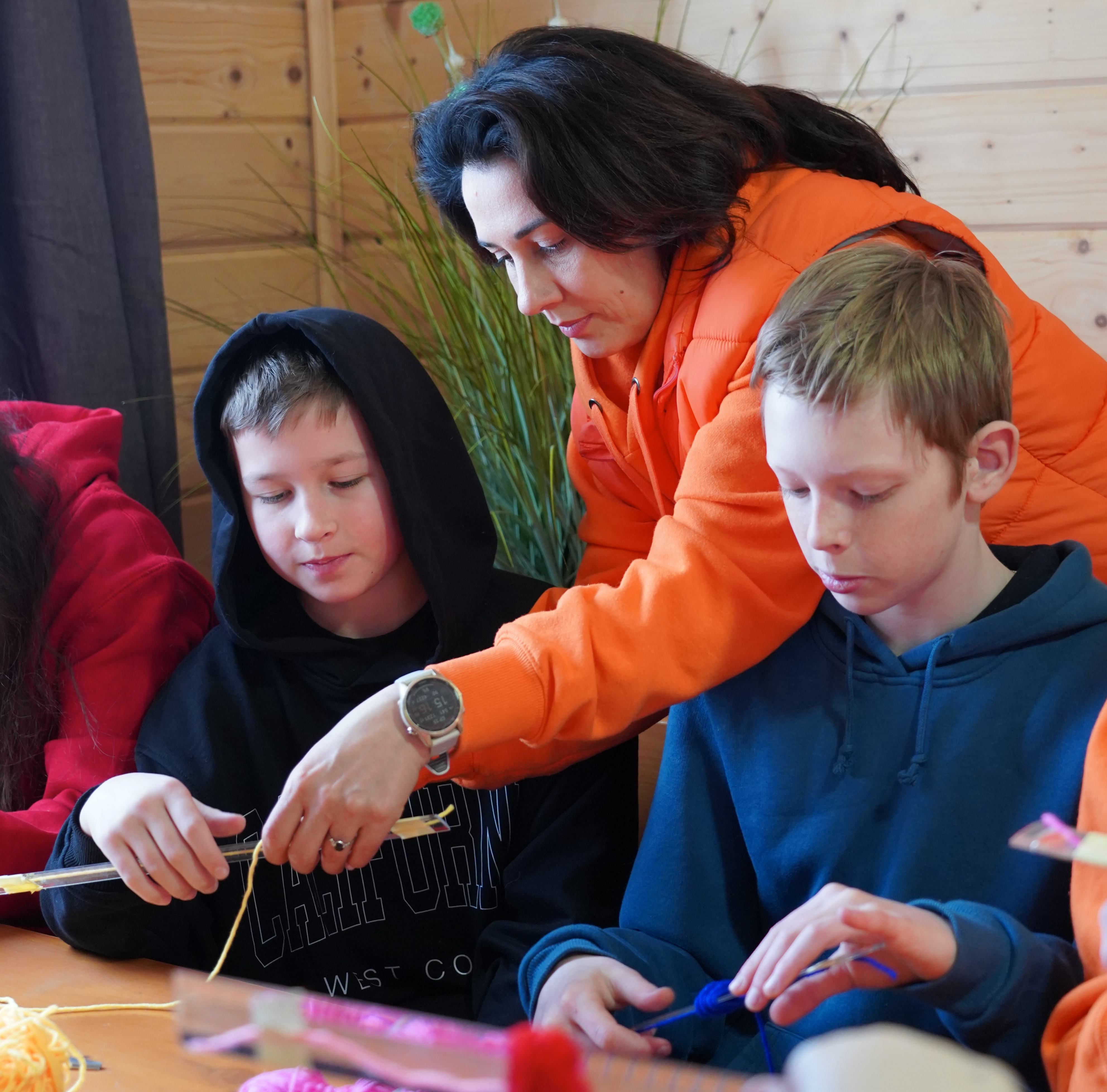
“Operating in war zones is incredibly demanding,” said Nataliia Lavrenchuk, Multidisciplinary Mobile Team Coordinator. “This winter was especially difficult, with endless power outages that severely affected our daily operations. Nonetheless, every person we help reminds us why this work is so vital. Working here in Bucha, I see every day how our support restores a fragment of hope.”
Since the programme’s launch, more than 41,000 people across Ukraine have benefited from psychosocial, legal, and case management services.
Story by Anastasiia Haviuk, Communications Officer I Photos by Laurentia Jora, Advocacy & Communications Manager