
World Vision’s Integrated Support Restores Dignity and Learning for 312 Learners in Matlameng Area Programme

By Lebohang Takane, Graphic Design and Communications Officer
At one primary school in the rural Matlameng area, education was once defined by hardship rather than hope. With an average school roll of 230 learners at the time, the learning environment was marked by overcrowded classrooms, water scarcity, inadequate sanitation, and deep social inequalities that affected children’s confidence and academic performance.
A School Day Marked by Exclusion and Struggle
For many learners, the greatest barrier to education was not the curriculum — it was poverty.
Numerous children did not have school uniforms. Learners from child-headed households were particularly vulnerable. Without proper uniforms and shoes, they often felt humiliated among their peers. Many withdrew socially, avoided participation, and in some cases stayed home altogether.
“They did not feel free,” the school principal, Mr Thaabe, shared. “You could see how it affected their confidence. Almost every parent’s meeting centred on the same issue — the importance of purchasing school uniforms. Yet for many families, this was simply unaffordable. Absenteeism increased. Motivation declined. Learning outcomes suffered.”
Overcrowded Classrooms and Conflict Over Furniture
The school had only six classrooms, three of which had no furniture. Learners from Grade 1 to Grade 3 often learned without desks or chairs. In some classes, children were required to bring chairs from home. Some parents stopped sending their children to school because they could not afford to buy chairs for them, resulting in absenteeism. Some parents made the painful decision to withdraw their children from school because they could not afford to purchase chairs.
By the end of each quarter, many of those chairs were broken due to overcrowding and daily strain. This created frequent disputes among parents, each concerned about damaged property.
Classrooms were congested and poorly ventilated. Teachers struggled to effectively monitor individual learner progress. Illnesses spread easily in cramped conditions. The right to education was quietly compromised by infrastructure gaps.
Water Scarcity and Interrupted Learning
Water — essential for both health and learning — was severely limited.
Learners were required to fetch water from a distant, unprotected well. During these trips, lessons were paused as classes waited for those assigned to collect water. One learner was even hit by a car while crossing the road after fetching water from the well. Valuable learning time was lost.
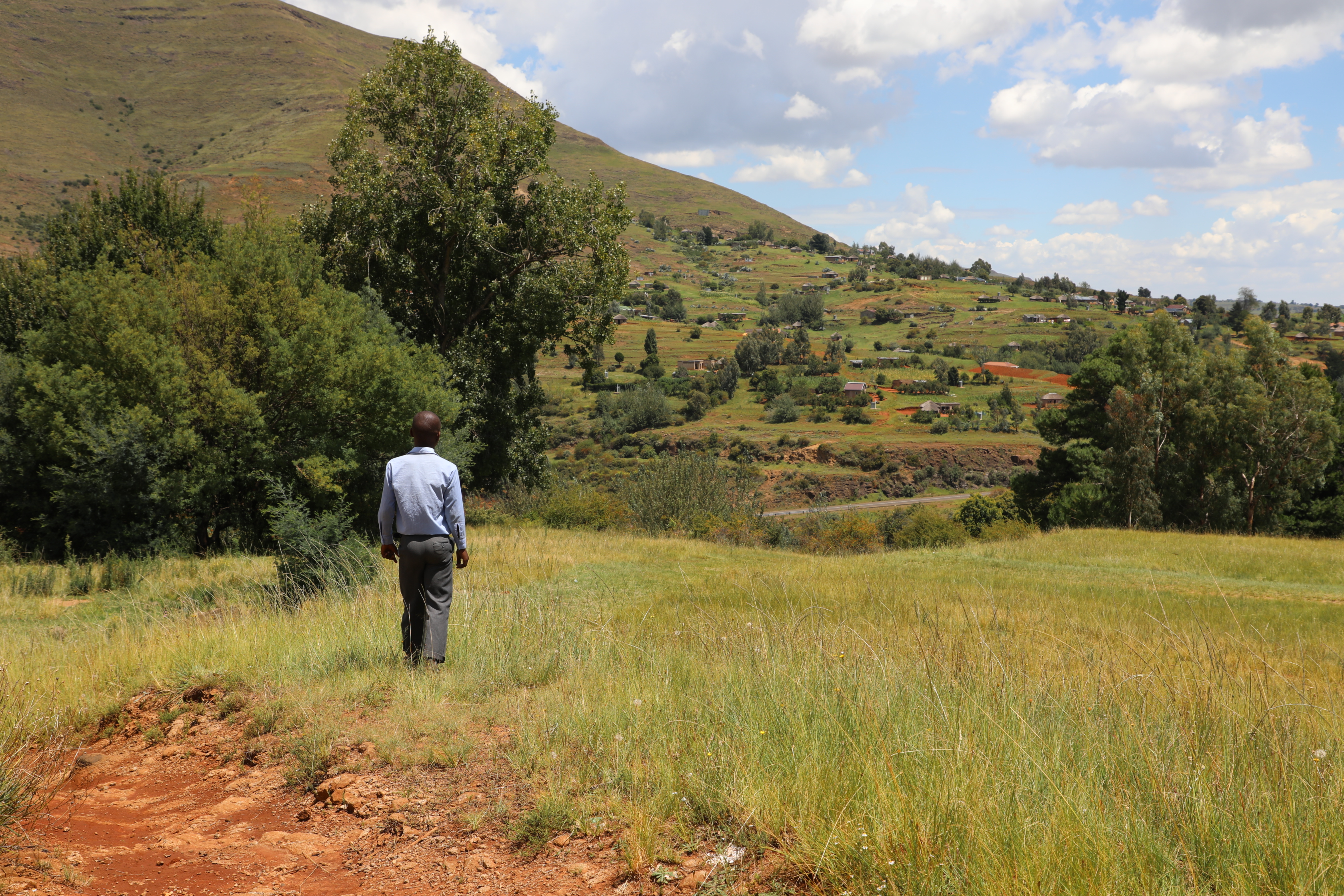
Before proper sanitation facilities, learners like Tlelima used nearby dongas as toilets
Without reliable water access, hygiene practices were inadequate. Handwashing was inconsistent. Classrooms and toilets were not thoroughly cleaned. Sanitation conditions were alarming. The school had only one toilet for teachers, while learners were forced to use a nearby valley as a toilet. During heavy rainfall, waste would wash down into a spring used by both the school and the community, contributing to widespread illness.
The environment exposed children to health risks and stripped them of privacy and dignity.
School Feeding Under Pressure
The school relied on produce from its garden to support school feeding. However, due to ongoing water shortages, crop production was inconsistent. This led to food shortages and placed additional strain on learners who depended on school meals as a reliable source of nutrition.
A Turning Point: An Integrated Intervention
Recognising that these challenges were interconnected, in 2009,World Vision implemented a comprehensive, integrated response addressing infrastructure, water, hygiene, sanitation, literacy, and child protection.
Expanding Safe Learning Spaces
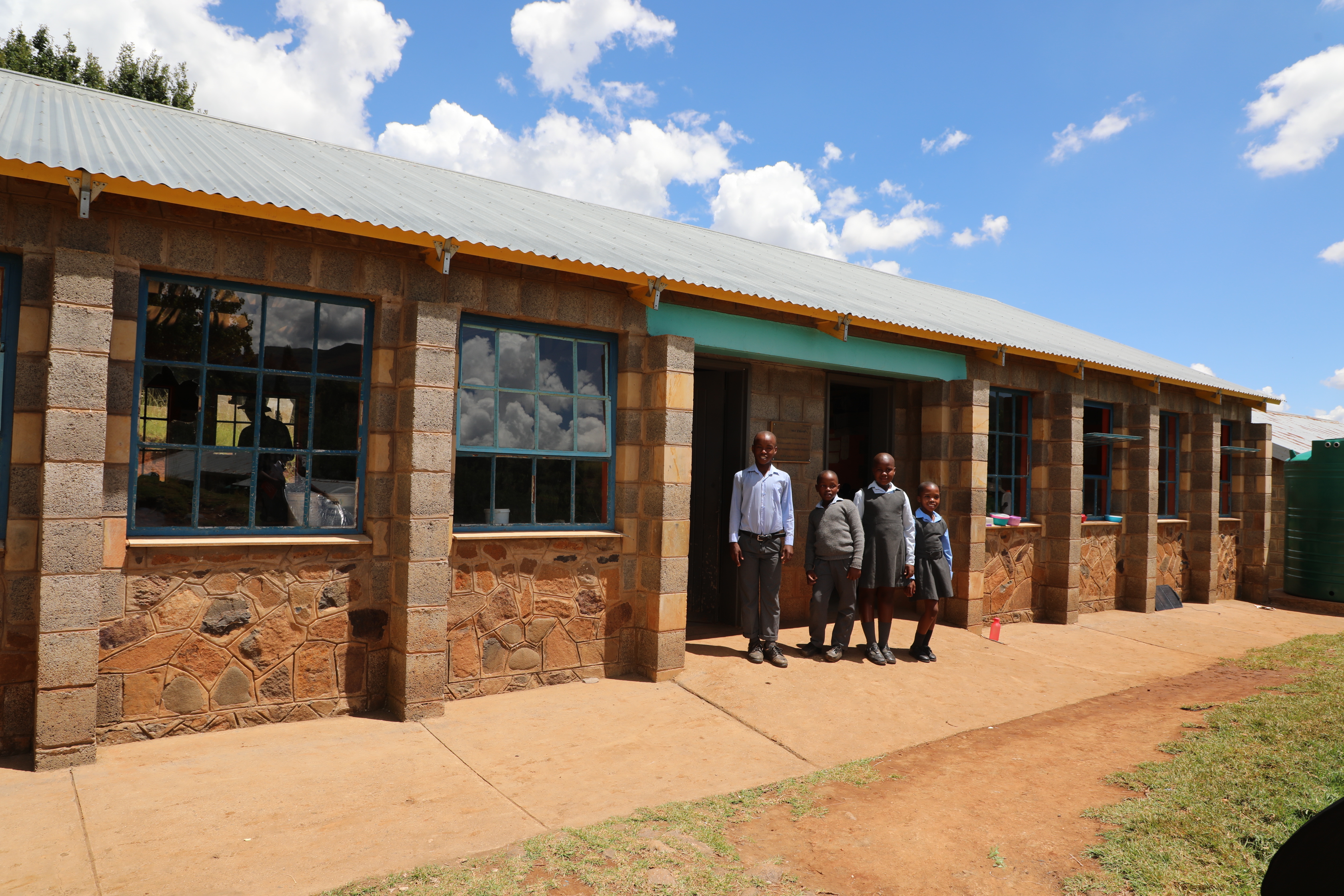
A brighter learning environment — learners in front of their newly built classrooms
World Vision constructed two new classroom blocks, easing congestion and creating a more conducive learning environment.
The school also received desks, chairs, and storage units for learning materials. Classrooms became organised and structured, enabling teachers to deliver lessons more effectively.
Following the COVID-19 pandemic, the school was supported with paint — eight 20-litre containers — to renew and refresh classrooms, restoring a sense of pride and ownership among learners and staff.
Restoring Access to Safe Water and Sanitation
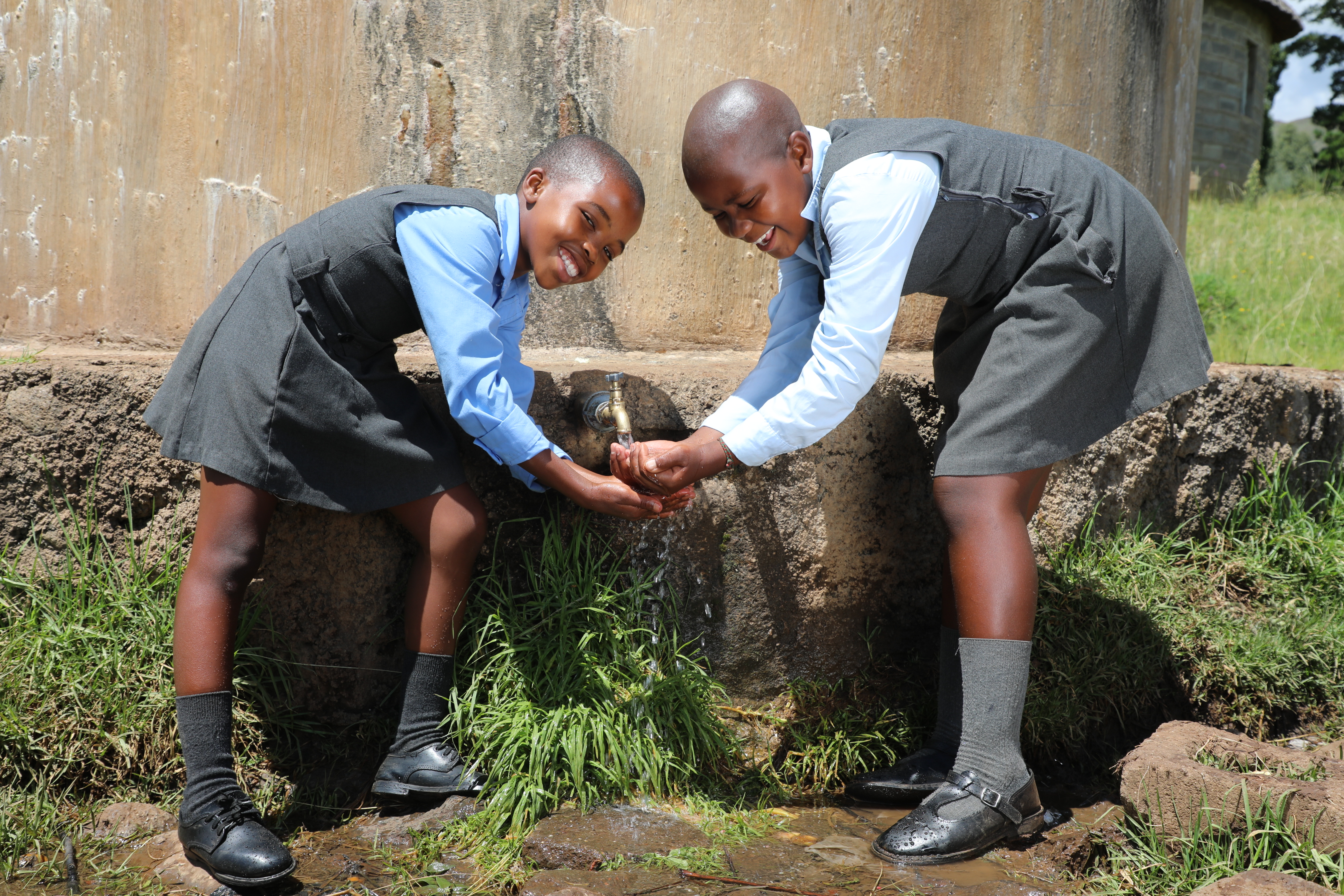
With clean water now available at school, Tsepiso and Tlhonolofofatso practise handwashing with joy
World Vision supported the school with two handwashing facilities, two water tanks, and the repair of vandalised pipes and reconnection of the school water system.
T’sepiso (12) shared her joy: “We are happy because now we have clean and safe drinking water at our school. We use it to wash our hands and to keep our classrooms clean and maintain hygiene throughout the school.”
With reliable water restored, hygiene practices significantly improved. Learners now practise regular handwashing. Classrooms and sanitation facilities are properly cleaned. The school also received 19 toilets. Open defecation stopped, protecting both the school and the wider community from contamination and disease. Learning is no longer interrupted by long walks to fetch water.
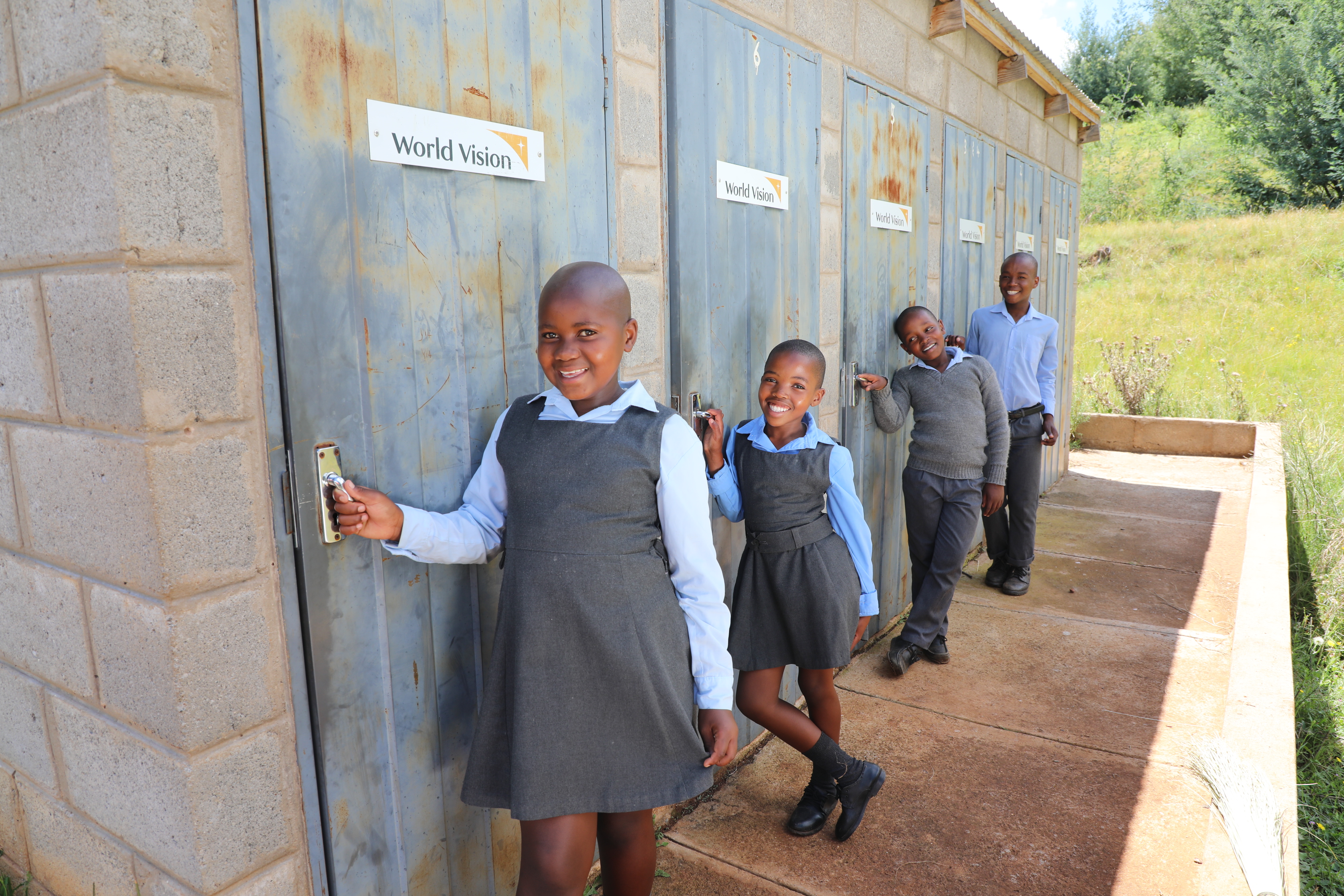
Smiles of dignity — learners next to the newly constructed toilets supported by World Vision
Strengthening Literacy and Child Protection
Teachers and learners benefited from literacy books that helped to ease the transition process from the old curriculum to the newly introduced curriculum, strengthening reading skills and improving learning outcomes.
Children were also equipped with child protection awareness, empowering them to understand their rights and fostering a safer school environment. The school also received uniforms that brought back dignity and improved attendance, as no learner felt ashamed anymore.
Mr Thaabe reflected on this change: “The provision of uniforms has not only improved the lives of the individual beneficiaries, but it has also improved the image of our school. It brought back respect and restored dignity to our learners and the entire school community.”
Building Confidence Through Extracurricular Support
Beyond infrastructure and academics, World Vision recognised the importance of holistic child development. Tlelima, a 13-year-old learner who loves playing soccer, shared his excitement when the school’s football team received new soccer jerseys.
“I was so happy when our team was given soccer jerseys,” he said proudly. For learners like Tlelima, such support strengthens confidence, teamwork, and belonging.
A School Transformed
Today, the school reflects resilience, growth, and sustainability.
The school roll has increased from an average of 230 learners to 312 — a clear sign of renewed trust from parents and improved learning conditions. Classrooms are organised and conducive to learning. Teachers report improved academic performance and higher learner participation.
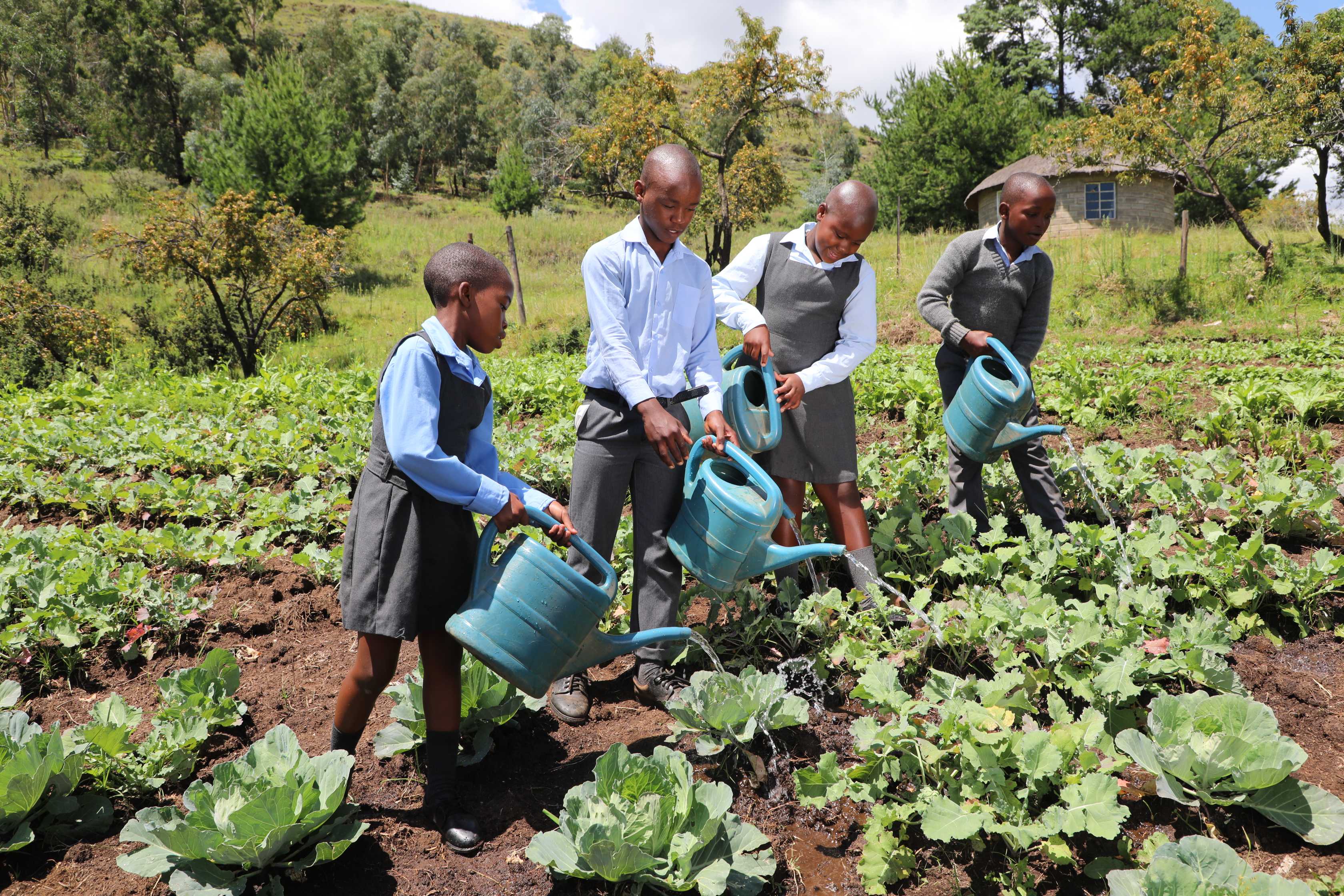
Learners watering their thriving school vegetable garden
With reliable water access, the school garden is now productive. The school produces crops that are sold to the National Management Agent (NMA), an institution responsible for school feeding. They now generate income that is saved to maintain and improve school initiatives, including supporting the most vulnerable children in the school.
Importantly, the Principal expresses confidence that even as World Vision transitions out of the Matlameng area, the systems, skills, and structures established will sustain progress. What was once a school defined by scarcity is now a centre of dignity, opportunity, and hope.
For 312 learners in Matlameng, education is no longer interrupted by lack — but strengthened by resilience and partnership.