publication / March 19, 2026
CONVENTION DE L’UNION AFRICAINE SUR LA FIN DES VIOLENCES FAITES AUX FEMMES ET AUX FILLES VERSION ADAPTÉE AUX ENFANTS
CONVENTION DE L’UNION AFRICAINE SUR LA FIN DES VIOLENCES FAITES AUX FEMMES ET AUX FILLES
VERSION ADAPTÉE AUX ENFANTS
publication / March 16, 2026
Lebanon Response Sitrep 2026 #4
The escalation of hostilities in Lebanon has now entered day 15, while regional tensions linked to the wider conflict continued for 17 days, with no immediate indication of de-escalation. Evacuation orders continue to expand across South Lebanon, Beirut, Mount Lebanon, and the Bekaa Valley, with warnings issued by the country to the south instructing residents to evacuate and indicating that return will not be permitted until further notice. Reports state that entire families who chose to remain in their homes in some affected areas have been killed during strikes, highlighting the severe protection risks facing civilians.
In recent days, strikes have increasingly targeted critical infrastructure and transport routes, including two key bridges connecting major towns in South Lebanon, further disrupting civilian movement and humanitarian access. Trucks transporting goods are reportedly warned not to move along the southern coastal road, further constraining assistance delivery. Airstrikes also impacted central Beirut and residential areas in Mount Lebanon, reflecting the continued expansion of hostilities beyond traditional frontline zones.
Meanwhile, displacement continues to rise, and shelter capacity remains under severe strain. With collective shelters overcrowded or at full capacity, many displaced families have been forced to seek alternative arrangements, including unfinished buildings, informal shelters, and makeshift tents along the coastal Corniche from Saida to Beirut. Recent heavy rainstorms and falling temperatures have further worsened conditions, destroying displacement tents and flooding temporary sites, leaving displaced households exposed to harsh weather and heightened risks. The prolonged escalation is also contributing to pockets of civil unrest, as well as heightened social tensions in several areas, with growing fears among communities that prolonged displacement and political polarization could increase the risk of localized sectarian tensions.
publication / March 19, 2026
Armenia Country Profile FY25
World Vision Armenia, active since 1988, delivers aid and development via six offices, supports 500,000 children, strengthens systems, drives policy, and builds resilient communities.
publication / March 23, 2026
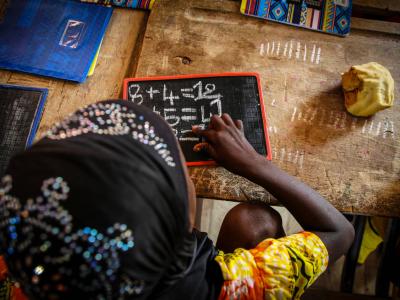
Impact of the Unlock Literacy Project Model on the reading results for girls and boys in early grades in Uganda
World Vision is implementing the Unlock Literacy Model, which aims to empower schools, parents, and communities to support children’s literacy development and to promote strong literacy habits among early grade learners both inside and outside the classroom.
publication / March 9, 2026
Policy Insights in Ending Child Hunger and Malnutrition
This policy brief introduces the ENOUGH Campaign in East Africa and invites you to be part of a practical response rooted in bold hope to end child hunger and malnutrition. It explains the challenge clearly, highlights what is working, and sets out actions that governments, donors, businesses, civil society, communities and friends of children can take together. The goal is simple and urgent: to make sure every child has ENOUGH of the right food to grow well, learn in school and thrive.
press release / March 18, 2026
Joint Statement: Humanitarian NGOs condemn civilian toll in Kabul airstrikes and call for respect for International Humanitarian Law
17 humanitarian NGOs operating in Afghanistan are profoundly alarmed by hundreds of civilian casualties in Kabul, Afghanistan, following heavy airstrikes on the capital on the 16th of March 2026. We urge international efforts to support deescalation.
publication / March 9, 2026
Lebanon Response Sitrep 2026 #2
According to Lebanon’s Ministry of Public Health (MoPH), attacks between 2 and 8 March have resulted in 394 people killed and 1,130 injured, with figures Increasing daily.
Displacement orders issued in the last days, including renewed orders affecting areas south of the Litani River and the entirety of Beirut’s southern suburbs, have triggered further population movements and repeated displacement for many households.
As of 8 March, the Disaster Risk Management (DRM) Unit reports 117,228 displaced individuals residing in 538 collective shelters. The Government of Lebanon has launched a national self-registration platform for internally displaced persons, with over 517,000 people, indicating the potential scale of displacement beyond those recorded in collective shelters.
Recent days have seen hostilities expand beyond traditional frontline areas, including blanket evacuation orders affecting Beirut’s southern suburbs, warnings and subsequent strikes targeting branches of the Al-Qard- Al-Hassan Association. Airstrikes have also impacted locations outside the declared warning zones, including a hotel in central Beirut and an earlier strike on a hotel in Hazmieh, both situated outside the primary red-zone areas. These incidents highlight the widening geographic scope of the conflict and the continued risks to civilians and humanitarian operations across areas.
opinion / February 27, 2026
Are we serious about children’s rights in the digital world?
As artificial intelligence reshapes platforms at extraordinary speed, are children’s rights keeping pace with the rapid shifts in their own digital world?
article / March 17, 2026
How Clean Water Access is Transforming Lives in Diapangou, Burkina Faso
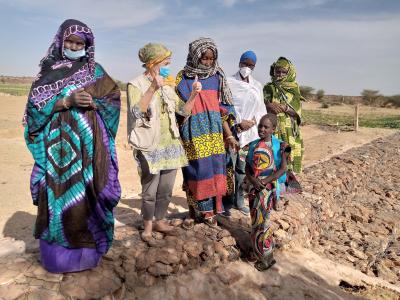
In Diapangou, Burkina Faso, safe water transforms life for 1,500 pupils. New WASH facilities improve health and school attendance for local children and families.
publication / March 4, 2026
Lebanon Response Sitrep 2026 #1
The current escalation follows prolonged instability and military activity despite the 27 November 2024 cessation of hostilities. Since the ceasefire came into effect, more than 10,000 air and ground violations have been recorded, resulting in at least 335 people killed and 973 injured as of 5 January 2026. Reported incidents have included airspace incursions, cross-border fire, and military activity in Baalbek, Hermel, and southern areas, alongside the continued presence of foreign military forces in five border villages. Prior to the renewed escalation in March 2026, an estimated 62,000 to 90,000 people remained internally displaced from earlier conflicts, underscoring the protracted nature of the crisis and the heightened humanitarian vulnerability across affected regions.
Over the weekend, regional tensions escalated following developments involving the United States and Iran, with hostilities expanding into the country to the south of Lebanon and Lebanon on 2nd of March. Airstrikes were reported across multiple areas, including the southern suburbs of Beirut, Bekaa, Baalbek-Hermel, and South Lebanon. According to Disaster Risk Management (DRM) Unit sources, an estimated more than 81,791 internally displaced persons (IDPs) including 9,000 children, have been recorded thus far, primarily in Beirut & Mount Lebanon (BML), Bekaa, Baalbek, and southern governorates. So far, over 60 people have been reported killed and at least 154 injured, with figures continuing to evolve. Warnings have been issued to evacuate over 200 towns across Lebanon, contributing to significant population movement from border areas and high-risk locations, while shelter data remains fluid due to continued secondary displacement and movement between collective sites.