

Becoming One: Faith in Action Against Femicide
As violence against women continues to rise, a new source of hope is emerging in rural Kenya. Faith leaders trained through the Becoming One pilot are supporting couples to communicate better, resolve conflict, and build safer, more stable homes. For International Women’s Day, GEDSI advisors Pauline and Dorise reveal what’s working and why scaling it matters now.
08 March 2026
Did you know that nearly one in three women experience physical or sexual intimate partner violence (IPV) in their lifetime? Home should be the safest place we know. Yet for millions of women in Kenya and around the world, home remains the most unsafe place.
The stats are staggering
Femicide cases in Kenya rose by 10% between 2022 and 2024, according to the Technical Working Group on GBV Including Femicide (2025). The National Police Service recorded 1,639 cases. Most victims were women aged 30–44, and 77% of these killings were committed by intimate partners or individuals known to the survivor.
The 2022 Kenya Demographic and Health Survey (KDHS) shows 34% of women have experienced physical violence and 13% have experienced sexual violence since age 15.
These figures highlight the scale of the crisis as well as the heightened risks faced by women with disabilities.
Faith leaders, catalysts for transformation
In 2024, in two rural Kenyan communities, Mwala in Machakos and Kalawa in Makueni, a promising shift began. World Vision Kenya, in partnership with Innovations for Poverty Action (IPA), piloted Becoming One, a faith‑based couples program designed to prevent IPV by strengthening communication, promoting mutual respect, and shifting harmful gender norms.
Faith leaders remain among the most influential voices in Kenyan communities. During the pilot, 86 leaders were trained, and 78 completed delivery of the full 14‑week programme. Their leadership was catalytic, helping couples rethink conflict, partnership, and shared responsibility.
A total of 468 couples (936 individuals) graduated, benefiting over 1,900 children through improved household harmony. Families reported stronger communication, reduced conflict, and more stable relationships.
These changes create calmer, safer home environments where children can grow, learn, and thrive. As parents collaborate more on decision‑making and share responsibilities, children experience greater emotional security and a more nurturing atmosphere, directly, supporting World Vision’s mission of child well‑being.
Crucially, the programme reached seven couples where one spouse had a disability, including partners with visual impairments and autism. For these couples, Becoming One provided reassurance, empathy, and emotional grounding.
How families are healing
Couples across both communities reported significant positive shifts:
- Improved communication and conflict resolution
- Collaborative financial decision‑making
- Shared household responsibilities
- Increased relationship stability, with 95% of men reporting positive change (100% in Mwala)
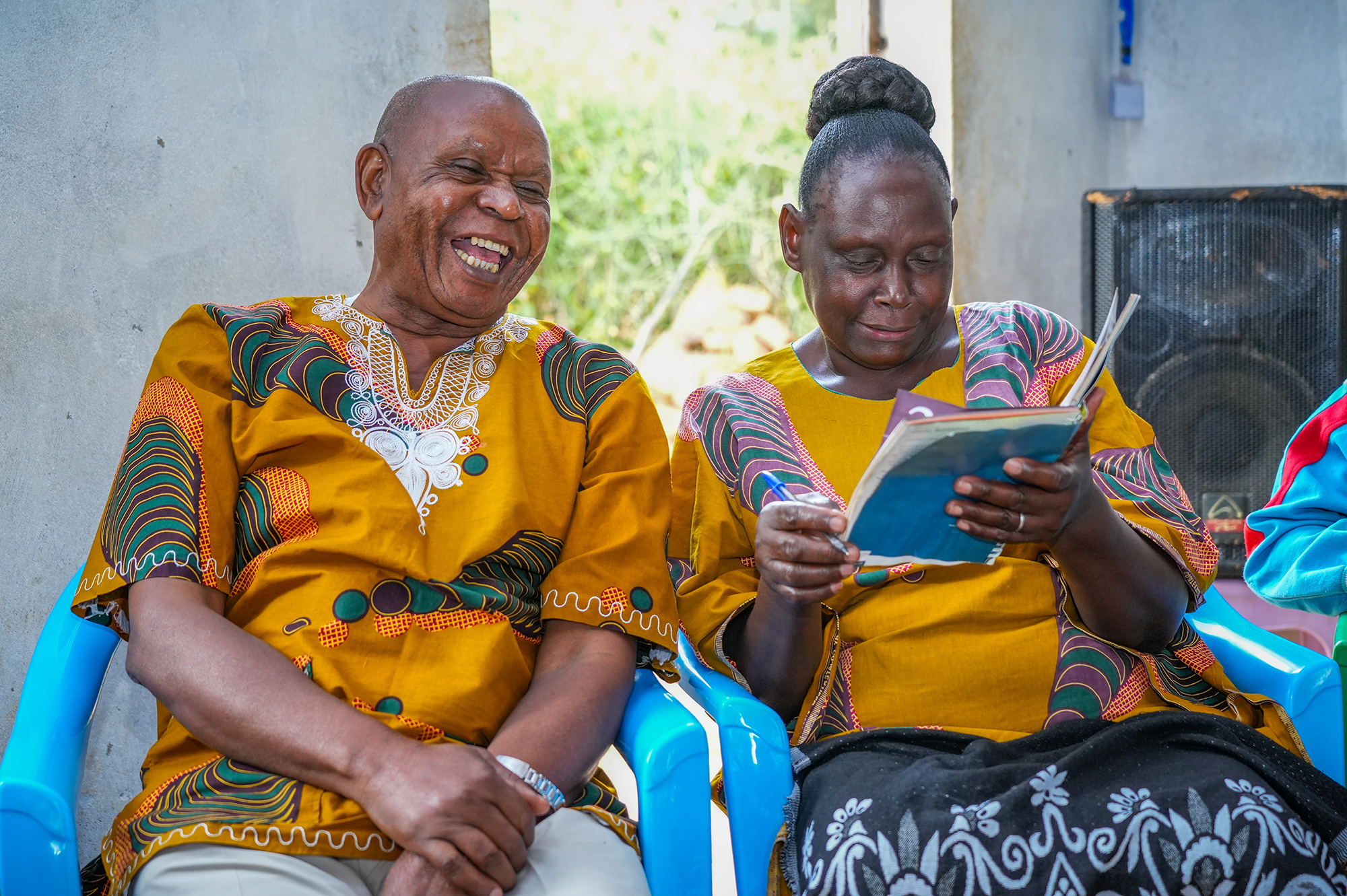
"Before the programme, I often had to raise my voice just to be heard, and my husband was not always transparent with me. Becoming One helped us heal the gaps in our marriage. We communicate better, understand each other more, and our home is now a calmer place for our children.” — Gregory and Mary Mutuku, Kalawa (names used with consent)
These outcomes are not anecdotal. They demonstrate the power of community‑led, evidence‑driven models to shift entrenched norms and prevent violence before it begins.
Why this matters now
This year’s International Women’s Day theme, “Rights. Justice. Action. For ALL Women and Girls.”, calls for transforming the systems and norms that allow violence to persist.
Becoming One reflects the spirit of the African Union Convention on Ending Violence Against Women and Girls (AU‑CEVAWG), which World Vision East Africa helped shape. The programme prioritises prevention, social norms change, and community‑led action. These are all essential for addressing the root causes of IPV within families and relationships.
Early successes also show Kenya’s readiness for scale. Already, 51 staff and faith leaders across 16 area programmes have been trained as Trainers of Facilitators. But to expand effectively, the programme must strengthen language adaptation, engage younger couples, increase leadership buy‑in, and ensure continuous pastoral support.
Call to action
As organisations, faith institutions, and policymakers reflect on this year’s IWD theme, we must ask: What would it take for every Kenyan couple to have access to a safe, supportive space to build healthier relationships.
World Vision is ready to take the next step. We call on:
- Faith institutions to champion scale up across denominations
- County governments to integrate relationship education into community services through partnerships
- Donors and partners to invest in evidence-based IPV prevention models
- Communities to embrace positive gender norms and relational well-being including those living with disabilities.
The call is not just for International Women’s Day, but for every day. Let’s advance women’s rights, fight for justice and take action, so that home becomes the safest place for every woman and girl, and safety extends to every space where they live, learn, and thrive.
______________
Pauline Mkala currently works with World Vision East Africa as Regional Snr Technical Gender Equality Disability and Social Inclusion Advisor. She is a passionate advocate for gender equality, education, and holistic leadership. She holds a Master’s degree in Education, Gender, and International Development from University College London and a Bachelor’s degree in Community Psychology from the University of South Africa. In addition, she is a certified ICF professional coach specialising as a life coach, with numerous professional courses enriching her expertise.
Her passion is facilitating organisations to maximise sustainable impact by ensuring that underrepresented voices actively shape strategies and operations for greater inclusivity. Her approach combines academic rigor, compassion, and innovation - driven by a deep commitment to creating environments where girls, women and people with disability can thrive, participate, and lead change.
Pauline’s leadership journey is marked by her enthusiasm for agile practices and community service. Driven by a spirit of adventure and purpose, she is dedicated to empowering others through both her professional and personal endeavors.
Dorise Ng’ong’a is the Ag Gender Disability Social Inclusion and Education Advisor with World Vision Kenya, having years of experience in programme design, policy advocacy, and capacity strengthening across education, health, and humanitarian contexts. She has a proven track record in developing practical manuals and curricula, coordinating multi‑stakeholder partnerships, and leading rigorous monitoring and evaluation to drive gender‑responsive and disability‑inclusive outcomes. Dorise’s portfolio spans child protection, GBV prevention, adolescent sexual and reproductive health, inclusive education, youth engagement, financial inclusion, inclusive market systems development, and community‑led climate resilience and regreening.
Academically, Dorise holds a Master’s in Education Curriculum Development, Post Graduate Diploma in Project Planning and Management, Bachelors in Education Arts, Diplomas in Gender Studies, Policy development and advocacy, Monitoring and Evaluation, leadership and Management. Her leadership transcends conventional boundaries, making her a driving force in the development sector. Her commitment to social impact, coupled with her ability to navigate complex issues, positions her as a key influencer in the realms of education, health, and humanitarian initiatives.
Subscribe to see more content like this
Related Resources

Progress for Girls: Are Our Promises Outpacing Delivery?

Peacebuilding: How faith leaders can be catalysts for change
