

Faith as a Connector in Humanitarian Action
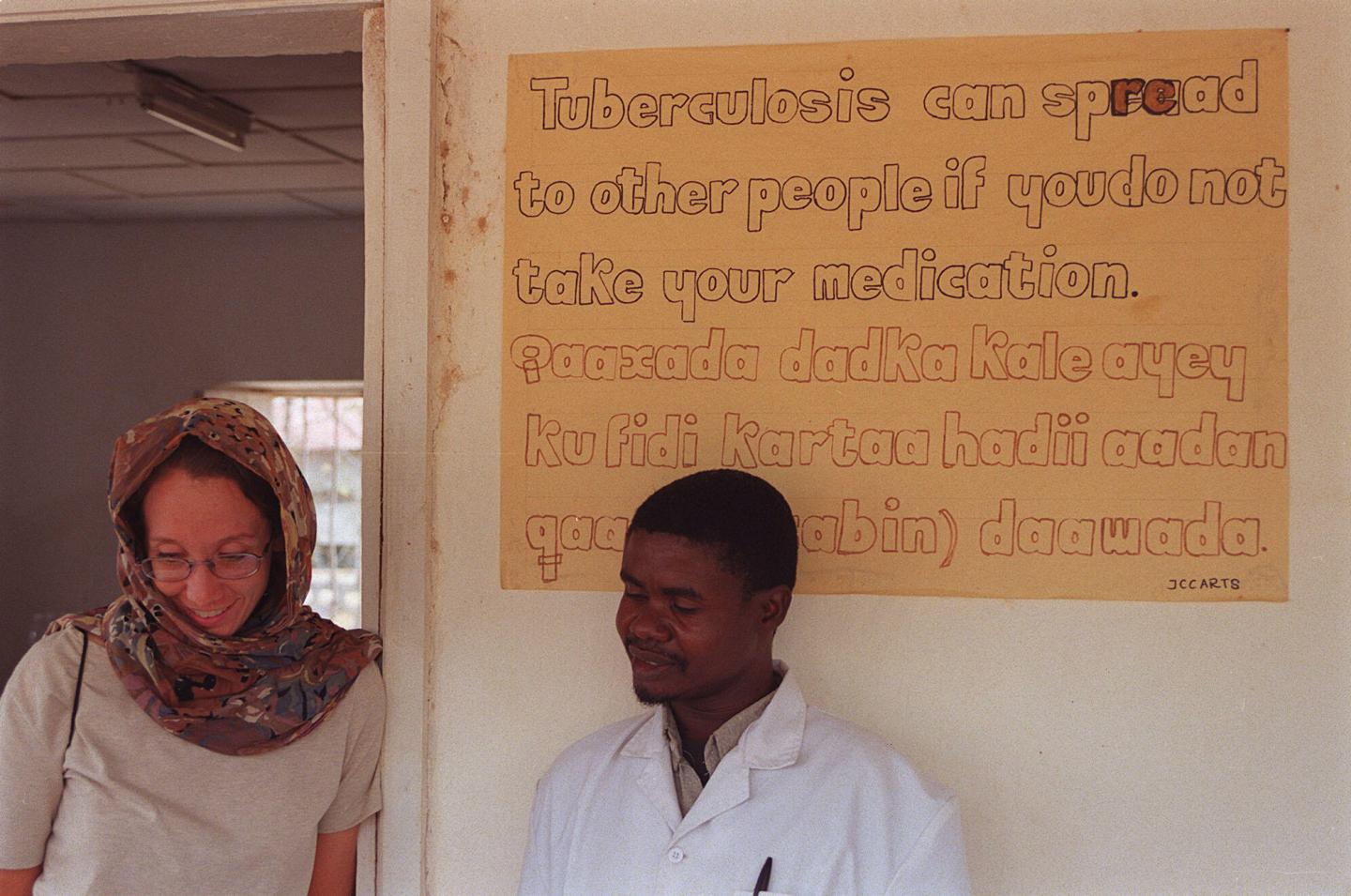
I was first in Somalia for World Vision in 2001, a time where the world had all but given up on the country. With threats of kidnappings and looting for all INGOs, most donors had written it off as a lost cause. The Black Hawk Down incident in 1993 shaped the lens of how people viewed Somalia even though the reality on the ground was far more complex than a single moment in history. It was an extremely fragile situation with high tension but not without hope.
I recall being at a school World Vision was supporting in Southern Somalia, with curious children surrounding us, when a truck roared up. Armed men jumped out and started arguing with community members. The children scattered before I even realised what was happening. Our local staff pulled me inside a crumbling building and told me it was an argument over Khat, a locally grown stimulant. The argument finished nearly as quickly as it started, and the men roared off and our meeting continued.
Later, that evening, one of our female Somali staff members sat with me and asked me why, as a Christian, would I ever consider working in such a hard location? Why would I want to take such risks in a Muslim environment? I had to be careful, but I shared about my faith and even mentioned Jesus. She wasn’t offended or hostile but really wanted to understand my faith. It was a moment of connection for us, two women of different faith backgrounds asking questions and speaking honestly about our convictions. I kept in touch with her for years after that.
Why is faith important in humanitarian action?
Historically, and across contexts, faith has been used as a source of tension and conflict. At World Vision we view faith as a connector rather than a divider. As a Christian organisation, we work to learn the language and cultural practices of the people we serve, including their religious beliefs. We do not discriminate based on religion to decide who receives aid. In Muslim, Hindu or Buddhist contexts, we seek to find common language in our desire to see children protected from harm and thrive. We work with religious leaders in everything from promoting safe burial practices in Ebola-affected areas to working to reduce gender-based violence. Because we can relate to others with deeply held faith traditions, we often establish trust through our common language.
With 84% of the world’s population identifying with a faith group, faith systems are among the most pervasive community infrastructures in crisis contexts. World Vision does not shrink away from our Christian faith identity. We recently developed a Theology of Humanitarian Action which seeks to provide a foundation for our mission and our calling to bear witness to injustices and to lament and seek to restore where deep wounds have been inflicted upon the world around us. We need to speak with one voice, and to join hands with communities that want a better life for their children. Our common foundation means we can come alongside communities in over 100 countries to support them. Together, we dream of what could be created from chaos and destruction.
Currently, World Vision is responding to over 58 emergencies in 55 countries. We work as advocates for those who are suffering in places like Syria, Bangladesh or Central African Republic. As peacebuilders and mediators in communities struggling under political turmoil like Somalia and the Democratic Republic of Congo. In communities devastated by floods, droughts and other climate-induced disasters, we seek to find new ways to anticipate, mitigate, and rebuild after disasters.
We believe that this is our God-given responsibility and as scripture says, “From everyone who has been given much, much will be demanded; and from the one who has been entrusted with much, much more will be asked.” (Luke 12:48). We take this responsibility seriously, and seek excellence in all we do, which means we work in partnership with UN agencies, other NGOs, other Faith Based Organisations (FBOs), faith actors, and community leaders.
According to UNHCR’s Guidance Note on Engaging with Faith Based Actors, “FBOs are first-line responders and on site before, during and after the time of an emergency, serving the most vulnerable in remote and hard-to-reach areas. The deep embeddedness of faith communities and networks builds a relationship based on mutual trust and fosters multi-dimensional interventions.”
Faith is pivotal in responding to humanitarian crises. Which is why we thoughtfully developed a Theology of Humanitarian Action to guide our work in this area. We believe that when we stand firmly in our Christian faith, we build bridges faster, because our faith teaches us to love first, listen deeply, and honour the image of God in every person.
Learn more about World Vision’s Theology of Humanitarian Action, reach out to faith_and_development@wvi.org and for information on our humanitarian response work check out: Disaster Management.
Ashley Inselman the Director of Humanitarian & Development Learning at World Vision International. Ashley has worked for World Vision for over 26 years in different capacities including Grant Management, MEAL and Disaster Response. Ashley’s role oversees curriculum and training development and delivery for both the humanitarian and development sides of WV’s work in over 100 countries.
Subscribe to see more content like this
Related Resources

Peacebuilding: How faith leaders can be catalysts for change

No Room at the Inn? An Urgent Global Call to Action for Refugee Children
