

Latin America’s Water Paradox: How Long Can Abundance Exclude Millions?
Joao Diniz, reflects on why Latin America must confront water inequality with strategic urgency and coordinated leadership.
February 25, 2026.
Globally, 1.4 million people die each year due to inadequate access to water, sanitation and hygiene. Latin America and the Caribbean is not insulated from this systemic failure. In 2024, approximately 121 million people in our region lacked safely managed drinking water and 115 million lacked safely managed sanitation across a geography endowed with some of the largest freshwater reserves on earth.
This is not a resource crisis. It is an equity crisis.
Abundance Without Access
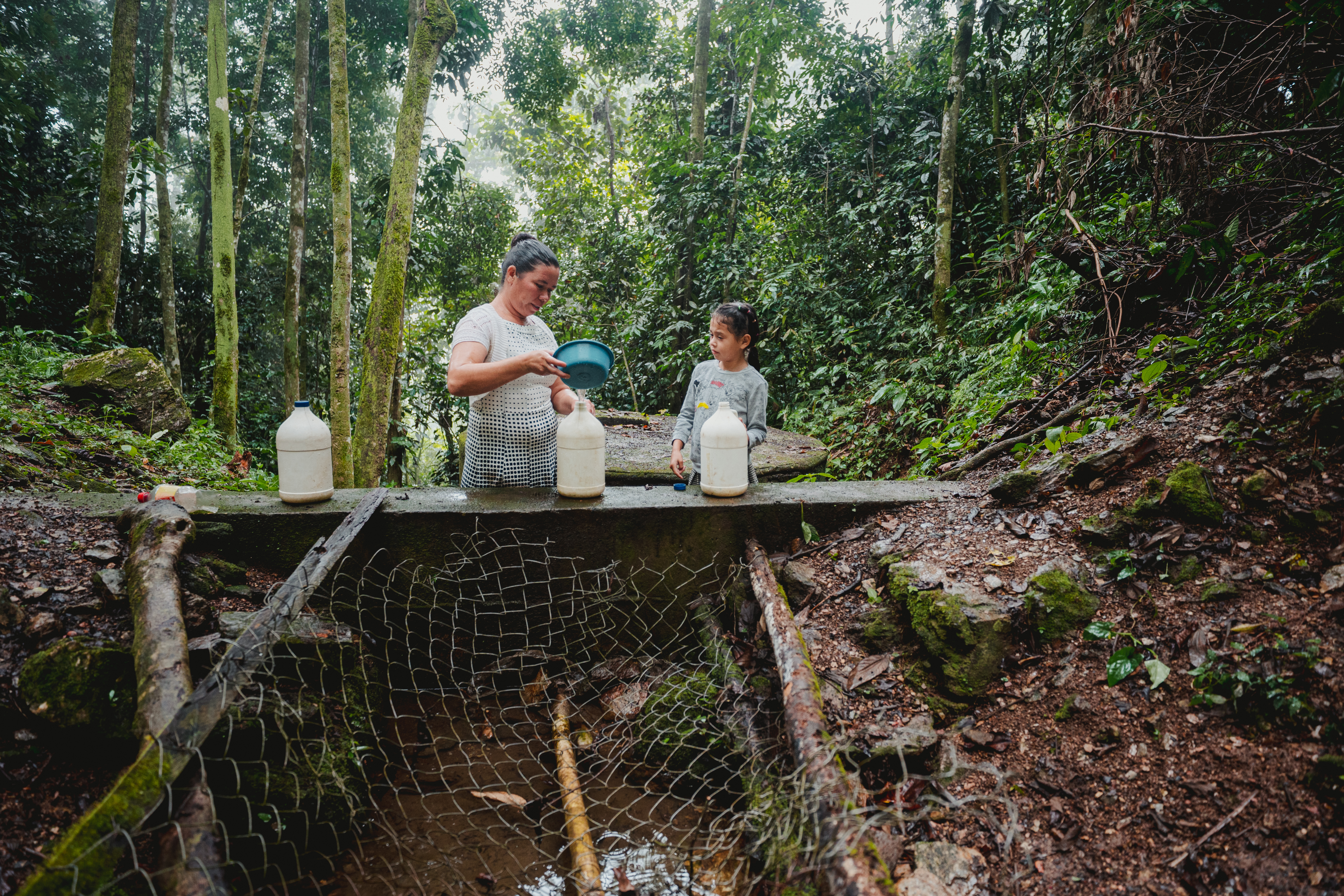
Latin America is hydrologically privileged. Yet millions still live without safe and dignified access to water, driving humanitarian, migratory and economic pressures in contexts such as the Dry Corridor, the Amazon Basin, Haiti and Andean communities. Indigenous and Afrodescendent populations remain disproportionately affected.
When drought reduces agricultural yields or floods contaminate sanitation systems, the consequences extend far beyond immediate illness. Health systems absorb avoidable strain. Families lose income. Children miss school. Fragility deepens. Climate change intensifies these patterns, damaging infrastructure and contaminating water sources with increasing frequency.
Safe water is not simply about drinking a glass of water. It is about restoring ecosystems, protecting watersheds, ensuring menstrual hygiene, enabling sustainable livelihoods and allowing women, boys and girls to live with dignity. Water security underpins child protection, public health and environmental stability. It shapes economic productivity and social cohesion. To treat water, sanitation and hygiene as a narrow technical sector is to underestimate its systemic weight.
The paradox is clear: a region rich in water resources continues to tolerate structural exclusion.
From Fragmentation to Coordination
For decades, water initiatives across the Latin America have been characterised by fragmentation. Governments invest in infrastructure without sufficient maintenance models. Development actors deliver parallel programmes with limited interoperability. Financing flows remain episodic rather than strategic. The result is predictable: uneven coverage, fragile systems and slow progress.
Closing the gap for over 121 million people without safely managed drinking water will not be achieved through isolated projects. It requires alignment, financial, institutional and operational.
From Silos to Strategic Alignment
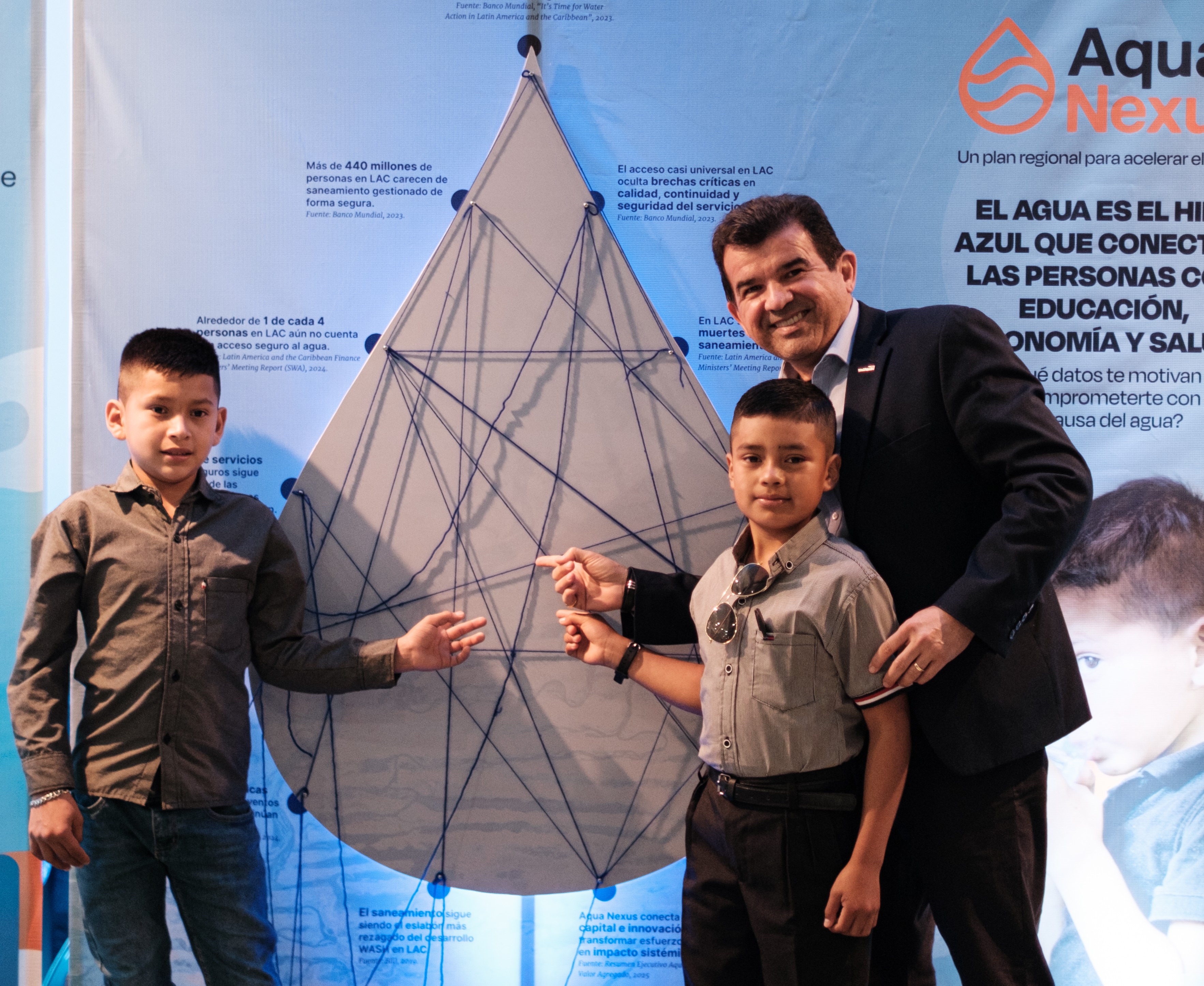
This evolution towards greater coherence underpins AQUA Nexus. World Vision designed the platform as a structured mechanism for collective delivery, not an additional layer within an already crowded landscape. Its purpose is to mobilise capital, scale innovation and convene partners around a shared resilience agenda for vulnerable communities across Latin America and the Caribbean.
By aligning external investment with locally defined priorities and long-term sustainability, AQUA Nexus converts strategic intent into tangible progress. It links finance with field realities and ensures that policy commitments translate into measurable impact.
A central objective is the harmonisation of mandates. The platform creates a practical space for governments, multilateral institutions, private sector actors, civil society and faith-based organisations to operate in concert rather than in competition. In water governance, duplication drains scarce resources, while deliberate complementarity amplifies results.
As Marlon Martínez, Coordinator of the Emergency and Resilience Unit for Agrifood Systems at the Food and Agriculture Organization in Honduras, observed during our regional dialogue:
“The needs are many, which calls us to share technical, logistical and economic knowledge. I believe that the AQUA Nexus platform will provide a mechanism for coordination and complementarity in the field… ensuring that populations facing water-related crises can receive a well-coordinated response on the ground.”
His insight captures an operational truth. In climate-exposed contexts, delayed alignment prolongs vulnerability. Structured coordination, by contrast, enables earlier intervention, sharper resource allocation and more durable resilience outcomes.
The Strategic Choice Ahead
Current trajectories suggest that safely managed services will remain out of reach without significant acceleration. Incremental improvements will not close the current gap. Finance ministries must classify water resilience as core economic infrastructure. Development banks must expand blended finance instruments that crowd in private capital while safeguarding equity. Governments must integrate water security into national adaptation plans, health systems and social protection frameworks. The private sector must recognise that watershed stability underpins supply chains and long-term competitiveness.
We do not lack knowledge. We do not lack technical capacity. What remains uneven is political prioritisation and disciplined collaboration.
Through AQUA Nexus, we are aligning capital, expertise and community leadership to accelerate durable solutions. Yet platforms alone cannot shift regional trajectories. They require leaders prepared to act beyond institutional silos and short-term cycles.
Water justice in Latin America is not an abstract aspiration. It is a measurable and achievable objective if we choose to treat it as the foundation of stability, dignity and shared prosperity.
João Diniz is Regional Leader for Latin America and the Caribbean at World Vision, with over 35 years of experience in strategic leadership and organisational management. He has held senior global and regional roles and holds degrees in Agronomy, Tropical Agriculture, and a Master of Administration, with a field of study in Non-Governmental Organization (NGO) Management
Subscribe to see more content like this
Related Resources

Whose Future Are We Negotiating? Why COP30 Must Put Children at the Heart of Climate Action

What 2026 Could Mean for Children’s Future
