

World Bank Spring Meetings 2026: How Did the Meetings Score for Children?
Sini Maria Heikkila reflects on why child centred investment must move from aspiration to architecture in global financing systems.
April 30, 2026.
In mid-April, I joined thousands of delegates at the World Bank Headquarters in Washington, DC. The weather was hot, the meeting rooms buzzing and World Vision delegations moved through packed schedules of high-level meetings focused on child wellbeing.
At the Spring Meetings, there were strong, welcome discussions on early childhood financing and an important kickstart of the investment round of the Global Financing Facility for Women, Children and Adolescents focusing on ending preventable maternal and child deaths. The launch of Water Forward, conversations around IDA and the Bank’s work on Human Capital all provided strong entry points and conversations on child wellbeing. But the focus on children remains fragmented and children’s wellbeing is not consistently treated as an issue relevant to core economic and political priorities.
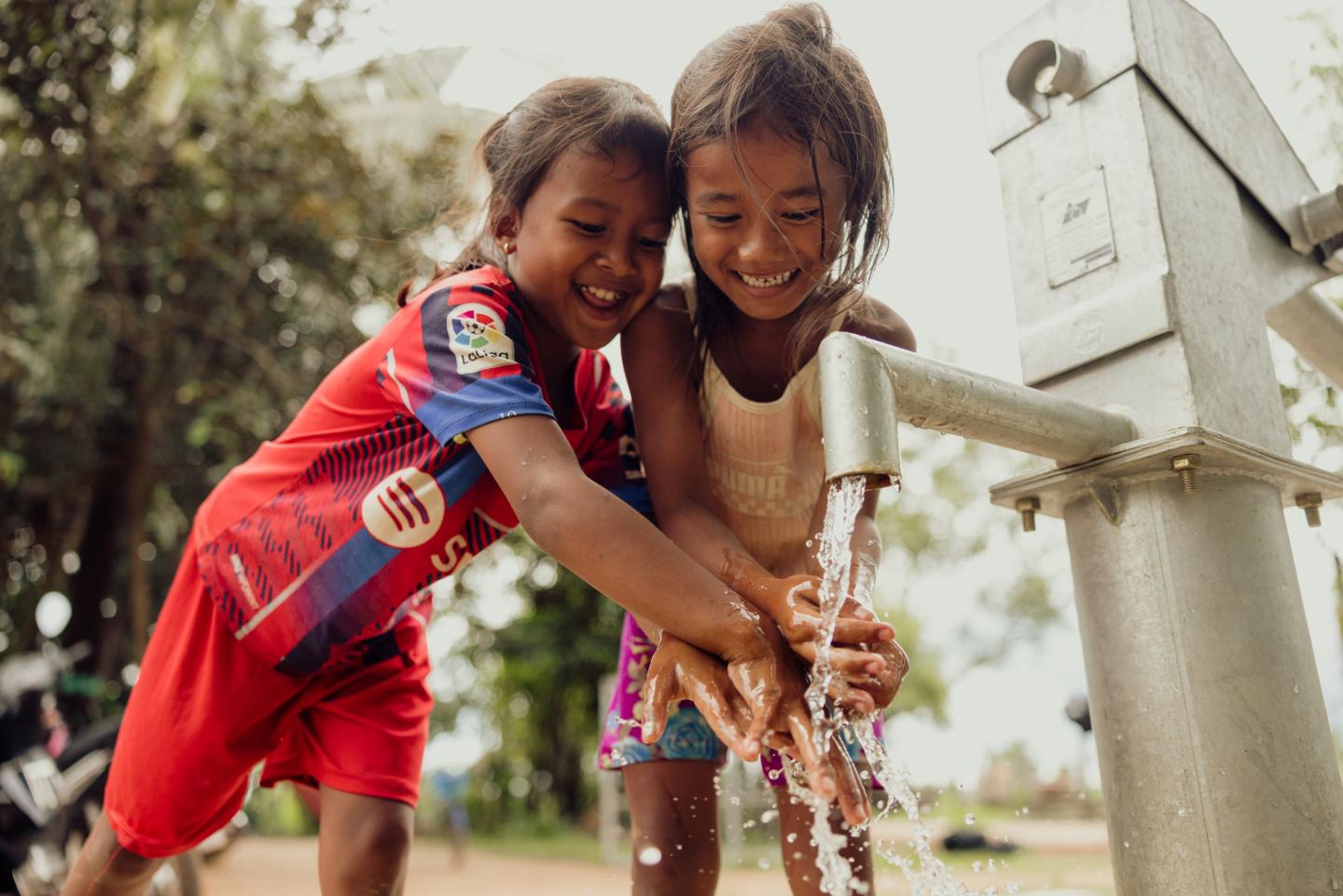
No water, no life
One of the most significant announcements was the launch of Water Forward, the World Bank’s ambition to extend water security to 1 billion people by 2030. As Ajay Banga, President of the World Bank stated,
“Water may seem basic, but it is human capital at its best.”
The urgency is undeniable. Every day around 1,000 children under five die from water related diseases and in schools, 646 million children remain without basic hygiene services. These are not marginal gaps but structural failures with lifelong consequences for learning, health and productivity.
A core innovation under Water Forward is the introduction of country‑owned Water Compacts, designed to align reform and investment across donors and financing partners. The real test will be whether Water Compacts consistently embed child‑centred outcomes particularly for schools, health facilities, and early childhood settings and whether implementation delivers for the communities where children are most at risk.
IDA’s scale is clear but visibility of children is still uneven
In a context of deteriorating child wellbeing, shrinking the Official Development Assistance (ODA), and escalating crises, the World Bank’s International Development Association (IDA) remains one of the most important instruments to end poverty on a liveable planet benefiting 1.9 billion people globally living in low-income countries.
Over the course of the week, I joined the Global IDA Forum highlighting World Vision’s support for IDA and raising calls for stronger focus on child wellbeing. At World Vision, we were encouraged to see IDA20 exceeding commitments on early childhood development and channelling close to 40 percent of resources to fragile and conflict affected contexts, where children’s needs are greatest.
Yet, gaps remain especially when it comes to investments in social sectors vital for children. In FY25, 37% of IDA allocations were channelled to infrastructure whilst 25% went to social sectors. I urged the Bank to further sharpen its focus on child centred investments nutrition, health, education, WASH, and social protection and to ensure age disaggregated monitoring and results so IDA’s impact on children is visible and strengthened.
The IDA discussions were reinforced by signals from IDA leadership, including Paschal Donohoe and Akihiko Nishio, who emphasised the importance of collaboration with NGOs and recognised the role of civil society in strengthening IDA’s effectiveness.
Human capital begins where systems currently fail to look
A standout moment was the Knowledge Café on Building Human Capital Where It Matters, grounded in the World Bank’s latest report. The findings are stark: human capital progress in many low and middle-income countries is stalling or reversing. One of the key statistics shared was that between 2010 and 2025, learning has declined in almost all low- and lower-middle-income countries.
I left reflecting on how this research, alongside the Bank’s work on human capital particularly its focus on children could be more systematically integrated into discussions on financing, crisis response, and reform and more consistently used to guide funding and policy decisions.
Where Are Children’s Voices?
Despite a compelling children’s art exhibition, children’s voices continue to be absent from the Spring Meetings, unlike in other multilateral forums such as UNGA, COP, and frameworks within UNICEF and WHO, where child participation is already institutionalised.
The Bank has a clear opportunity to move from aspiration to practice by piloting meaningful child participation, for instance through IDA consultations and development of Country Partnership Frameworks. Children bring insights adults often overlook; while the Bank has advanced youth engagement, children’s distinct priorities require safe, age appropriate, and structured participation mechanisms that reflect their rights and lived experiences.
Beyond Spring Meetings
While the 2026 Spring Meetings shone a spotlight on some key issues critical to children, there is more that should be done to ensure the World Bank’s global ambitions consistently translate into meaningful change for children. Upcoming global moments including the Fragility Forum, the World Bank Annual Meetings in Bangkok, and the IDA Midterm Review, offer important opportunities to strengthen this commitment..
Beyond global engagements (and perhaps most importantly), World Vision looks forward to engaging closely with the World Bank in Country Partnership Framework reviews and development of Country Compacts, working alongside the Bank, governments, and other partners to strengthen investments that deliver for children. Because investing in the next generation is not only right, but essential to ending poverty and building a more resilient future.
Sini Maria manages World Vision’s global relationship with the World Bank, advocating for a strong focus on children in the World Bank strategies, policies and financing. With 15 years in multilateral advocacy, she has influenced G7, UN and EU commitments and remains a strong voice for collective action to advance child wellbeing worldwide.
Subscribe to see more content like this
Related Resources

Prioritising Water to Unlock Human Capital

Why Financing for Development must reckon with children’s futures now.
