

The world isn’t running out of food, so why are children still going hungry?
Child hunger is driven by failing systems, not food shortages. Dr. Salmon Jacob, Regional Climate Change Adaptation Senior Advisor with World Vision East Asia argues that coordinated investment in resilient, locally rooted food systems is critical to prevent a generation from growing up hungry.
1 June 2026
It is an uncomfortable truth: the world is producing enough food, yet more children are going hungry. This is not a crisis of supply. It is a crisis of systems and of choices.
Globally, an estimated 1.05 billion tonnes of food, nearly 19% of all food available, is lost or wasted every year, equivalent to one billion meals discarded every single day. This stark imbalance reveals a deeper failure: food is not reaching those who need it most. Instead, inefficiencies, inequities, and unsustainable systems continue to deny millions of children their right to adequate nutrition.
Across Asia, the warning signs are impossible to ignore. Even under the good scale of food production, the World Food Programme’s Global Outlook Report 2026 estimates that 318 million people now face acute hunger worldwide; 38 million children under five years suffer from acute malnutrition; and nearly 12 million pregnant and breastfeeding women remain undernourished.
Asia bears the heaviest burden, hosting over half of the world’s stunted children. For millions of families, the daily calculation is no longer about nutrition or balance, but about survival, whether there is anything to eat at all. World Vision in East Asia, works with communities in some of the region’s most vulnerable contexts, and the pattern is clear: hunger today is not driven by a lack of food, but by structural inequalities, issues of affordability, and lack of resilience in the systems that are meant to deliver it.
Cascading effects of global shocks
The fragility of those systems is exposed by a convergence of global shocks. Conflict in West Asia has driven up energy prices and skewed fertiliser availability. The war in Ukraine also continues to disrupt fertiliser supply chains. These pressures cascade quickly into Southeast Asia, where many countries depend heavily on imported fuel and agricultural inputs. The result is a chain reaction. Farmers reduce fertiliser use because they cannot afford it. Yields fall. Transport costs rise. Food prices increase. What begins as a geopolitical disruption becomes a local crisis, felt most sharply by families already on the edge.
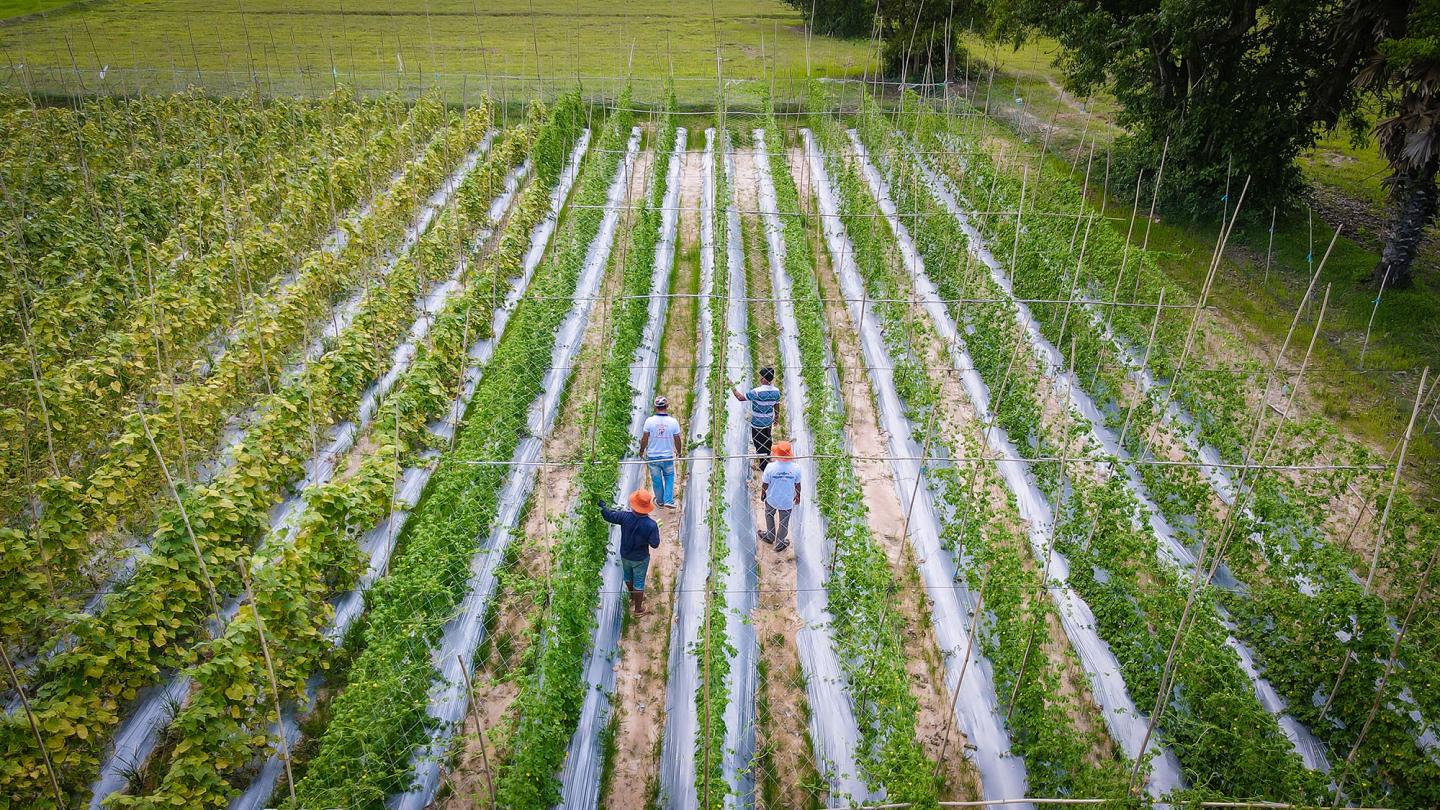
The current crisis is not limited to food grains and vegetables, but also seafood. In Thailand, for example, rising fuel prices have forced many small-scale fishing boats to remain docked. For coastal communities, this is not just an economic slowdown; it is a direct hit to food availability. Fish, a primary and affordable source of protein, becomes scarcer and more expensive. The impact does not stop there. Reduced fish supply affects fish meal production, pushing up the cost of poultry and aquaculture. Protein, in all its forms, moves further out of reach. It is children who absorb these shocks most acutely. At World Vision, we are seeing this firsthand across the region: meals shrinking, diets losing diversity, and the long-term consequences quietly taking hold; stunting, weakened immunity, reduced cognitive development. Hunger is not a momentary condition. It is a lifelong disadvantage.
Climate change is accelerating this trajectory. The anticipated El Niño threatens droughts and erratic rainfall across East Asia, where up to 85% of farmland depends on rain. In countries like Cambodia, Laos, Vietnam and Myanmar, even short disruptions can devastate harvests. Paradoxically, these same countries receive significant annual rainfall, yet without adequate systems to store and manage water, abundance and scarcity exist side by side. This is where the conversation must shift, from production to resilience.
Locally rooted resilience
Across East Asia, World Vision is working with communities to strengthen resilience in practical, locally rooted ways. In 2025 alone, tens of thousands of farmers across countries including Vietnam, Cambodia, Laos, Myanmar, Thailand, and Mongolia were trained on climate-smart agricultural practices, and integrated nutrient management that collectively stabilise food production. Many smallholder farmers are opting to produce organic fertilisers with local resources. This reduces reliance on volatile global supply chains while restoring soil health and ensuring stable crop produce.
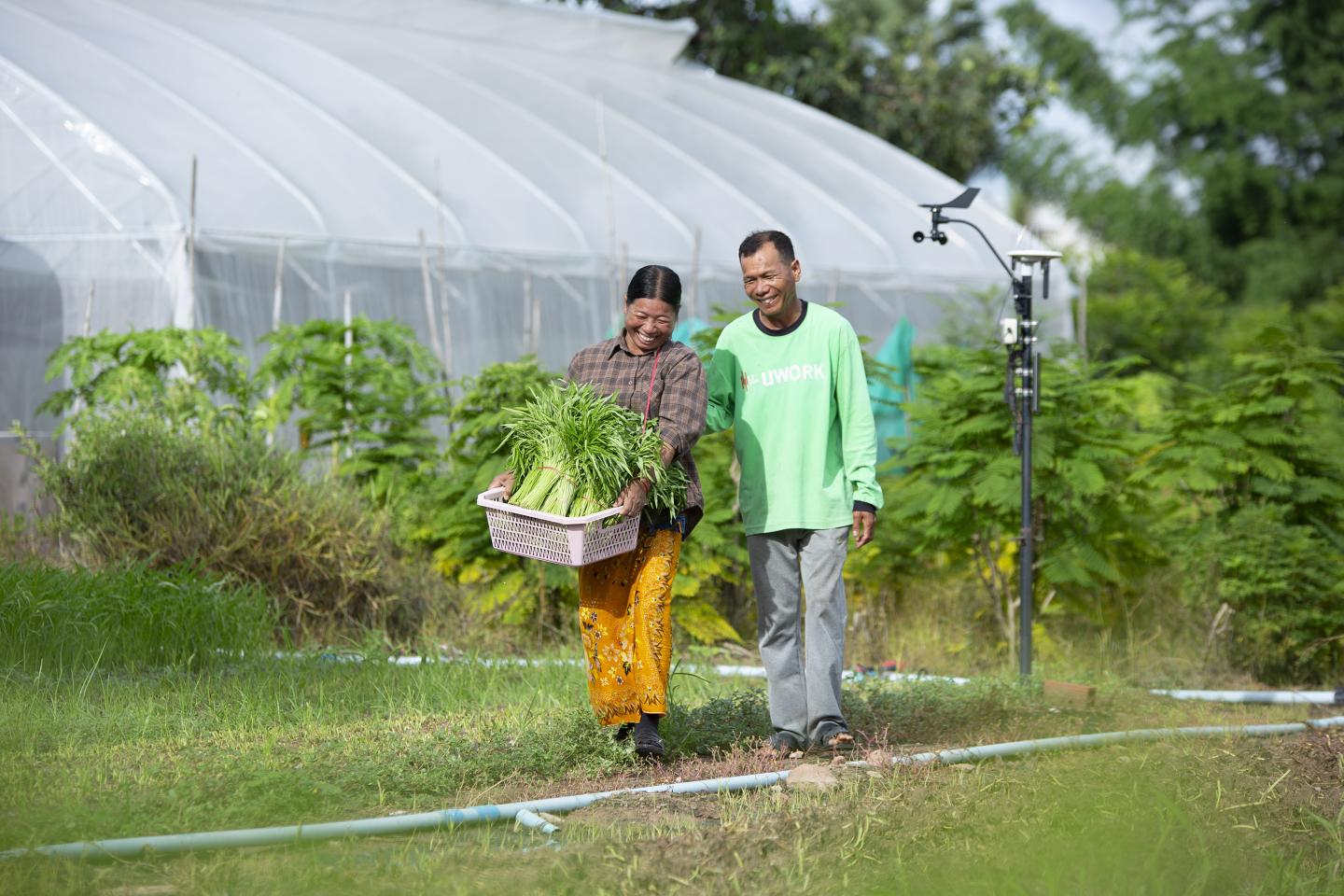
Water management is another critical frontier. Community-led rainwater harvesting and micro-irrigation systems are enabling farmers to withstand dry spells and extend growing seasons. These are not large-scale infrastructure projects, but they are transformative precisely because they are owned and sustained by communities themselves. There is also a need to rethink what we grow. Across mainland East Asia, crops like millets, long overlooked, offer a powerful solution. They require less water, withstand heat and erratic rainfall, and provide essential nutrients such as iron and calcium. For children at risk of malnutrition, these are not alternative crops; they are strategic ones.
At the same time, energy is emerging as a decisive factor in food security. High fuel costs are crippling both agriculture and fisheries. Scaling renewable energy, particularly solar, offers a pathway to reduce costs and increase stability. In Indonesia, solar-powered fishing initiatives are demonstrating how clean energy can sustain livelihoods while reducing dependence on diesel. In Vietnam, our partnership with WWF supporting over 50,000 fishers, shows how sustainability and productivity can go hand in hand. These are not isolated success stories. They point to a broader insight: resilience is not built through one intervention, but through connected systems -- food, water, energy, and livelihoods working together.
This is the approach World Vision is advancing across East Asia. We’ve moved beyond simply delivering aid to strengthening the systems around children. Because food security is not just about calories. It is about whether a child can grow, learn, and thrive in the face of uncertainty.
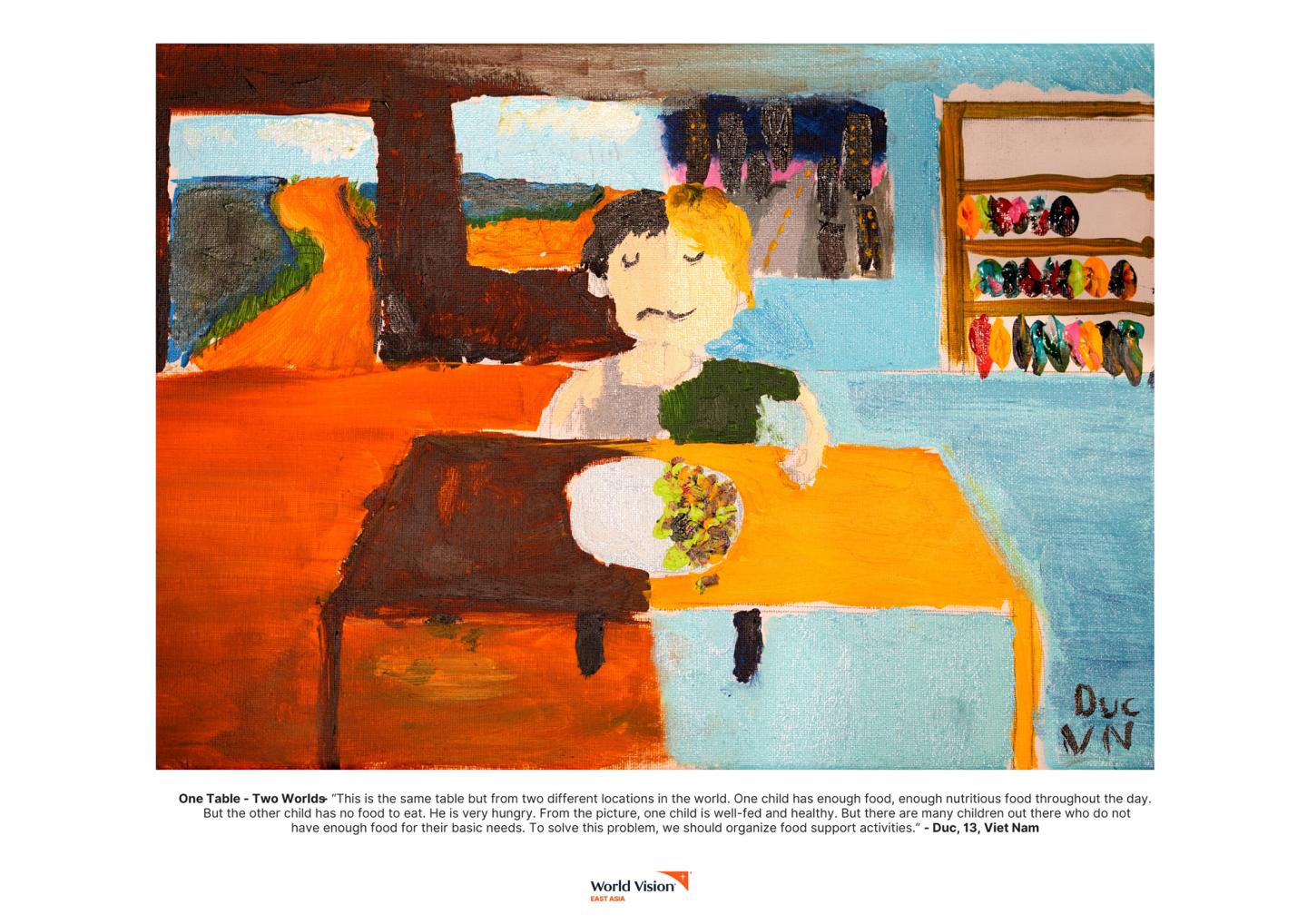
As Duc, 13, from Vietnam, shared at Young Minds Camp, a regional platform by World Vision East Asia connecting young voices with policymakers:
“It is the same table, but not the same reality, one child has enough food, the other has none.”
His words capture the stark inequality behind global food systems, where access, not availability, determines whether a child is well-nourished or left hungry.
There is another dimension that is often overlook. Children and young people are not only the most affected, they are also part of the solution. Duc himself calls for action, emphasising that “we should organise food support activities.”
Across communities, we are seeing young people engage in climate awareness, sustainable practices, and local innovation when given the opportunity. Investing in their agency is not symbolic; it is essential for long-term resilience.
A fundamental shift in food systems
This crisis demands more than incremental change. It calls for a fundamental shift in how we think about food systems in Asia, less vulnerable to global volatility, more rooted in local resilience. Governments have a critical role to play in enabling this transition through policy and investment. The private sector can accelerate innovation and scale. Civil society organisations bring the trust, access, and community partnerships needed to ensure solutions reach those who need them most.
The next three to five years will be decisive. Southeast Asia can choose to remain exposed to global shocks, or it can invest in systems that protect its most vulnerable, especially its children.
The world is not running out of food. But unless we act with urgency and intent, we risk running out of time to prevent a generation from growing up hungry. And that would not be a failure of resources, but of resolve.
About the Author
Dr. Salmon Jacob is the Regional Climate Change Adaptation Senior Advisor for World Vision East Asia, where he provides strategic leadership and technical guidance to strengthen climate action across the region. With more than 25 years of experience in environmental and climate change work, he brings deep expertise in climate change adaptation and mitigation, disaster risk reduction, ecosystem restoration, and environmental sustainability.
Dr. Jacob actively engages with regional and global networks, including Climate Action Network Southeast Asia and the Asia Pacific Adaptation Network, collaborating with governments, UN agencies, NGOs, and academic institutions to strengthen climate adaptation and resilience strategies across Asia.
Subscribe to see more content like this
Related Resources

Building Nutrition Systems Beyond Products

Building community resilience through climate-smart agriculture
