
From Struggle to Self-reliance - A Young Farmer’s Journey of Survival and Hope

By Sindile Mhlanga, Communications Intern
In a rural community under Mahlalini Area Programme in the Shiselweni Region of Eswatini, Philani Sibandze, a young high school graduate, carries responsibilities that define both his present and his future.
After completing high school, he returned home to a household dependent on him for survival. He lives with his grandmother, who is wheelchair bound and his younger brother, who is still in high school. With no formal employment opportunities available, Philani turned to agriculture as his only realistic means of livelihood. He began a small vegetable garden, initially relying on water drawn from a nearby river. What started as a basic attempt to provide food quickly transitioned into a demanding struggle for survival.
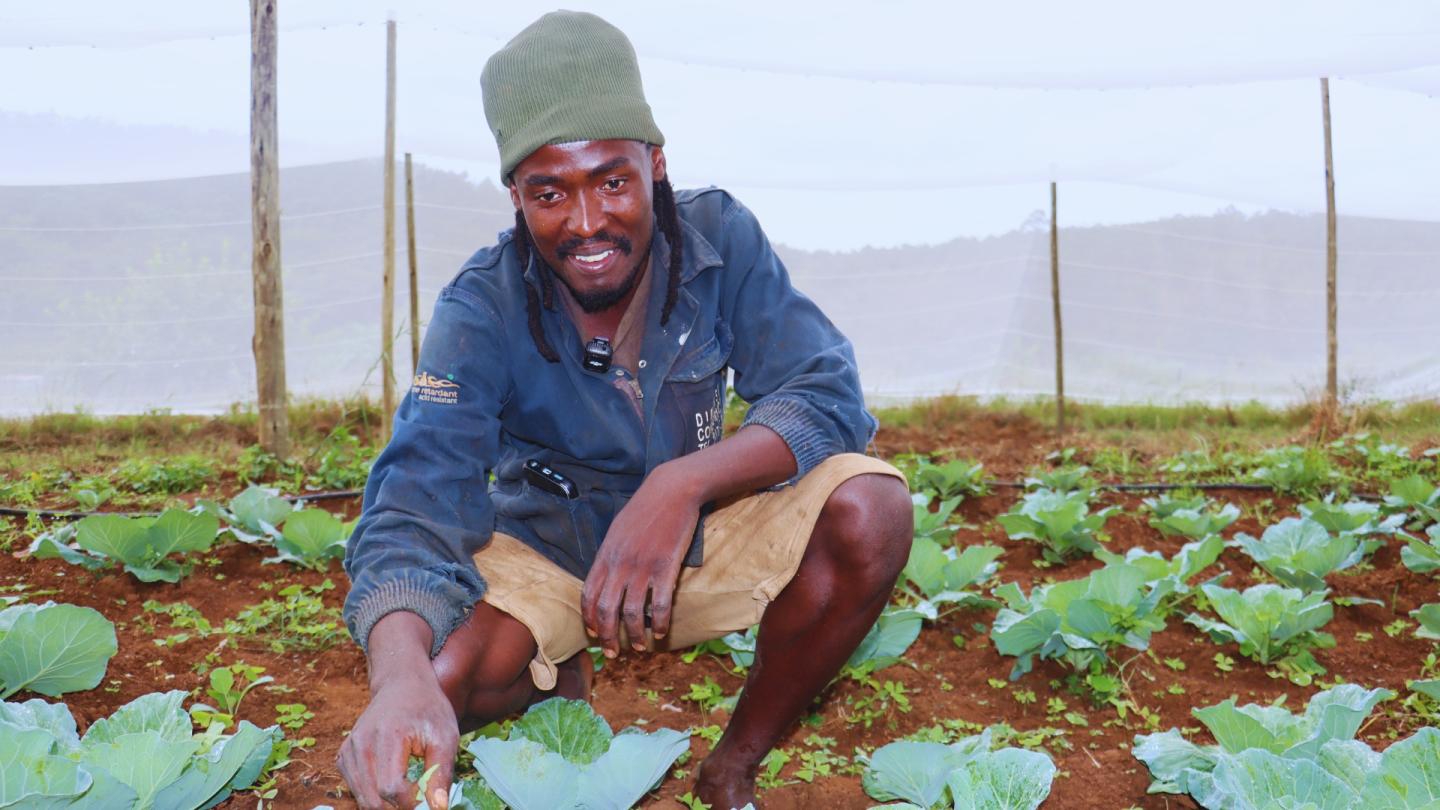
In the early stages, Philani faced constant threats. Without fencing, his crops were frequently eaten by livestock (cows) that wandered into his garden. Entire sections of vegetables would be eaten before harvest, resulting in repeated losses of both effort and potential income. This directly affected the household’s food supply and limited any possibility of earning from sales.
The harsh environmental conditions made survival even more difficult. Extended periods of extreme heat caused the soil to dry quickly, reducing crop yields and increasing the need for constant watering. These challenges made the sustainability of his livelihood uncertain. Despite these hardships, Philani persevered, driven by responsibility rather than choice.
Gradually, the garden began to slowly transform from a survival activity into a source of livelihood. It provided essential food for the household, reducing dependence on external assistance and ensuring that meals were available even during difficult periods. When production allowed, Philani sold vegetables at the local market, generating small but meaningful income that supported the family’s basic needs.
Although small, this income became an important part of household survival. It helped provide food and also allowed Philani to support his younger brother in small but significant ways. When means were possible, he would set aside small amounts, sometimes SZL5 or SZL10, which he gave to his brother. On better days, where weather conditions had worked in his favour, he was also able to provide clothing, ensuring that despite their circumstances, his brother’s dignity and needs were not completely neglected.
The garden also became a shared responsibility within the household. His younger brother, when not in school, assisted with watering and maintaining the crops. This shared effort not only reduced the workload but also strengthened family unity.
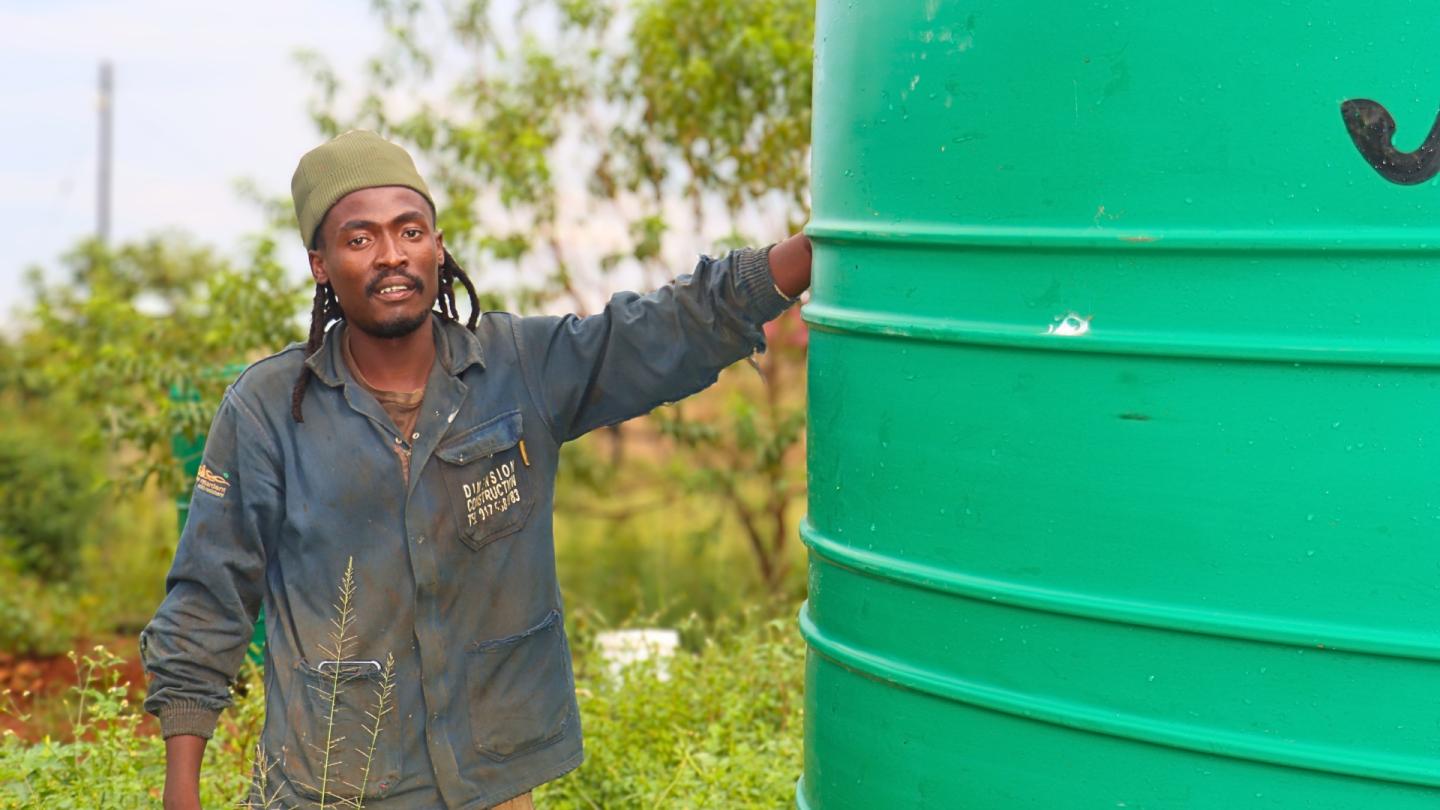
Over time, support from World Vision Eswatini brought even more meaningful change to Philani’s livelihood and that of his family.
Water tanks provided by World Vision significantly improved water security, allowing him to store water during periods of availability and use it during dry seasons. This reduced his dependence on the river and ensured more consistent crop production, even during drought conditions.
In addition, the fencing provided by the humanitarian organisation became a major turning point. It protected the garden from livestock, preventing destruction of crops and allowing Philani to harvest more consistently. This intervention directly improved productivity and restored confidence in his farming efforts.
Today, Philani’s vegetable farming has evolved into a more stable and sustainable livelihood. What began as a fragile attempt to survive has become a structured source of food security and income generation.
Through determination and targeted support, he has managed to build resilience in the face of hardship. His garden now contributes not only to daily meals but also to financial stability, support for his brother, and care for his grandmother. Philani’s journey reflects the power of livelihood strengthening interventions in rural communities, where small-scale farming, when supported, can transform survival into dignity, stability and hope for the future.