
When the Land Finally Answered

Before Tamiro, now five, learned to speak, the land in Gewane had already fallen silent. Season after season, no rain came, only wind and dust sweeping across fields that once fed families.
For families like Tamiro’s, life became a cycle of planting, praying, and watching the earth turn, not provide any food. “We planted seed after seed,” Tamiro’s mother, Hawa, recalls. “But nothing came up. Every time we hoped for rain, it was only more heat, more wind, more hunger,” said Hawa.
The drought in Afar has pushed many parents into impossible choices. With failed harvests and livestock losses, families lost their main sources of food and income. Children like Tamiro grew up knowing hunger as part of everyday life. Hawa remembers measuring food carefully each day to make sure her children had at least a small portion a day.
When the drought pushed families like Tamiro’s to the edge, support finally arrived. Through a drought-response project funded by FAO and implemented by World Vision Ethiopia, households in the hardest-hit areas, including Tamiro’s, received practical support designed for a changing climate: climate‑resilient crop seeds and a hands-on training on how to farm better.
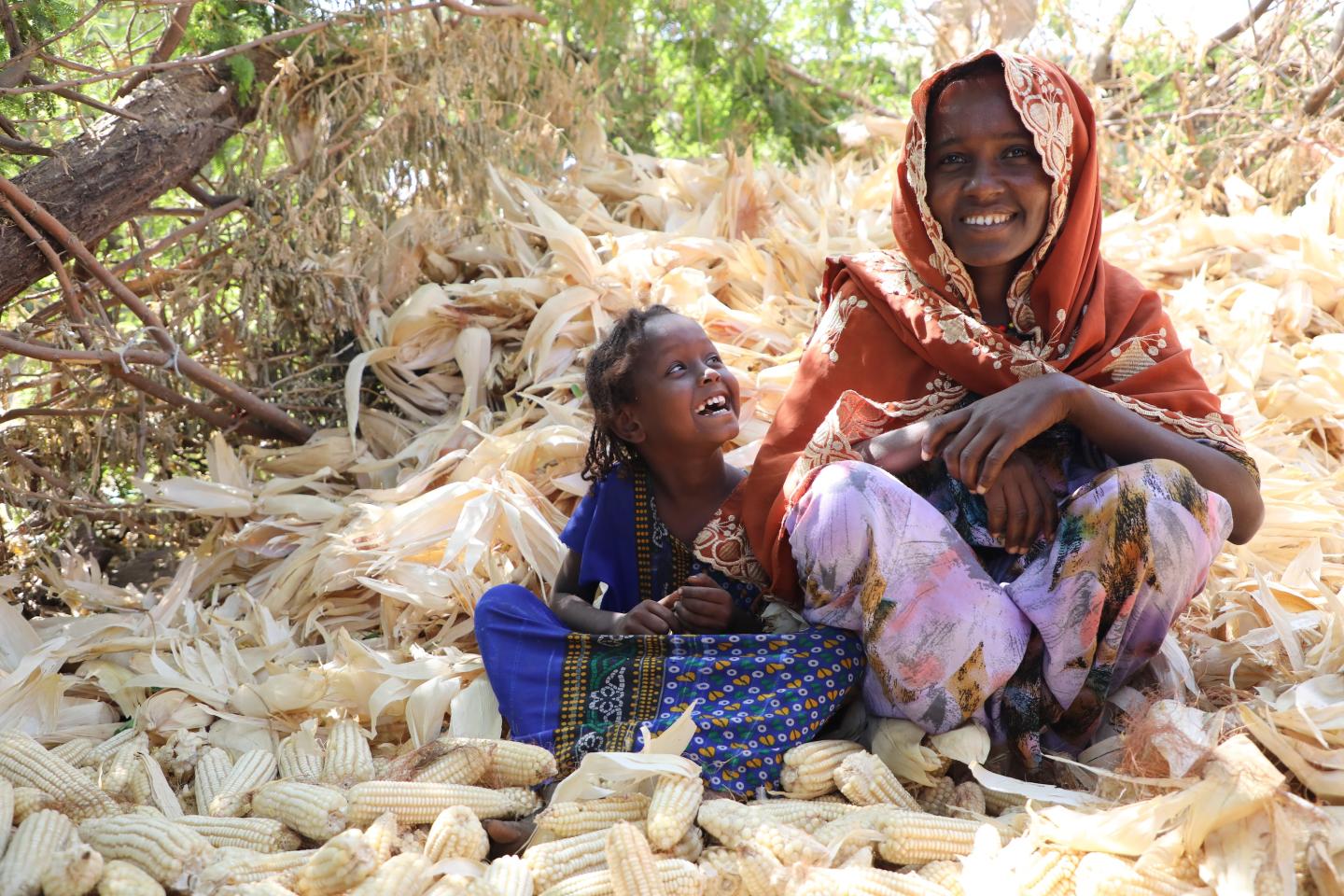
World Vision field staff moved from village to village, working closely with communities to help them understand not just what to plant, but how to farm differently in a changing climate. “The training helped us learn new ways to save moisture, prepare the soil, harvest properly and protect our seeds,” She said. For the family, the turning point came with a simple bag of improved drought‑tolerant maize seeds. She planted them with caution and made sure to take good care of the plants.
As the plants grew taller, so did the family’s hope of harvesting this time. With technical support and follow‑ups from the project team, the family learned how to protect the crop, space the plants, and store water more efficiently. Slowly, what had been a barren field transformed into rows of healthy maize swaying in the wind.
This time, the earth responded. Shoots of bright green broke through the soil where nothing had grown for years. Every morning, Tamiro ran outside to check on them. “She would shout, ‘Mama, they are growing!’” Hawa laughs, remembering those early weeks.
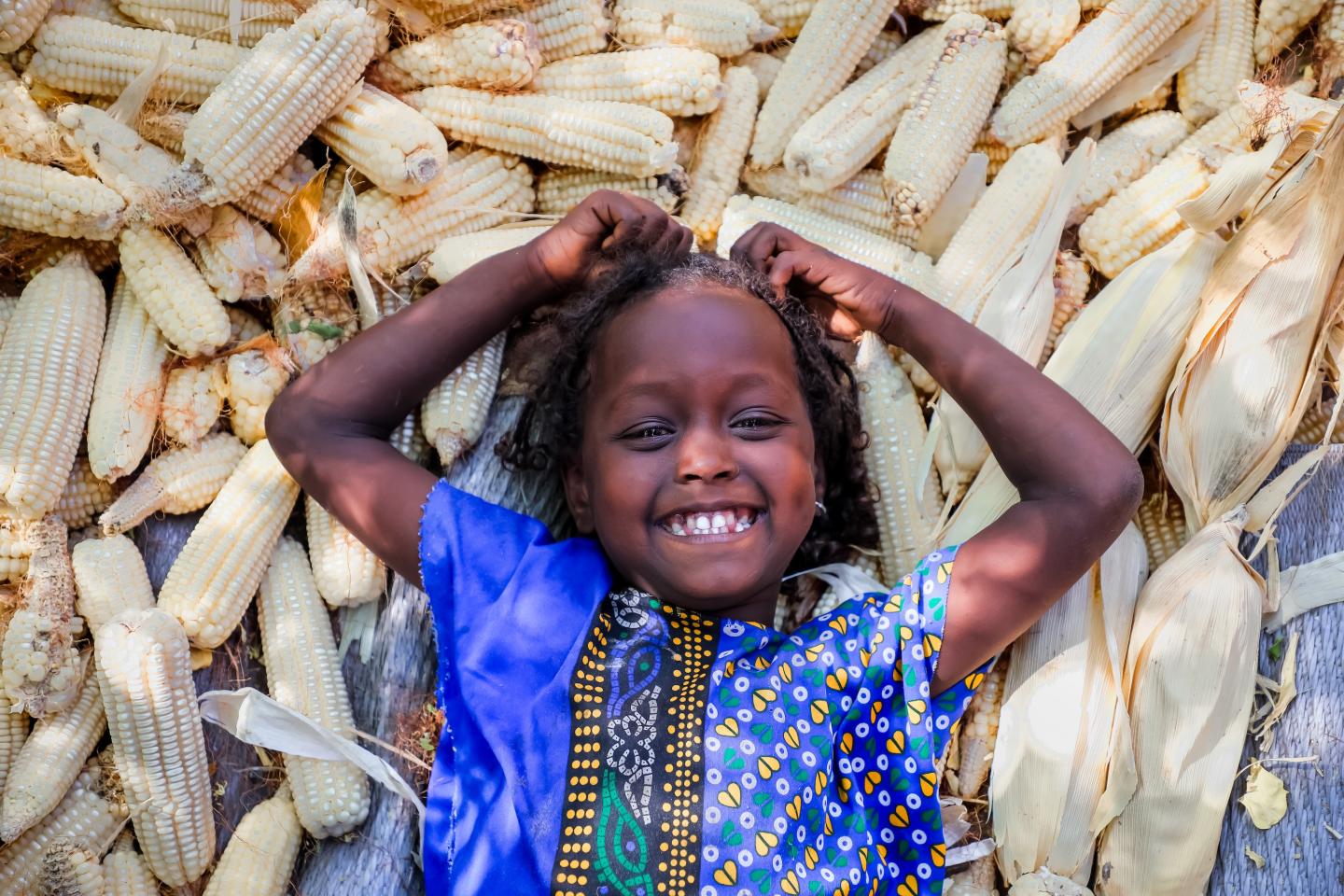
During harvest time, something extraordinary happened. The field that once held only dust now holds abundance. One afternoon, as the family began collecting their harvest, Tamiro, now five, lay right in the centre of the corn. She stretched her arms wide, smiling as corn spilled around her. “This is my treasure,” she said proudly. “We grew it!”
For the family, the harvest meant far more than just food. It meant dignity, stability, and reassurance that her children would go to sleep with full stomachs. “We have food again,” she says. “And we have hope again. That is the biggest change.”
Seeing how good the seed is, Hawa and her family have saved some for the next farming season, so they get to have this amazing harvest next time.
Tamiro’s story is not the only one. In just seven months, this drought-response project helped 2,920 households in Afar access climate-resilient seeds and farming support. Across Afar, Amhara, and Tigray, the project reached 15,917 households, distributing 4,636 quintals of improved crop seeds, almost 2 million sweet potato cuttings/ planting materials provided to 5,579 households, and 3,974 households received unconditional cash assistance amounting to 57.8 million ETB (US$397,400), helping families meet their most urgent needs while rebuilding their livelihoods.
By Bethel Shiferaw, Humanitarian Storytelling Specialist, World Vision Ethiopia