How World Vision helped Tseliso rebuild his life after Labour Exploitation

By Reentseng Phephetho, Communication and Digital Officer
In the heart of Maseru District lives Tseliso, a 41-year-old father who spent years doing whatever work he could find to provide for his family. Like many men facing limited opportunities, Tseliso turned to informal work, hoping it would help him meet his family’s daily needs.
For a long time, Tseliso worked for Nigerian men who appeared to have established families and businesses in Lesotho. His job involved removing car filters—sometimes without the consent of vehicle owners, and at other times by persuading clients that their filters needed replacing.
“I knew the work was not right, but hunger leaves you with very few choices,” Tseliso shared quietly.
Payment was irregular and based on the number of cars serviced each day. On good days, Tseliso could earn as much as M1,500, enough to help his family survive. The removed car filters were collected and later transported to South Africa, though Tseliso never fully understood the business behind it.
In 2022, everything changed. Tseliso and his colleagues were informed that the business was relocating to Durban, South Africa, and that they should prepare to move. Despite not having a passport, Tseliso travelled with the group, driven by the hope that the work would continue and his family would be supported.
“When you are responsible for a family, you follow work—even when fear is knocking,” he said. In Durban, they were accommodated in the same yard and continued working as usual. However, at the end of the month, they were not paid, with no explanation. One month became two, then three, and eventually six months passed without any salary.
Still, they continued working.
“We kept hoping the money would come. We didn’t want to lose the little chance we thought we had,” Tseliso recalled. Instead of paying them, the very men who employed them reported Tseliso and his colleagues to the police for living in South Africa without passports. Tseliso was arrested and detained for two months before being deported through Qacha's Nek border by the police.
“That was the lowest point of my life,” he said. “I was punished for trusting people who had already taken everything from me.”
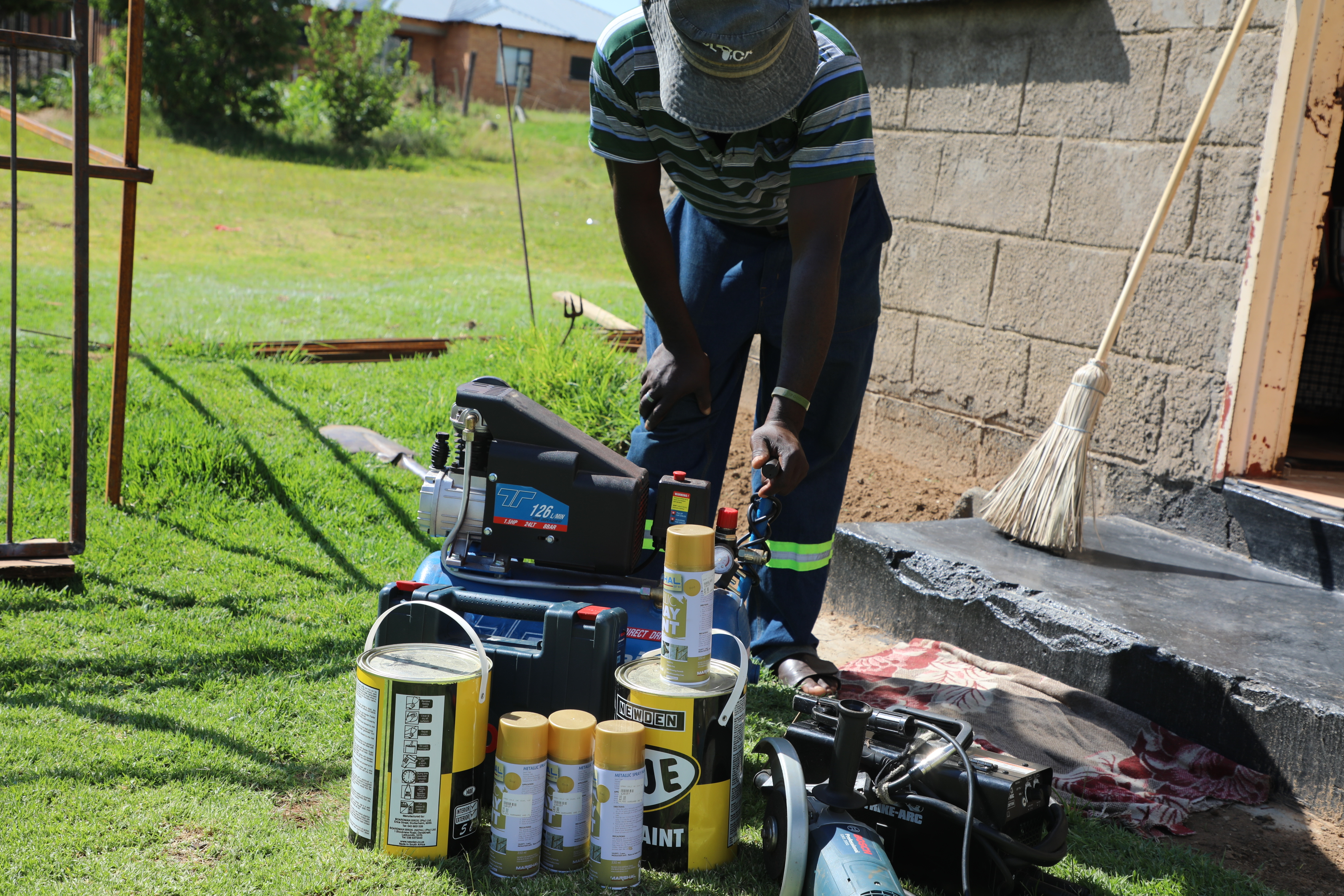
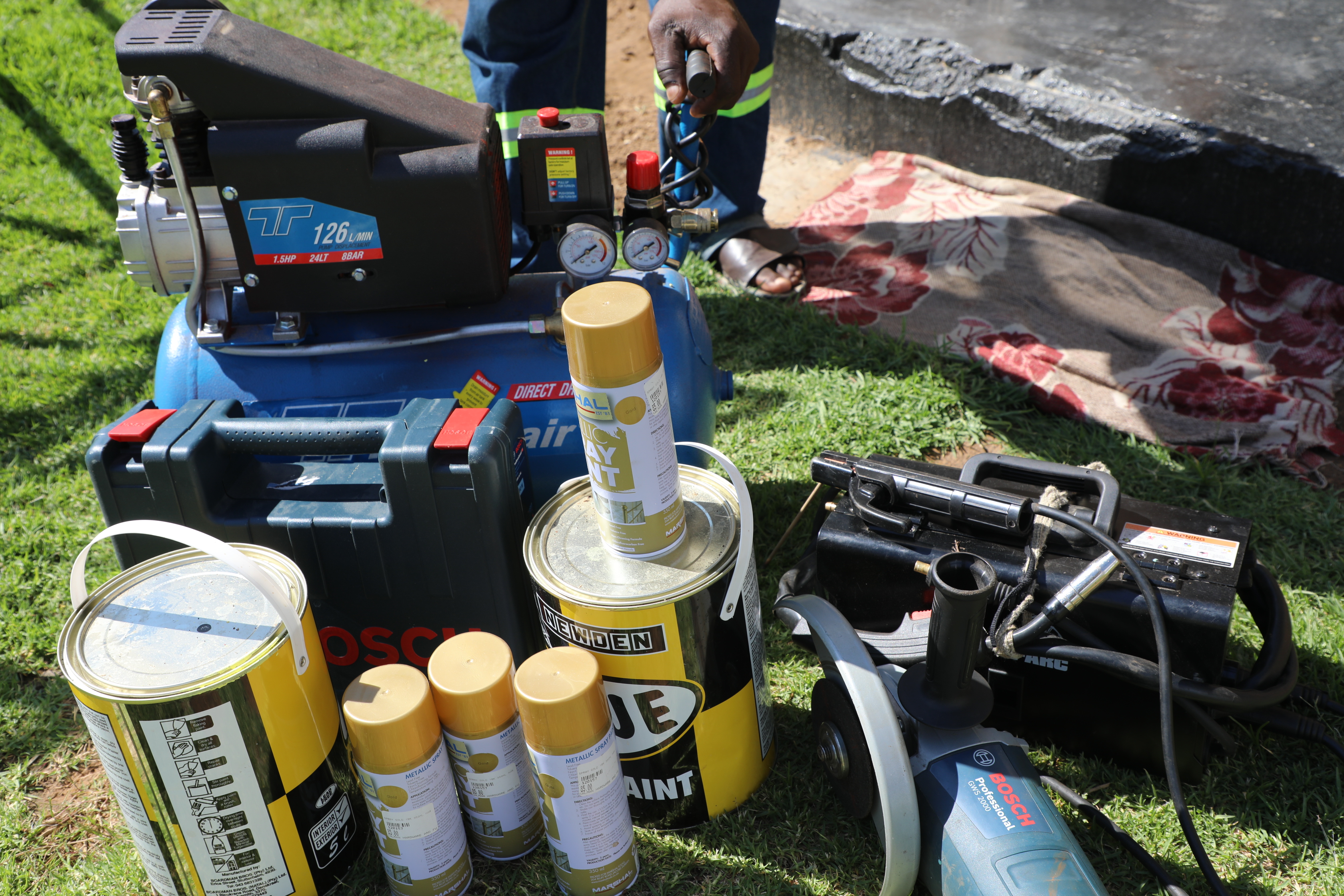
Tseliso and his equipment he received from World Vision Lesotho
Upon returning to Lesotho, Tseliso reported his experience to the Migrant Workers Association of Lesotho, an organization that supports victims of trafficking and labour exploitation. He received guidance and was referred to World Vision Lesotho through the Promotion and Protection of Human Rights (PPHR) project, funded by the European Union.
Through the project, Tseliso received welding equipment in December 2025, including a grinder, welder, compressor, steel paint, and spray paint—tools that allowed him to start a business of his own. “When I received the equipment, I felt like my life was starting again,” Tseliso said with relief.
The impact was immediate. Tseliso now serves clients daily, earning a stable income. In less than a month, he managed to replace two dilapidated doors in his home and continues to provide food and clothing for his family.
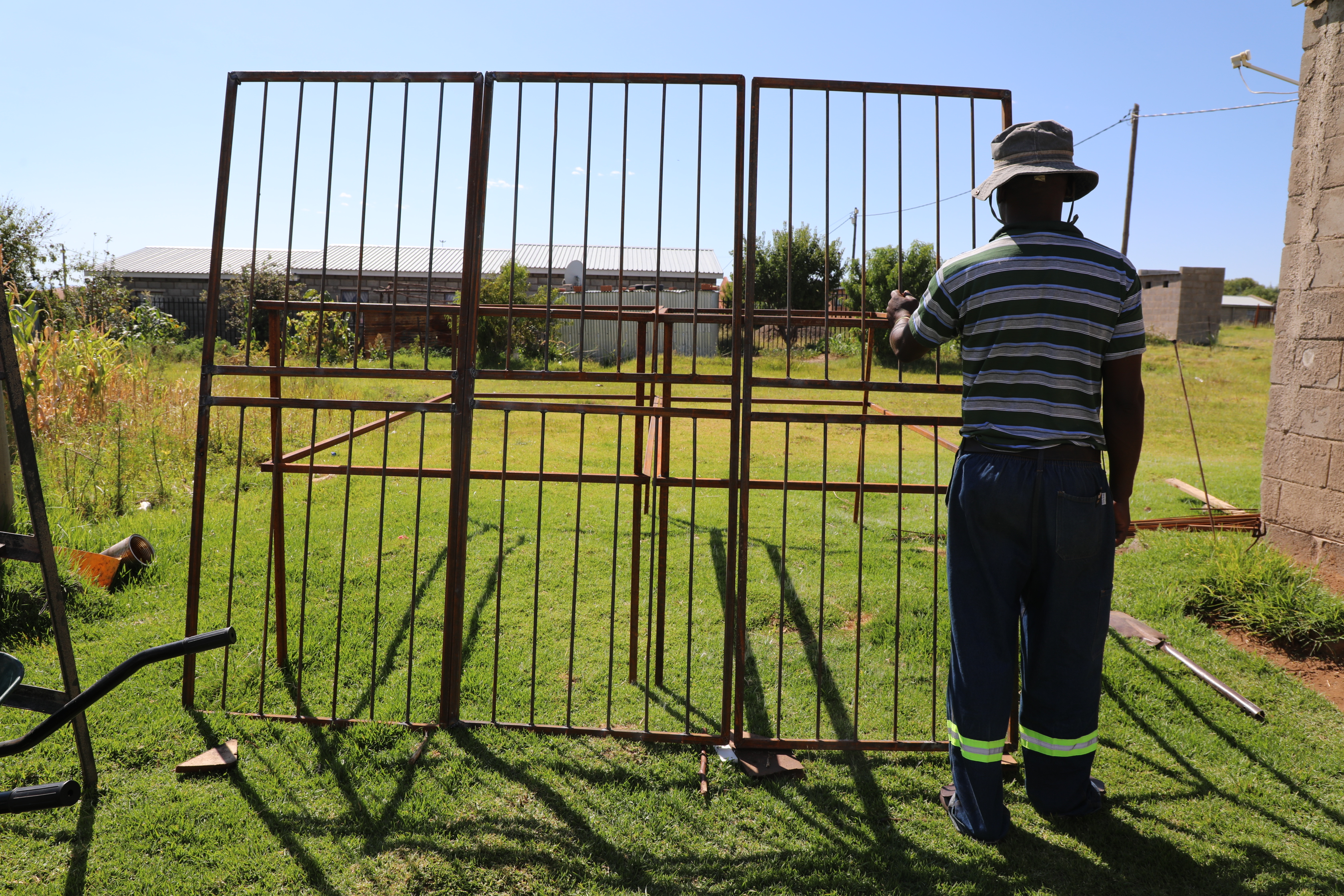
Tseliso showcasing steel products he made from his business
“My children now see their father working with pride,” he said. “This business has given us dignity.”
Beyond meeting his family’s basic needs, Tseliso dreams of growing his welding business. His goal is to purchase a business vehicle so he can take his services directly to clients and expand his reach.
Tseliso’s story highlights how labour exploitation and trafficking can hide behind informal work and cross-border opportunities—and how skills-based livelihood support can restore hope, independence, and human dignity.
“I don’t want to depend on anyone again,” he said firmly. “I want to build something that no one can take away from me.”