
World Vision Malawi Engages Stakeholders on School Meals

For many children in Malawi, school day begins with a difficult reality of trying to learn on an empty stomach.
While classrooms are meant to be places where children discover their potential, hunger continues to stand in the way of learning for thousands of learners who attend school without the support of a daily meal. Currently, school feeding programmes reach about 40 percent of school-going children in Malawi, leaving many learners without access to nutritious meals that can help them concentrate and stay in school and complete their education.
For World Vision Malawi, ending child hunger requires more than short-term interventions. It requires long-term partnerships, investment and collective action from all sectors of society.

This is the focus of the ENOUGH Campaign, a global World Vision initiative that seeks to mobilise action to end child hunger and malnutrition. In Malawi, the campaign is bringing together government, communities, development partners and the private sector to identify sustainable solutions that ensure children have enough nutritious food to grow, learn and thrive.
As part of these efforts, World Vision Malawi recently organised a high-level private sector engagement on school feeding in Blantyre after a similar successful engagement was held in Lilongwe where stakeholders also discussed how the private sector can contribute towards expanding access to school meals.
Speaking during the event, Minister of Education, Science and Technology Bright Msaka said expanding school feeding requires collaboration because government alone cannot meet the financial demands.
“As of now, we are feeding roughly 40 percent of school-going children, and that is not good enough because those who are not being fed do not benefit from all the advantages of school feeding. Government alone cannot do it, but with the support of the private sector, it is achievable,” said Msaka.

The Minister continued to say hunger affects children’s ability to participate effectively in learning and can contribute to repetition and dropout rates.
“When children repeat, it costs the government money. Instead of a child finishing primary school in eight years, they end up finishing in 10 or 12 years, which is extremely costly. They end up finishing primary school when they are grown up and especially for girls, they decide to get married and not proceed to secondary school,” said Msaka.
Studies have shown that school feeding programmes have demonstrated that providing children with meals can improve attendance, retention and participation in class. However, expanding these programmes to reach every learner requires support beyond government resources.
World Vision Malawi Board Chairperson Alfred Kaponda said the private sector has an important role to play in helping Malawi close the school feeding gap.
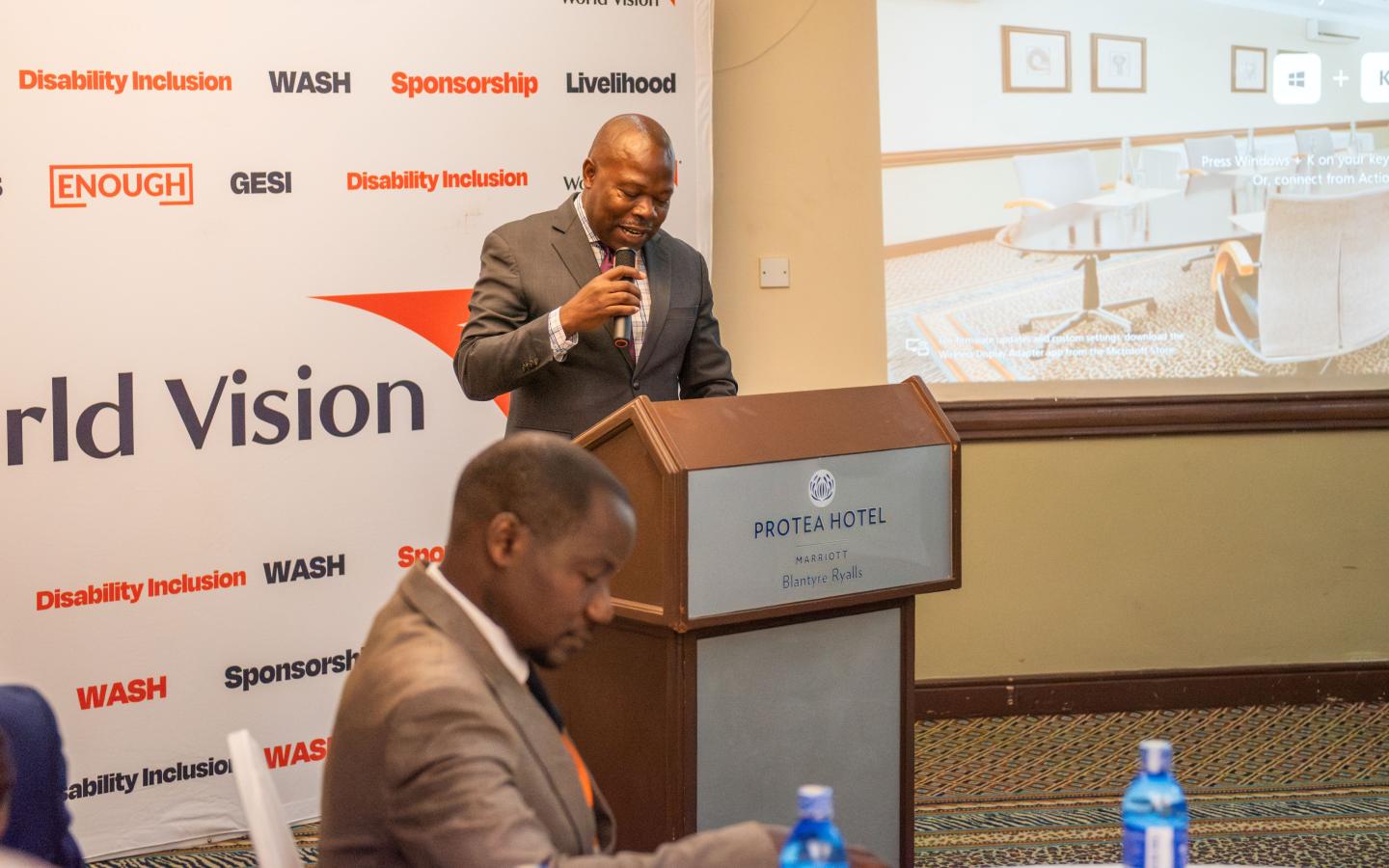
He said businesses should view investment in school feeding as an investment in the country’s future workforce and economic development.
“We want to partner with the government to escalate from where we are currently to 100 percent by 2030. We are requesting partners from industry to ensure they improve the learning environment for the future employees of their very own businesses,” said Kaponda.
In her remarks , Malawi Confederation of Chambers of Commerce and Industry (MCCCI)’s Dr Leanne Moyo, who is also Managing Director for Vanguard Life said businesses have opportunities to support initiatives that improve communities.

“Most companies in the private sector have Corporate Social Responsibility programmes where they can make donations and facilitate funding. We believe we are well-equipped for such partnerships,” said Moyo.
The engagement marked an important step towards building stronger partnerships to address child hunger and improve education outcomes.
The engagement comes at a time when Malawi requires an estimated K400 billion to achieve universal school feeding coverage by 2030. Through the ENOUGH Campaign, World Vision Malawi continues to call for collective action to ensure that no child’s education is limited by hunger