
Beyond Relief: Why Protecting Girls Matters in Humanitarian Response?

When a humanitarian crisis strikes, the most immediate needs are clear: food, safe drinking water, shelter and livelihoods. These are life-saving kits, essential to help families survive the devastating impact of disasters. Yet there is another crisis that often goes unseen.
As poverty deepens and families exhaust their coping mechanisms, protection risks also increase, particularly for children and adolescents. Girls become more vulnerable to several forms of violence, child marriage, school dropout, and other mechanisms of exploitation that threaten not only their safety but also their future.
This is why humanitarian response is about far more than providing food, restoring access to clean water or rebuilding homes. Protection saves lives too. It creates opportunities for children and adolescents to understand their rights, recognise situations of risk, seek help and make informed decisions that safeguard their future.
World Vision integrated a Protection component into its Emergency Flood Response in Mozambique project, implemented in the districts of Guija and Mabalane. While Food Security interventions helped families recover from the crisis, Water, Sanitation and Hygiene (WASH) activities reduced the risk of disease, and shelter assistance restored safety and dignity to affected households, Safe Spaces and Girls' Clubs focused on protecting something equally vital: the rights, safety and future of children and adolescents.
Within these safe spaces, girls learn about equality, sexual and reproductive health and rights, prevention of violence against women and girls, life skills, leadership and reporting mechanisms. Just as importantly, they are given a safe environment where they can ask questions, share experiences and build the confidence to speak up.
It was here that 13-year-old Shelsea first learned about her rights.
Before joining the Girls' Club, she had never heard about violence against women and girls or how to respond to situations of abuse. Today, having completed the training, she speaks with the confidence of someone who has discovered that knowledge can also be a powerful form of protection.
"Today I have the knowledge to protect myself and the courage to act whenever my rights are violated."
Shelsea's words reflect a transformation that extends far beyond the training sessions. Over several months, she gained the knowledge and confidence to recognise risks, protect herself and support other girls in her community.
"Now we know what to do when our rights are violated. We will not stand by and allow other girls to suffer in silence."
Shelsea is one of nearly 120 girls who graduated from the Girls' Clubs across Guija and Mabalane districts. The graduation ceremony marked not only the completion of a learning journey but also the beginning of a new responsibility. The graduates are returning to their communities equipped to share their knowledge, raise awareness of girls' rights and inspire other adolescents to protect themselves and speak out against violence.
Shelsea's story demonstrates that, in humanitarian settings, protection is more than preventing harm. It is about equipping girls and young women with the knowledge, confidence and opportunities they need to make safer choices and build a brighter future. When an adolescent girl understands her rights, she is better able to recognise risks, seek support and become an active advocate for preventing violence within her community.
This is the transformation the Girls' Clubs seek to achieve: turning ignorance into knowledge, fear into confidence, and silence into a voice for change.
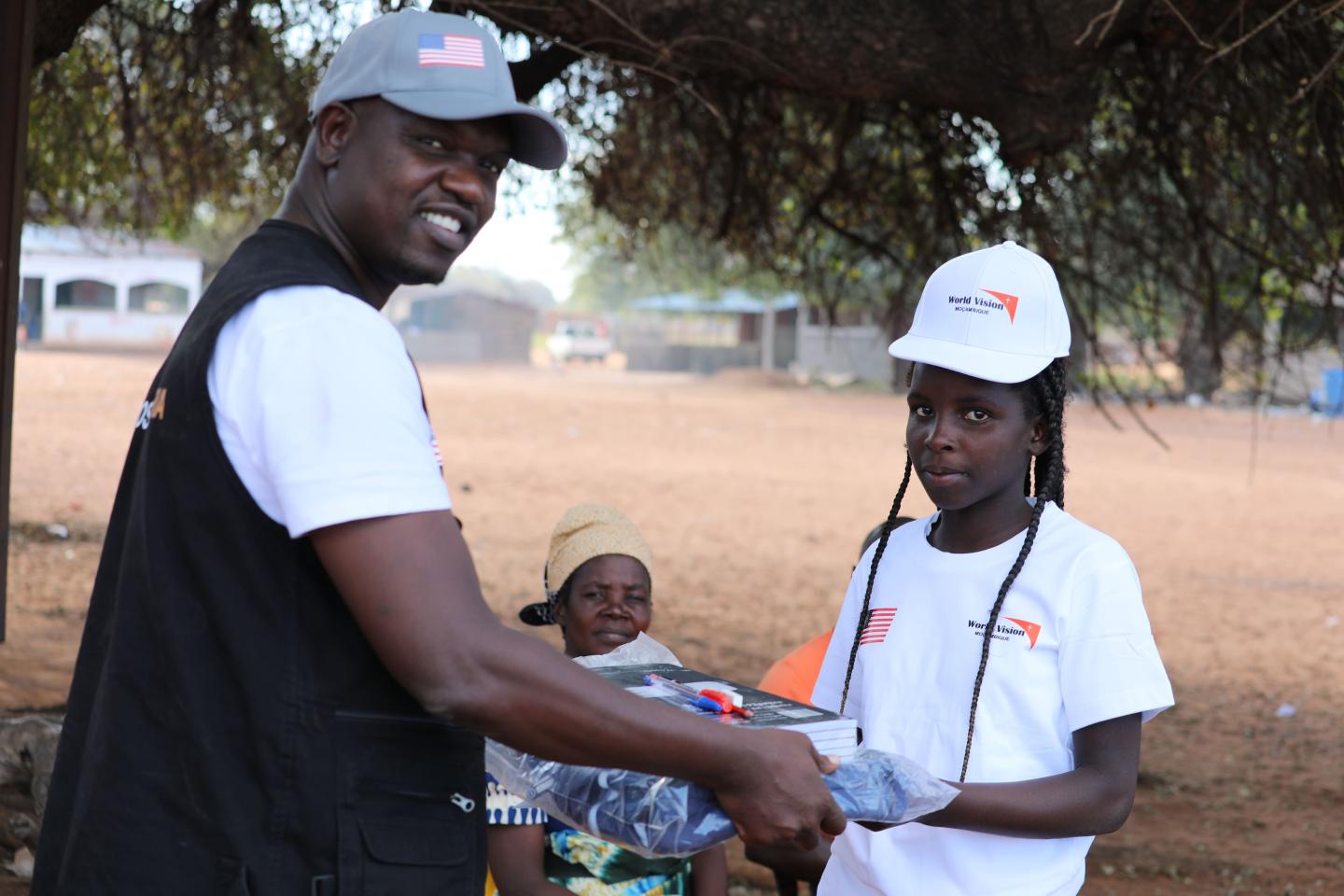
These skills, today mastered by Shelsea and the other 120 girls, are possible thanks to the support from the United States government which is funding the Emergency Flood Response in Mozambique in Gaza Province. Through an integrated approach, the project supported crisis-affected communities with interventions in Protection, Food Security, Water, Sanitation and Hygiene (WASH), and Shelter, helping families recover with greater safety, dignity and resilience.