
A Matter of Minutes: How a World Vision International Nepal Staff Member’s Family Survived the Nepal Flash Floods

When the Nepal flash floods struck on August 26, torrents of mud, water, and debris transformed peaceful riverside communities into scenes of devastation within minutes in one of the hardest hit communities; Bidhur Municipality-5 of Nuwakot .As Jiban, a World Vision International Nepal staff member based in Rautahat, began his work early that morning, his family was facing a life-threatening disaster hundreds of kilometres away. For his wife, Laxmi, and their family, the flood became a terrifying fight for survival.
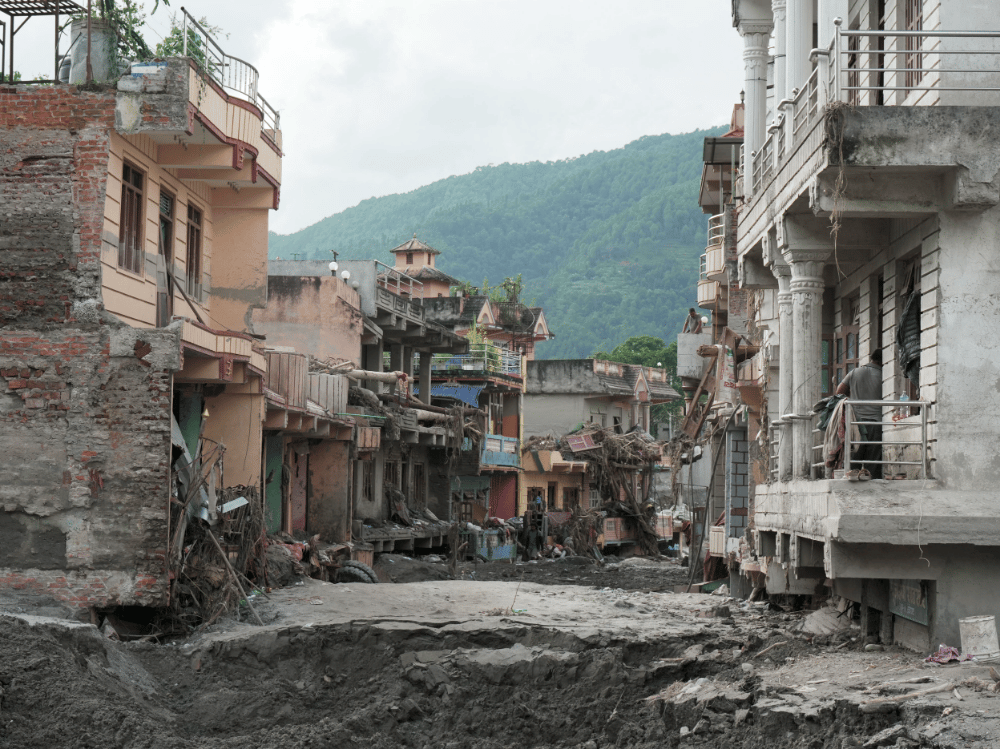
On the morning of the disaster, Laxmi was preparing to ride her scooter to Chandeshwari Secondary School in Tupche, where she was scheduled to facilitate a life skills session for adolescent girls. She was about to leave at around 8:45 a.m. when her father, a teacher himself, asked her to wait for five to ten minutes so he could finish his meal and ride with her.
Those few minutes became the difference between life and death.
Reflecting on the experience, Laxmi said, “I guess it was not my time, it was written for me to live.”
After dropping off her father, Laxmi continued her journey and reached the Dhunge area near the Trishuli River bridge. Suddenly, she saw a massive wall of dark water, mud, and debris rushing toward the road like a mountain. Motorcycles ahead of her were swept over by the powerful surge.
Acting on instinct, she immediately turned her scooter around and sped away from the rising floodwaters. Had she left home just ten minutes earlier, she would likely have been caught directly in the flood.Still shaken, Laxmi rushed to her 11-year-old son's school. When she arrived, the school administration was unaware of the disaster unfolding nearby. She quickly informed the principal about the flood and urged the school to evacuate the students. After ensuring her son’s safety, she moved her family to a safer location near Pipaltar., Nuwakot.
“I couldn’t sleep for two nights,” Laxmi recalled. “Every time I close my eyes, that mountain of water appears right in front of me.”
For countless nights since the flash floods hit, she battled fear, panic, and sleeplessness as the memories of the flood replayed in her mind.
Miles away in Rautahat, Jiban was at office. Suddenly Jiban’s phone rang some minutes after the disaster. It was Laxmi, breathless and panicked. Before he could process her words, the phone line went dead off.
Unable to contact his family or confirm their safety, Jiban was overwhelmed by uncertainty.
"Being away from home for work is one thing. But being away from your family during a crisis is a different kind of pain," Jiban shared.
The news took a severe emotional and physical toll on him. His blood pressure rose to 170/110, requiring medical attention. Meanwhile, back in Nuwakot he got the news that his family home, built through his father's hard work and dedication, had been inundated with mud and debris, through the ground floor and seemed uninhabitable now.
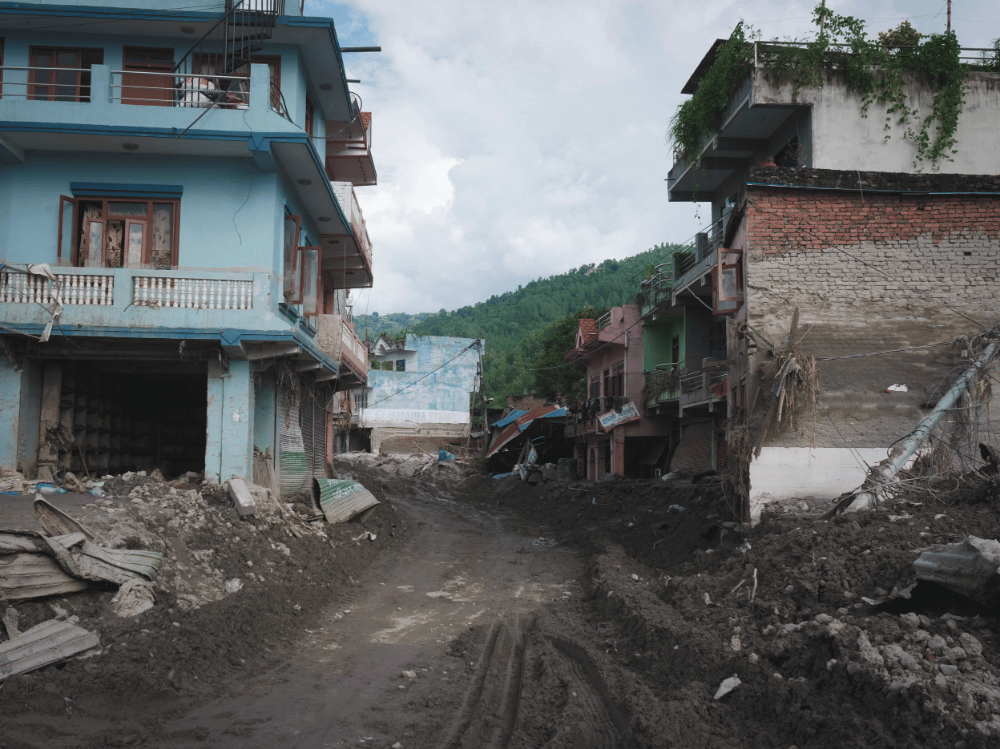
On 31 August, five days after the flood, Jiban returned to Nuwakot to see his family, home, and community for the first time since the disaster. Damaged roads had initially prevented him from travelling home, but with vehicle and logistics arrangement from WVI Nepal office, he was finally able to make the journey from Rautahat. Although he had remained in regular contact with his family and had seen images of the destruction through news reports and social media, he was unprepared for the reality of seeing it in person.
“I had already seen the impact through the news and social media, but seeing the damage to my home and community with my own eyes was deeply overwhelming,” Jiban recalled.
As he walked through Devighat, familiar places had become almost unrecognisable. Homes had been buried or damaged, the bridge connecting communities had been washed away, and the old marketplace where generations had gathered was devastated. The shops he once visited, the school he attended, the places where he played and learned to ride a bicycle, and the streets where the community celebrated jatras now bore the scars of the flood.
“This was the place where we played, spent time together, learned to ride bicycles, and celebrated our festivals,” he said. “To see everything washed away on such a massive scale is something I cannot put into words.”
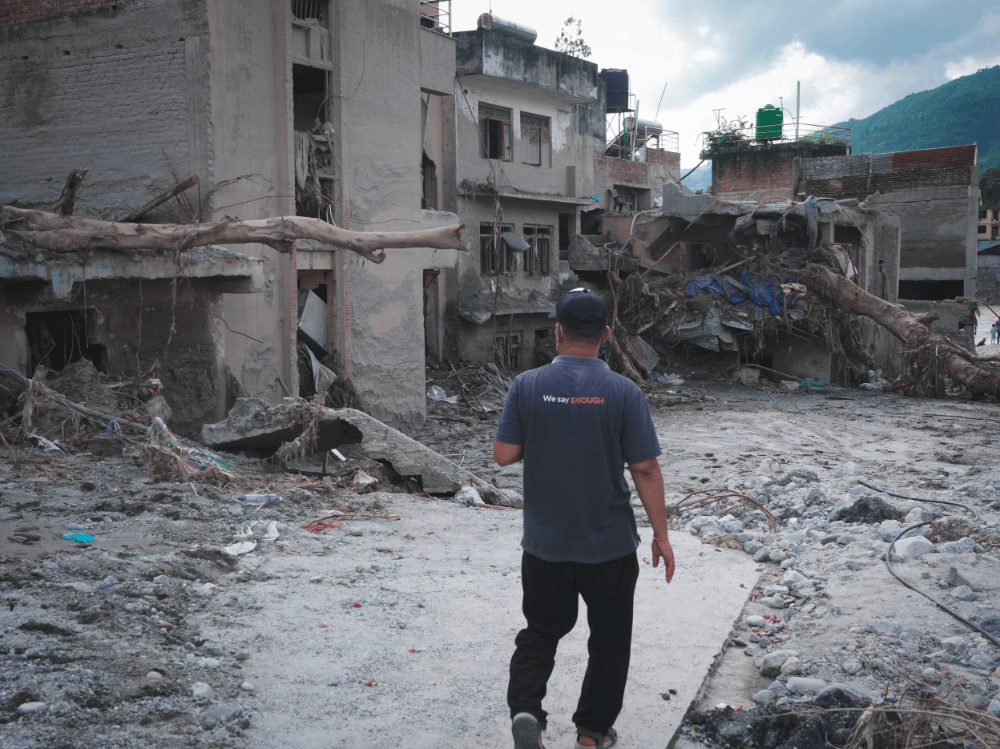
When Jiban finally reached his family home, he found that mud had entered the ground floor. From the outside, the house appeared to have sustained less damage than some of the surrounding buildings, but he knew that a technical assessment would be needed before the family could know whether it was safe to return. Yet for Jiban, the loss extended far beyond his own home. Nearly every house in the marketplace had been affected, transforming a community once known for its shops, celebrations, and daily gatherings.
“It is not only my home that has been affected,” Jiban said. “Our entire community and marketplace, once so lively and filled with celebrations, festivals, and gatherings, has been devastated. I keep wondering whether the community we once knew can ever be restored and, if we rebuild, how we will begin.”
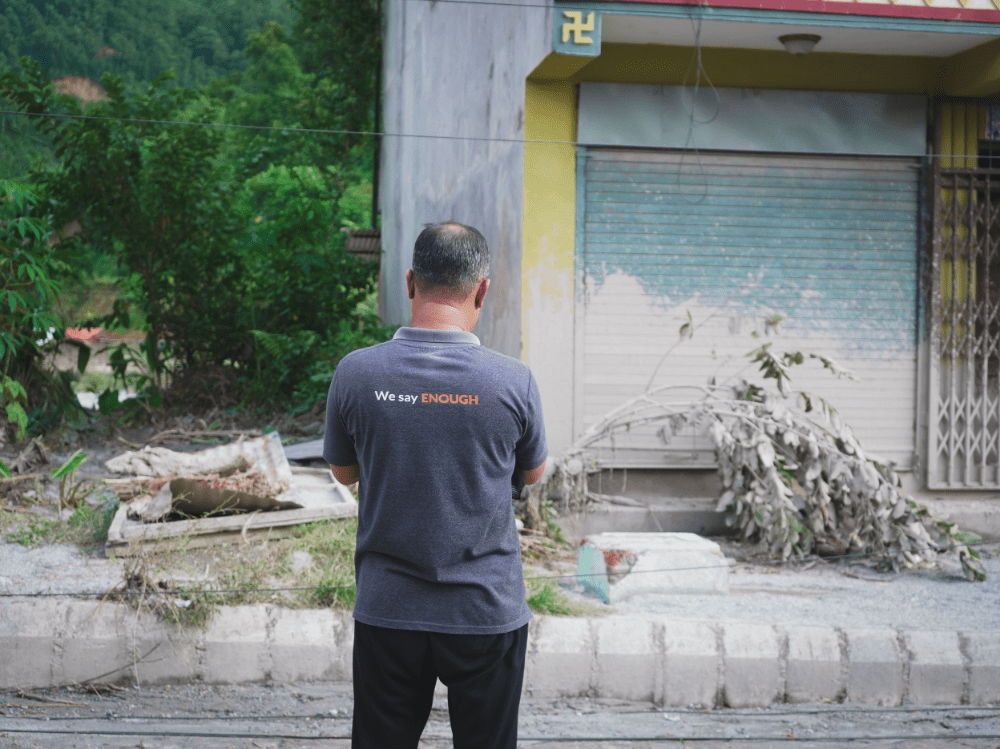
After walking through the affected area, Jiban travelled to his uncle’s home, where Laxmi, their son, and his parents were staying. His son followed his journey by phone, repeatedly asking, “Baba, where have you reached? How much longer will it take?” For Jiban, being reunited with his family offered a moment of relief after days of uncertainty.
“Being away from home for work is one thing, but being separated from your family during a crisis brings a different kind of pain,” he reflected. “Seeing them again made me feel lighter and more at peace. The greatest comfort was knowing that my family was together and safe.”
Today, Jiban's family is staying with relatives as they begin the long process of recovery. But the impact of the disaster extends far beyond the loss of a home.
Their young son has struggled to cope with the sudden disruption to his life. Once accustomed to a daily routine of school, study, play, and family time, he was forced to leave everything familiar behind.
"My son had to leave behind his routine of sleeping, studying, and playing and suddenly move to a new place,” Jiban explained.
Jiban’s family and his experience makes us realize that recovery is about more than rebuilding houses and restoring livelihoods. Children and families affected by disasters also need psychosocial support, trauma-informed care, and opportunities to heal emotionally.
Despite the devastation, Jiban remains grateful for what matters most.
“The biggest thing is that all my family members are safe. For me, my biggest strength is my family.”
As Jiban and Laxmi’s family begins to cope with the magnitude of their loss and navigate an uncertain path forward, many other flood-affected families in Rasuwa and Nuwakot are facing similar grief, disruption, and uncertainty.
World Vision International Nepal is working alongside government authorities, local partners, and humanitarian actors to support affected children and families. Through the relief phase of its response, World Vision aims to support 25,000 people across 5,000 households, including 10,000 children, with emergency food assistance, shelter and essential household items, water, sanitation and hygiene support, and protection services.
The response also includes Child Friendly Spaces to provide children with safe and supportive environments. World Vision is coordinating with partners to help ensure that assistance is timely, accountable, and responsive to the needs of affected communities.
Beyond meeting immediate needs, World Vision recognises that recovery takes time. During the early recovery and rehabilitation phase, the response aims to support 20,000 people, including 8,000 children, as families work to restore their livelihoods, reconnect with essential services, and gradually regain a sense of safety and stability. Support will also help children return to learning and cope with the emotional impact of the disaster.
For families confronting loss on this scale, the road ahead remains difficult. But timely assistance, compassionate support, and the strength of communities can help them take the first steps towards recovery and renewed hope.
(Text by Aabhash Shrestha, External Engagement Strategy Department Trainee, National Office and Avashree Shakya, Grants Communications Coordinator, National Office)