
Rooted in Resilience: How Persons Of Concern in Tongogara Refugee Settlement Are Building a Brighter Future

By Leana Padera (Communications Graduate Trainee)
Since 1992, Tongogara Refugee Settlement (TRS) in the Eastern Highlands of Zimbabwe has been home to over 11000 people displaced from their countries of origin, mainly due to crippling conflicts. Arriving at TRS with little more than hope of safety and a group of determined persons of concern are proving that with the right support, even the smallest opportunity can grow into a sustainable livelihood.
Like a few residents, Bukasa, a father of three, attempted to venture into piggery farming individually. However, he did not have enough resources, infrastructure, and technical knowledge which made it difficult to succeed. His pigs often roamed freely around the settlement, creating challenges for the wider community. Today, through the Tongogara Pig Keepers Association (TOPIKA), that challenge is being transformed into an opportunity for economic empowerment and self-reliance.
TOPIKA was established as part of the UNHCR Bureau of Population, Refugees and Migration (PRM) Solutions Fund. Amongst other interventions, the program provided 33 persons of concern with an opportunity to venture into piggery farming. Rather than starting from scratch, the group received pregnant sows and breeding boars to establish the project, alongside pig housing facilities, fencing, and access to. These investments laid the foundation for what is now a growing project that is helping families build sustainable livelihoods.
Beyond the provision of livestock and infrastructure, the farmers continue to receive technical support and capacity building to strengthen the sustainability of the project. Through collaboration with Government of Zimbabwe Agricultural Extension (AGRITEX) officers, they receive training in animal husbandry and business management. This ongoing support is helping farmers improve productivity, manage their enterprises effectively, and build long-term self-reliance
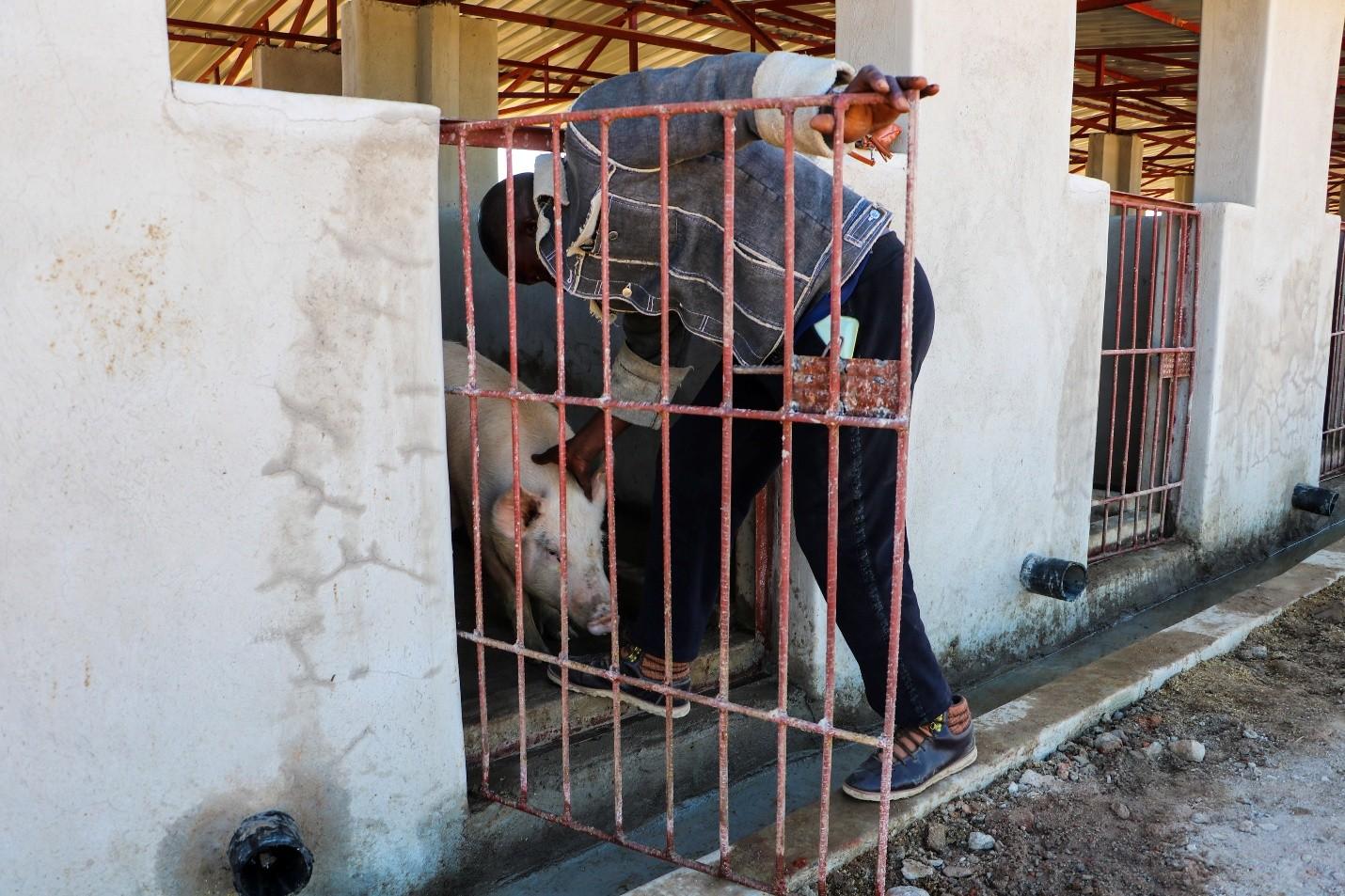
“The support has transformed our vision into reality. What started as an idea is now a growing project with 43 pigs and 9 piglets. We are proud of how far we have come and excited about the opportunities this project will create for our members in the future,” said Bukasa, Chairperson of TOPIKA.
“World Vision Zimbabwe and its partners helped us build these structures to keep the pigs, fenced the area, and provided us with water. This support has made it possible for us to manage the project properly.” he added
The project has already begun to change lives. Beyond providing livestock and infrastructure, it has created a sense of purpose and belonging among members of the association. Persons of Concern who once had limited livelihood opportunities now spend their days caring for the pigs, learning business management skills, and working collectively towards a shared goal.
Among them is Jacqueline, one of three female members in the group. Every day, she joins fellow members in feeding the pigs and cleaning the pigsties.
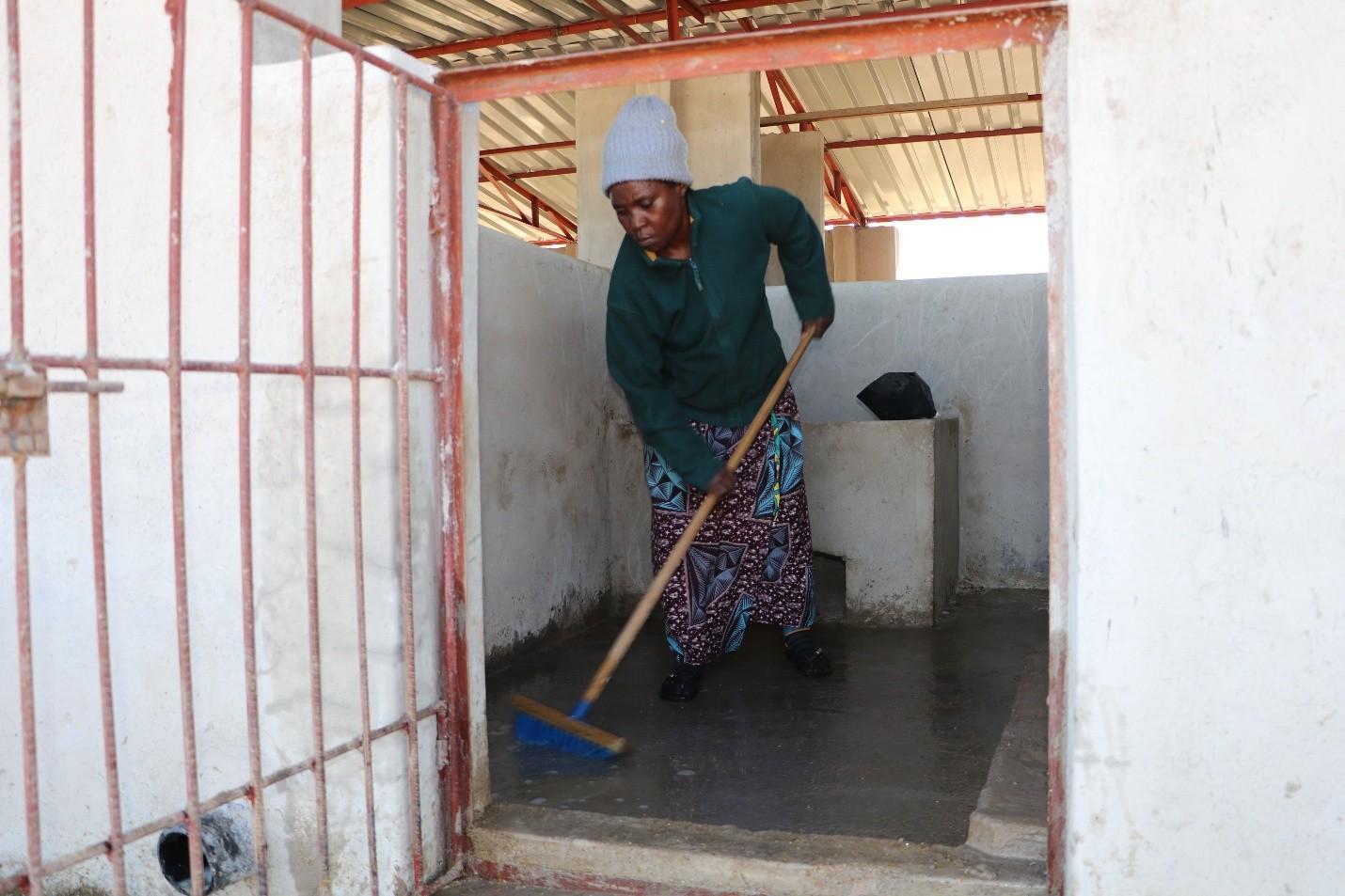
“We take turns to clean and feed the pigs. They thrive better where there is enough food and water, and we have already seen positive results,” she explained.
For Jacqueline and her fellow members, the project represents more than livestock production. It offers hope for a future in which refugees can generate income, support their families, and contribute positively to their communities.
Although the project is still in its early stages and has not yet generated profits, the association has ambitious plans for the future. Members hope to begin selling pork as the herd grows and eventually establish a butchery within the settlement, creating additional employment and business opportunities.
“We want this project to grow bigger than it is today,” said Bukasa with a laugh. “If World Vision continues to hold our hand and help us build a strong foundation, I believe we are looking at the next big thing.”
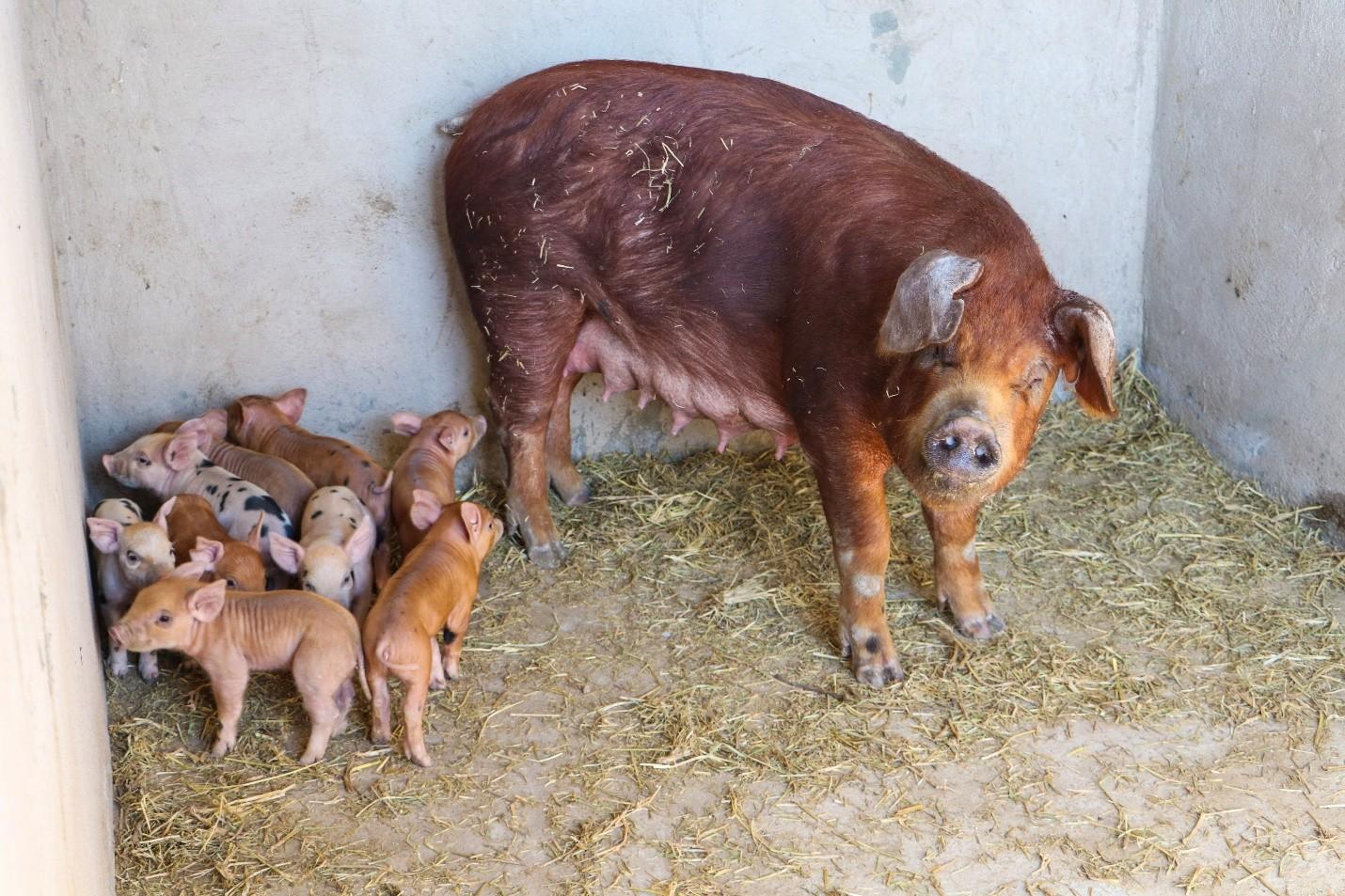
Despite the progress made, several challenges remain. As the number of pigs increases, so does the need for additional feed, veterinary support, and stronger market linkages. Continued investment in initiatives such as TOPIKA can help transform refugee communities from dependence to self-reliance. With the right support, this piggery project has the potential to become a thriving community enterprise that improves household incomes, creates jobs, and restores dignity among displaced populations.
For the members of TOPIKA, every pig raised is more than an asset, it is a symbol of resilience, opportunity, and the possibility of a brighter future.