press release / August 25, 2026
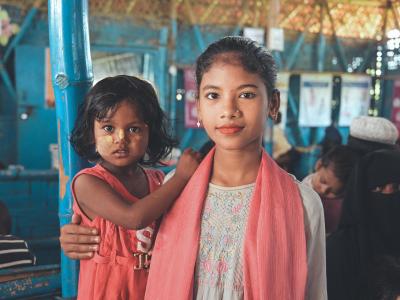
Nine Years of Struggle: Rohingya Children Caught Between Climate Disasters and Plunging Aid
Nine years into protracted displacement, escalating climate disasters and a 24% aid cut threaten 1.2 million Rohingya refugees, prompting World Vision to call for global responsibility-sharing and durable, nexus-driven solutions for children and host communities.
press release / September 2, 2026
‘I left everything behind’: Nepal flash flood, children face trauma, displacement and uncertainty and growing protection risks
As the humanitarian crisis deepens, with more than 1,000 confirmed fatalities and thousands still missing, strengthened child protection measures are urgently needed to support displaced children and their families.
publication / September 6, 2026
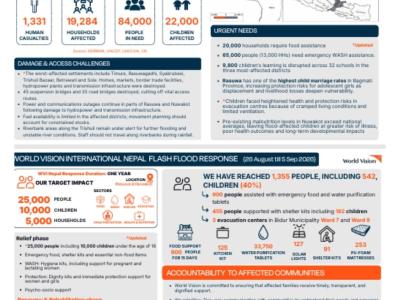
Situation Report 3: Nepal Flash Floods 2026
Situation Report 3: Nepal Flash Floods 2026
article / August 31, 2026
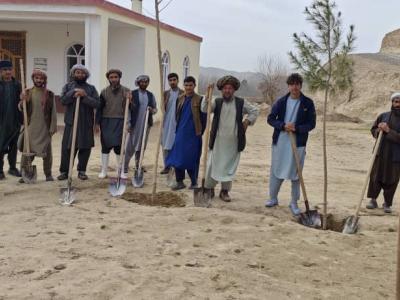
Empowered to Respond: A Community Building Its Own Resilience
In Faryab, a community-based disaster management group is responding to floods, fires and other risks, protecting lives, livelihoods and building resilience.
article / August 30, 2026
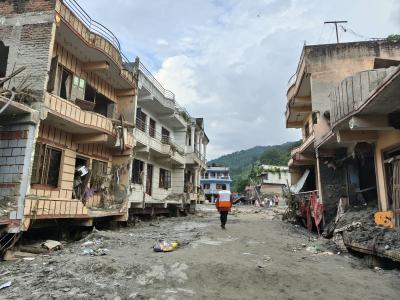
"The community is no longer recognizable" | Nepal Flash Floods Response 2026
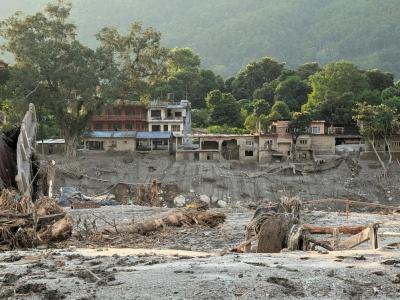
When floodwaters swept through Devighat, Nuwakot, they left behind more than damaged homes. Families were displaced, children's routines were disrupted, and entire sections of the community became unrecognizable. In this field account WVI Nepal staff shares observations from the ground and the urgent needs facing children and families in the aftermath of Nepal's 2026 flash floods.
press release / August 26, 2026
Flash flood devastates Rasuwa and Nuwakot, leaving 162 dead and over 400 missing; World Vision International Nepal readying humanitarian response
Copilot said:
Flash floods in Rasuwa and Nuwakot have caused widespread devastation, leaving 95 dead and nearly 400 missing. WVI Nepal is preparing emergency food and shelter assistance for affected families.
publication / September 4, 2026
Global Accountability Report 2025
Explore World Vision's 2025 Accountability Report, highlighting transparency, safeguarding, financial stewardship, resilience, and community impact.
press release / September 3, 2026
New EU-Funded Project to Restore Safe, Inclusive Education for Over 22,000 Conflict-Affected Children in the West Bank
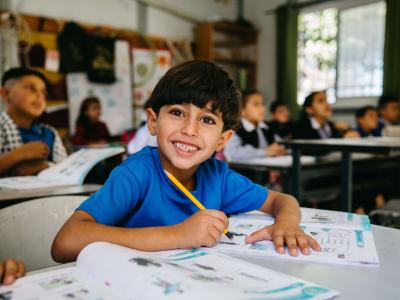
World Vision, in partnership with the Teacher Creativity Center (TCC) and the Palestinian Ministry of Education, today announced the launch of a new EU-funded two-year project to safeguard access to safe, inclusive and dignified education for the most vulnerable conflict-affected children across the West Bank.
article / August 31, 2026
I Only Lost My Shoe. They Lost Their World.
Golden light kissed shattered homes where memories slept beneath the mud. A red teddy bear lay silent in the ruins, carrying the echoes of childhood dreams swept away by the flood. I lost a shoe to the sludge, but thousands lost their homes, their safety, and the ordinary tomorrows they once imagined. Yet resilience rose like a river reed through the silt, bending beneath the torrent but refusing to break, as Bimala, a mother of a sponsored child, walked forward with quiet courage.
And above the wreckage, hope stood like sunlight after rain, stubborn as a seedling pushing through stone, refusing to be washed away.