
Growing Hope Through Faith and Farmer Managed Natural Regeneration

In the dry plains of Kajiado County, where families once moved from place to place in search of pasture, change is taking root. At the center of this transformation is John Silamoi, a pastor, lead farmer, and community leader who is helping restore land and livelihoods through Farmer-Managed Natural Regeneration (FMNR).
John's journey began when he received training through World Vision's Greater Regeneration for Evergreen Environment (GREEN) Project. Before this, he and his community had limited knowledge on how to care for trees. Land was degraded, trees were cut without proper management, and recurring drought often led to the loss of livestock and income.
With new knowledge and skills, John began practising FMNR on his farm. He learned how to prune trees correctly and allow naturally growing shoots to regenerate. Over time, the land began to recover. Grass returned, trees thrived, and his livestock had enough pasture even during the dry seasons.
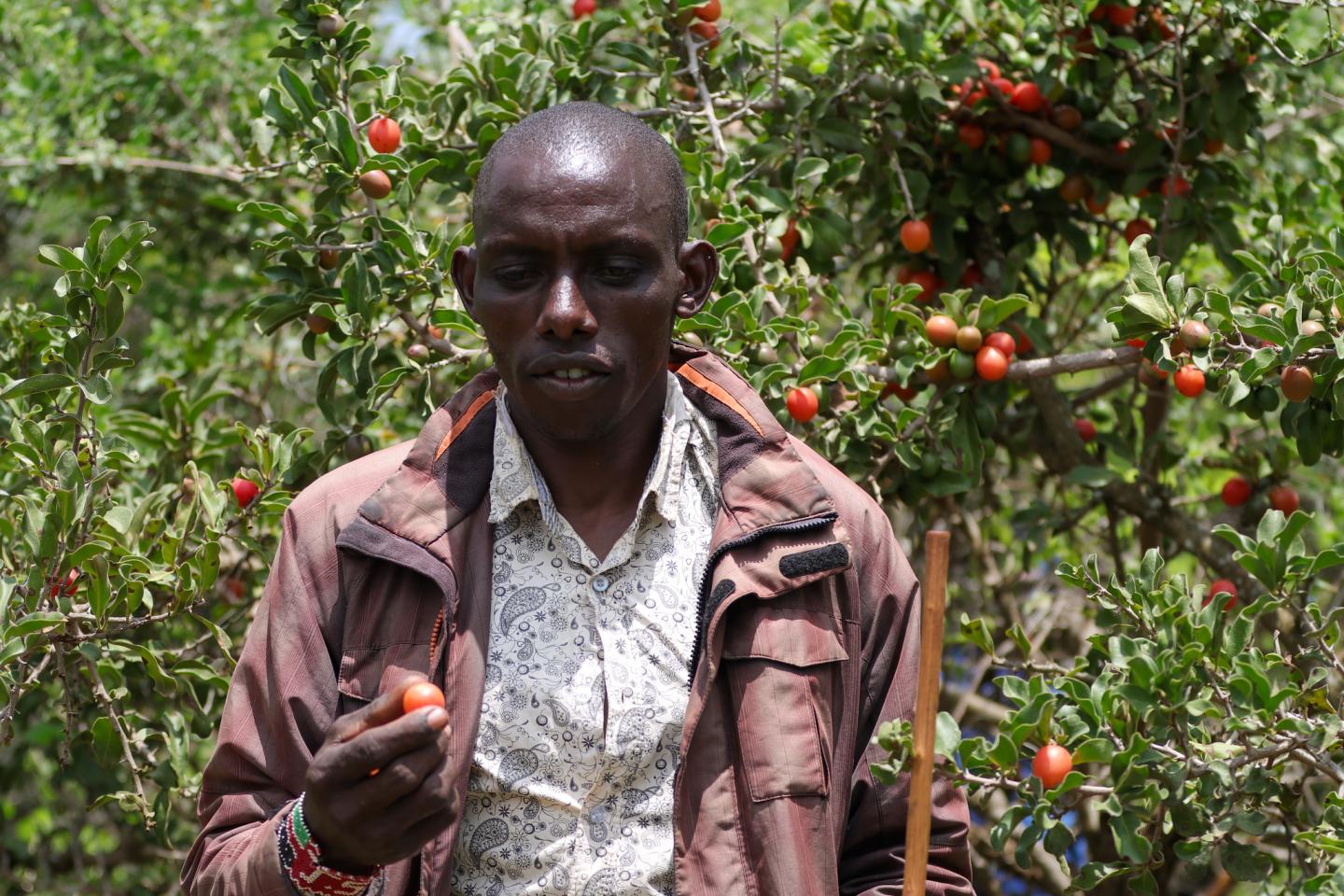
This change has had a direct impact on his family's income.
“Our livestock were small in kilograms, so we sold them cheaply in the market. Now they have gained weight and we can sell more. A cow that once fetched around KES 20,000 now sells at KES 40,000, and the bigger ones go for KES 150,000 to KES 180,000,” he explains.
FMNR has also reduced the burden on his family, especially for women and children. Firewood, which once required long journeys to collect, is now available within their own land.
“Before, we walked long distances in search of firewood. Today we collect it from our own land without destroying the trees. I am also able to use my FMNR knowledge to earn some income and help my husband,” says his wife, Damaris.
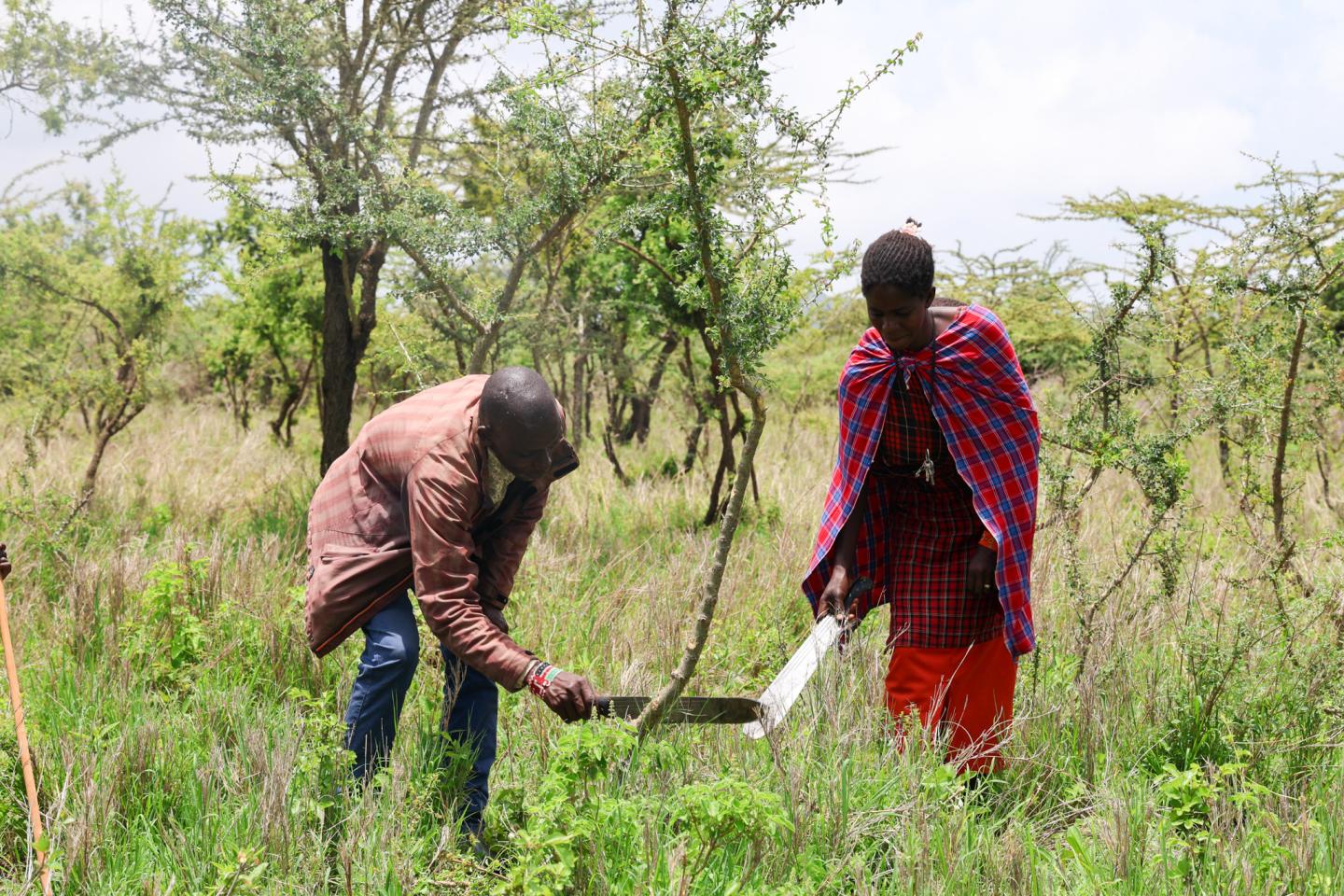
Beyond restoring land and improving income, the training also transformed relationships within the household. Through the Gender Transformative Approach (GTA), John reflects on how his mindset has shifted.
“Before GTA, I pushed my wife to do what I said, whether she was able or not. I never listened to her. Now we sit down together, discuss what we are selling, and budget the money we get,” he says.
Today, their family is more united. They make decisions together, support one another, and have strengthened their spiritual life.
“We start our day with prayers. Now I can sit with my wife and children and read the Bible together,” John shares.
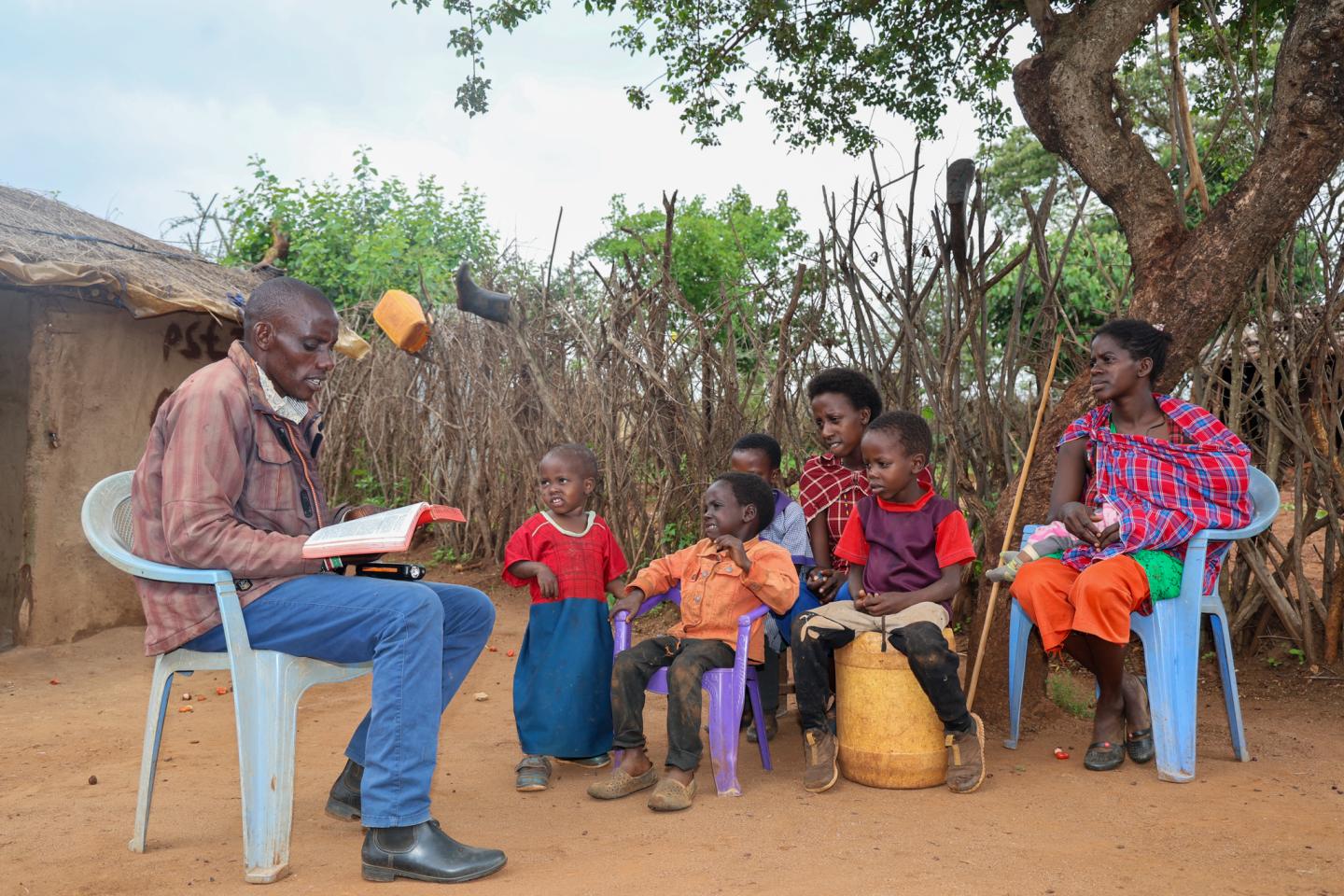
As a pastor, John uses his position to influence others. He teaches his congregation and community members about FMNR, family unity, and sustainable livelihoods. He also addresses challenges such as gender-based violence by encouraging dialogue and shared responsibility within families.
He has established a demonstration site at his church and has already trained six other community members, who are now replicating FMNR practices on their own farms. His influence continues to grow, positioning him as both a climate champion and a community educator. He also earns additional income by helping others prune trees.
Looking ahead, the family remains hopeful.
“It is a good initiative. When people see what we are doing, they will be encouraged to start and practise FMNR,” Damaris says.
Through faith, knowledge, and action, John is helping his community restore their land and build a more stable and united future.
The GREEN Project, funded by the Australian NGO Cooperation Program (ANCP), aims to restore 225,000 hectares of degraded land across Kajiado, Narok and Makueni counties in Kenya by 2028. Through this initiative, 55,000 agro-pastoral farming households trained on FMNR will become more resilient to the impacts of climate change.
By Teresia Mwaura, Communications Officer, World Vision Kenya