
Humbo Goats Union Protests National FMNR Symposium, Warns Ethiopia's Re-Greening Efforts Have Gone "Too Far"

Addis Ababa, Ethiopia – A delegation representing the Humbo Goats Union (HGU) has arrived in Addis Ababa to stage a peaceful protest outside the 3rd Annual FMNR Movement Catalyst Symposium and Forum, currently being hosted by World Vision Ethiopia.
The symposium has brought together government representatives, development partners, universities, researchers, donors, community leaders and practitioners to discuss scaling up Farmer Managed Natural Regeneration (FMNR) across Ethiopia and accelerating the country's growing restoration movement.
The goats have chosen the venue carefully.
"All the important people are here," explained veteran mountain goat and Union spokesperson Gobeze. "The government is here. The donors are here. The universities are here. The NGOs are here. The people who keep talking about 'movements' are here. If we're going to be ignored, we'd like to be ignored by everyone at once."
The protest comes as symposium participants celebrate the restoration of more than 1.4 million hectares of degraded land through FMNR and discuss plans to scale restoration efforts to 2.8 million hectares by 2028, with longer-term ambitions exceeding 4.6 million hectares as part of a vision for a greener Ethiopia.
The goats insist these developments represent a growing threat to their interests.
Alarm Over "Underground Forests"
Reports indicate that communities across Ethiopia have adopted FMNR after receiving training and support from World Vision Ethiopia and its partners. The approach encourages communities to protect and manage living tree stumps and root systems, allowing forests to regenerate naturally.
The goats remain deeply suspicious of what symposium participants repeatedly refer to as an "underground forest."
"We find the entire concept unsettling," said Gobeze. "Apparently, there are forests hiding underground just waiting for people to regenerate them. One day you're enjoying a perfectly respectable barren hillside, and the next day you're surrounded by trees and rules."
According to documents, the Union claims to have "accidentally eaten," World Vision Ethiopia and its partners are helping communities restore landscapes across the country through what organisers describe as a national movement.
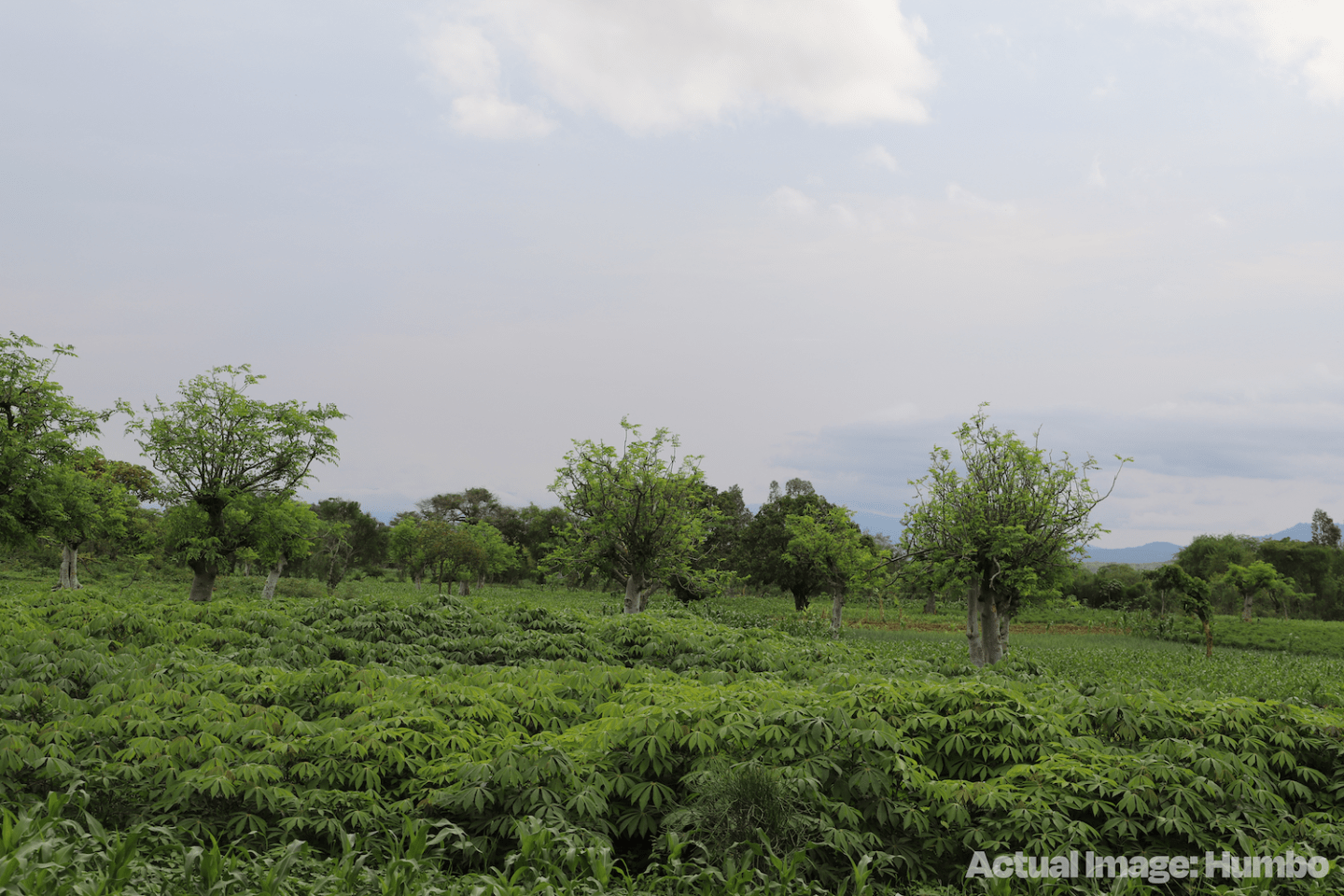
"This isn't a local issue anymore," warned Gobeze. "It's organised re-greening. First Humbo, then Soddo, and now they're talking about millions of hectares. By 2033, there may not be a single neglected hillside left for a goat to enjoy."
Goats Concerned by Growing Ambition
The Union expressed particular concern over remarks made during the symposium encouraging participants to become "greedy for a greener Ethiopia."
"What began as a few protected hillsides has clearly gotten out of hand," said Gobeze. "These people have already restored more than 1.4 million hectares. Any reasonable goat would consider that enough."
According to symposium presentations, partners are working towards restoring 2.8 million hectares by 2028, with a longer-term ambition of restoring 4.6 million hectares and beyond.
"The worrying part isn't the numbers," Gobeze continued. "It's that they don't seem satisfied. They keep talking about a Green Ethiopia for children. First, it was Humbo. Then it was Soddo. Now they're discussing millions of hectares. At this rate, future generations of goats may grow up without ever seeing a properly degraded hillside."
Union members described the symposium theme, "Unstoppable Forests," as "deeply provocative."
The "Child Labour" Crisis
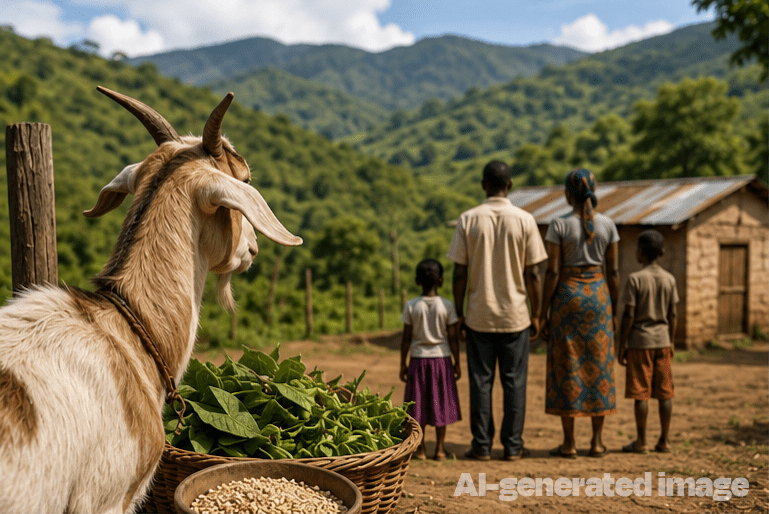
The goats are also upset because they believe children no longer devote enough time to livestock management.
For generations, local children spent much of their day herding goats across degraded hillsides in search of pasture.
According to the Union, that relationship has changed dramatically.
Deiya, a senior member of the delegation, described the situation as "straightforward abandonment."
"The little boy who used to follow me around all day, the one who was always coughing from the mountain dust, doesn't show up until evening now," complained Deiya. "Apparently, his parents can afford books and school uniforms because their harvests improved after the land was restored."
"That boy used to work full-time for me," he continued. "Now he goes to school while I remain his after-school hobby. This is unacceptable."
Another goat expressed concern about changes in children's physical condition.
"They're noticeably stronger," he reported. "Since communities restored water sources and improved food production, it's become much harder to knock children over with routine headbutts. We consider this a serious operational challenge."
Carbon Credits Draw Further Criticism
The Union reserved particular criticism for the growing role of carbon finance in landscape restoration.
"The final insult," complained Gobeze, "is that humans are now getting paid because trees are standing up."
"They call them carbon credits. We call them leaves with paperwork."
Official Demands
The Humbo Goats Union has submitted the following recommendations to symposium participants:
Expansion Moratorium
An immediate halt to plans to expand restoration efforts beyond current levels.
"We've seen the targets," said Gobeze. "If they keep restoring land at this rate, future generations of goats may never know the joy of unrestricted nibbling."
One-Branch Policy
A national commitment to deliver pruned branches directly to fence lines, effectively creating a "Forest Delivery Eats" service.
School Attendance Reform
A formal review of what the Union describes as the "Education Interruption."
The goats demand to know why children are carrying backpacks instead of herding sticks.
Livelihood Equity
An explanation as to why restoration benefits appear disproportionately distributed towards humans.
"People are improving their homes, sending children to school, investing in livelihoods and planning for the future," said one Union member. "Meanwhile, our salt-lick budget has remained completely stagnant."
Symposium Participants Respond
Participants attending the symposium welcomed the goats' contribution to the discussion but maintained that restoration efforts must continue.
One attendee noted that restored landscapes have improved water availability, increased agricultural productivity, strengthened household incomes, and created better opportunities for children.
"The goats see a snack," the participant explained. "We see healthier children, stronger communities and a more resilient future."
Community members also pointed to the growing involvement of children and young people in environmental stewardship through schools and environmental clubs.
"The children are learning something bigger than grazing," said one participant. "They're learning how to restore the future."
Protest Continues
At the time of publication, the Humbo Goats Union remained outside the symposium venue, distributing leaflets and attempting to gain access to donor roundtables.
Witnesses reported that Gobeze spent much of the afternoon staring through the conference-room windows while participants discussed restoring millions more hectares across Ethiopia.
Sources close to the goat confirmed he became visibly distressed when delegates applauded calls for a "Green Ethiopia for children" and appeared particularly troubled by repeated references to "unstoppable forests."
Disclaimer:
This article was created to celebrate the positive impact of Farmer Managed Natural Regeneration (FMNR) in Humbo. The story uses fictional goat characters and imagined dialogue to highlight real improvements in environmental restoration, livelihoods, water access, and children's well-being.
All goat interviews should be considered highly unreliable sources.
Images accompanying this article were generated using ChatGPT's AI image generation tools to depict this fictional scene.
=END=
About World Vision: World Vision is a Christian humanitarian organisation dedicated to working with children, families, and their communities worldwide to reach their full potential by tackling the root causes of poverty and injustice. World Vision serves all people, regardless of religion, race, ethnicity, or gender.
By Bitima Milkessa, Advocacy & Communication Coordinator, World Vision Ethiopia