

Rethinking Child Nutrition: Why Women’s Economic Power Remains the Missing Link
Dana Buzducea, reflects on why ending child hunger will depend on whether policy and finance finally align with the economic realities of women sustaining food systems.
March 26, 2026.
I don’t know about you, but my heart shrinks every time I come across news or evidence of food prices rising. With global food security on a very delicate balance, I cannot help but think of the growing despair faced by millions of mothers around the world who find themselves powerless to feed their children. As crises deepen, as we are witnessing now, those already vulnerable are pushed to the brink of survival. And at that edge, it is women who stand fighting for their children and families, and too often doing so empty-handed.
The evidence is no longer in question, women’s determination to save their families from hunger and poverty is a powerful engine that can support food systems. What remains uncertain is whether we are prepared to act on it with the discipline it demands. Across South Asia and the Pacific, child hunger persists not because solutions are unknown, but because they are insufficiently prioritised, fragmented in execution and too often detached from the lived realities of those holding food systems together. If we are serious about ending malnutrition, we must confront a persistent blind spot: food systems rely on women yet rarely invest in them accordingly.
The scale of the challenge is sobering. The World Vision South Asia and Pacific Impact Report indicates that in 2025 alone, 9.2 million people were reached, including 5.8 million children. Yet 42% of the region’s population continues to live on less than USD 3 a day.
In parallel, 17.5 million people were displaced by disasters in 2024, while 29.4 million children are growing up in slum conditions. These are not isolated vulnerabilities. They point to structural fragility in how food, income and resilience intersect.
The invisible architecture of survival
Within these systems, women are not peripheral actors. They are central. Across fragile contexts, they manage household nutrition, stretch limited incomes and sustain small-scale food production, often under intensifying climate pressures. Their role is not supplementary. It is foundational. Yet it remains consistently undervalued in both policy design and financing.
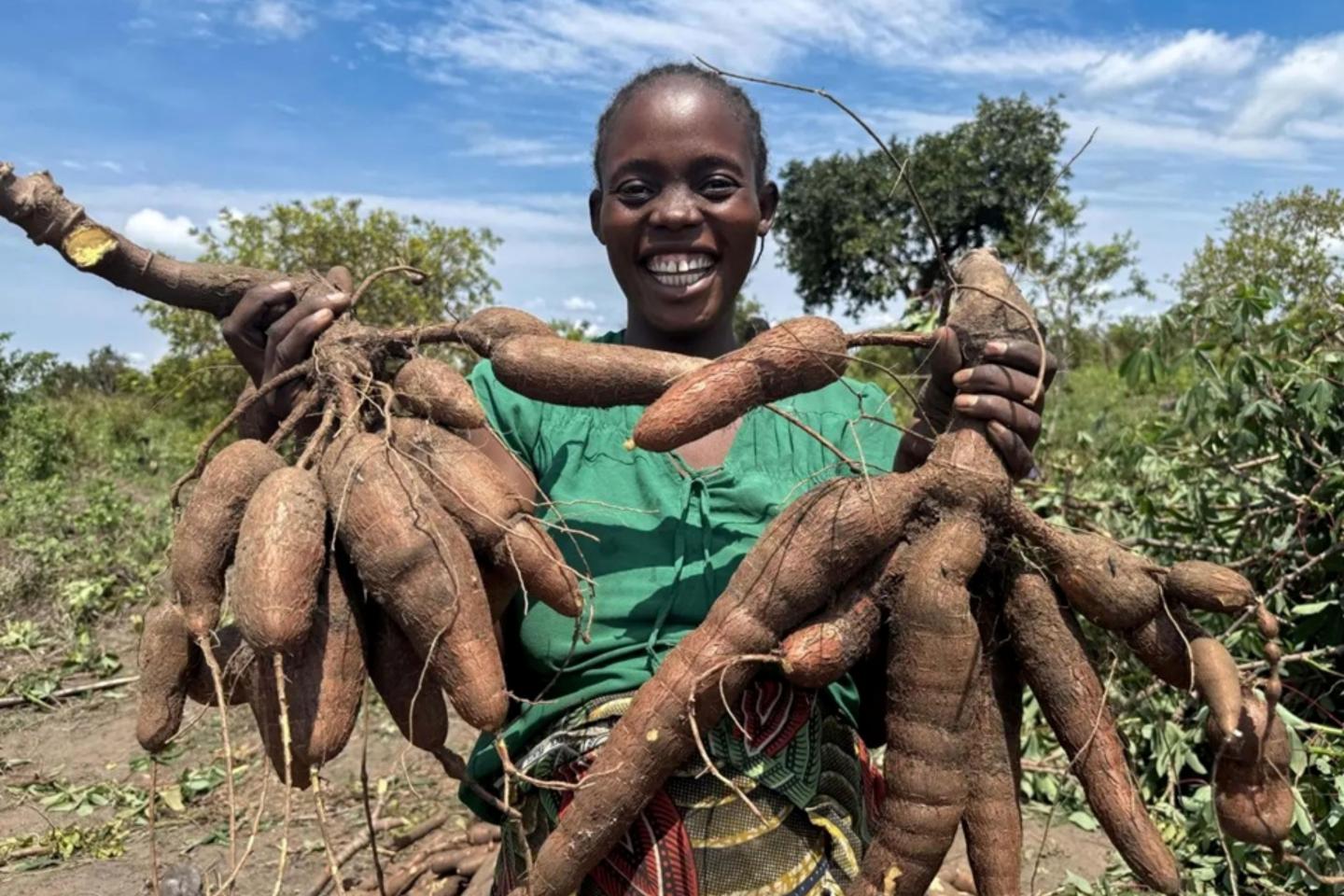
Consider the experience of Jacqui Tshela, a 28-year-old farmer and mother of three. For years, she cultivated four acres of land using traditional methods, yielding no more than 200 kg of cassava chips. The returns were low, the effort exhausting and the future uncertain.
Everything shifted when she accessed training through a Farmer Field School. On a smaller plot of just one and a half acres, applying improved techniques and seeds, she harvested approximately 300 kg of fresh cassava. The difference was not land. It was access: to knowledge, to inputs and to opportunity.
“It’s the first time I’ve harvested this much. I’ll be able to feed my children and save a little. It’s a victory, proof that change is possible,” she reflects.
Her experience is not isolated. It is indicative. It demonstrates how modest, targeted investment in women’s economic capacity translates directly into improved child nutrition and household resilience.
What the data already tells us
The implications are well established. According to FAO’s document: Women in agriculture Closing the gender gap for development estimates, if women had equal access to productive resources, farm yields could increase by up to 30%, potentially reducing the number of hungry people globally by as much as 150 million. This is not a marginal gain. It is a systemic shift.
And yet, investment patterns do not reflect this reality. Nutrition strategies remain siloed from livelihoods. Gender commitments are often declarative rather than resourced. Climate adaptation plans still overlook those producing food at the frontline. The result is predictable: incremental progress where transformation is required.
A moment that will test our seriousness
The designation of 2026 as the International Year of the Woman Farmer creates a rare window of alignment between political attention and funding potential. Alongside initiatives such as the ENOUGH Child Hunger and Malnutrition campaign and the Global Alliance Against Hunger and Poverty, there is an opportunity to move beyond rhetoric towards integrated action. But alignment is not automatic. It requires deliberate choices.
For donors, the case is both moral and economic. Investments that strengthen women’s access to savings groups, agricultural inputs and markets deliver measurable returns across nutrition, education and long-term productivity. Women consistently reinvest in their families. The multiplier effect is well documented. The risk lies not in investing, but in failing to do so at scale and with coherence.
From recognition to discipline
The greater risk now is complacency. We acknowledge women’s role, yet stop short of restructuring systems around it. As Joan Matji, UNICEF Director of Child Nutrition and Development, has rightly observed:
“What remains scarce is not capability, but political commitment and long-term financing. No child should die from a condition we know how to cure. Yet, every day we delay, lives are lost, not from lack of knowledge, but from lack of action.”
If this moment is to carry weight, three shifts are essential.
- First, governments must position women’s economic empowerment at the centre of national nutrition and food system strategies, not as an annex, but as a primary driver of outcomes.
- Second, donors should move towards integrated financing models that link livelihoods, climate resilience and child nutrition, resisting the inertia of siloed programming.
- Third, partnerships, including those under the Global Alliance Against Hunger and Poverty, must be held accountable for delivering results that reflect this integration in practice, not only in policy commitments.
The pathway forward is not ambiguous. When women thrive economically, children do more than survive. They grow, learn and contribute to societies that are more stable and more resilient. The question, then, is no longer whether we understand the solution. It is whether we are willing to act with the consistency and ambition that the evidence demands.
With over 30 years of experience, Dana Buzducea is World Vision International’s Partnership Leader for Advocacy and External Engagement, where she leads global efforts to influence child-sensitive policies, strengthen government and multilateral investments and advance both the Sustainable Development Goals and the Convention on the Rights of the Child.
Subscribe to see more content like this
Related Resources

Justice begins when no child goes hungry

A Just Transition Cannot Succeed While Children Go Hungry
