
Refreshed lives

Mr. Nuur Yuusuf (65 years old), his wife Hawo Mohamud (27 years old), and their eight children have lived in Boomas, Dangorayo district, Nugal region in Puntland for the last past year. As a pastoralist, he had moved to the area in such of water and pasture for his animals, but the area was adversely affected by drought. Lack of rains and consequently lack of water left most of the pastoralists not just counting losses to their livestock, but also getting ill due to poor hygiene. Lack of water greatly affected their way of living.
“Lack of water has left me poor. Before the drought, I had over 100 goats and sheep. But all these have died and I am only left with a few weak sheep and goats. Lack of water also affected my family’s hygiene. We were not able to access water to wash our hands or use water for washing our bodies in readiness for prayer. This also affected our personal hygiene, as we did not have water for bathing or to wash our clothes. Scarcity of water made us not cook enough meals for the family and at times we would go without cooking anything. This greatly affected our way of living,” Nuur explains.
“Not having water made us fall ill easily and more often. Two of my children Yaasir (two years) and Mohamud (five months) had an eye infection and also had diarrhea. A skin disease due to improper hygiene also infected my wife. This was a very hard time for us especially for the younger children, whom we could not give proper meals or give Oral Rehydration Solution (ORS). There were times, as adults, we would stay for a day or two without drinking water.”
As the head of the family, Nuur would do all it takes to ensure that his family has some water to get them through the day. Yet this was not very easy.
“To get water, I would stand by the roadside to beg from those who would be carrying water to their families. At times I would return home without any water. The following day, I would still go by the roadside hoping that anyone carrying water for their families would pass by and offer me some,” he vividly remembers.
“Our prayer was that Allah would send rains so that we could have water. And indeed our prayers were answered. The rains did not fall but we got water through World Vision,” he happily says.
Water trucking is a short term, life saving intervention that is used to support communities who have water shortages or have no access to sufficient quantity of water to meet their daily needs. The water is delivered through trucks, which are then poured into bladder plastics (water storage) for the households. The mobile water trucking, targeted pastoralist communities along the migration routes, which the government of Puntland identified as severely affected communities.
Ahmed (10 years old), Nuur’s son was elated because they now had water. For him not having water meant that he was not getting his usual cup of tea and at times as a family they would go without food.
“The drought and lack of water made it impossible for me to take the only cup of tea, I would take in the morning before I go to graze the animals. This was the only meal I took until evening. When I came home, I would eat rice. But there were days that we did not eat rice because there was no water to cook it. I am happy that we now have water,” says Ahmed.
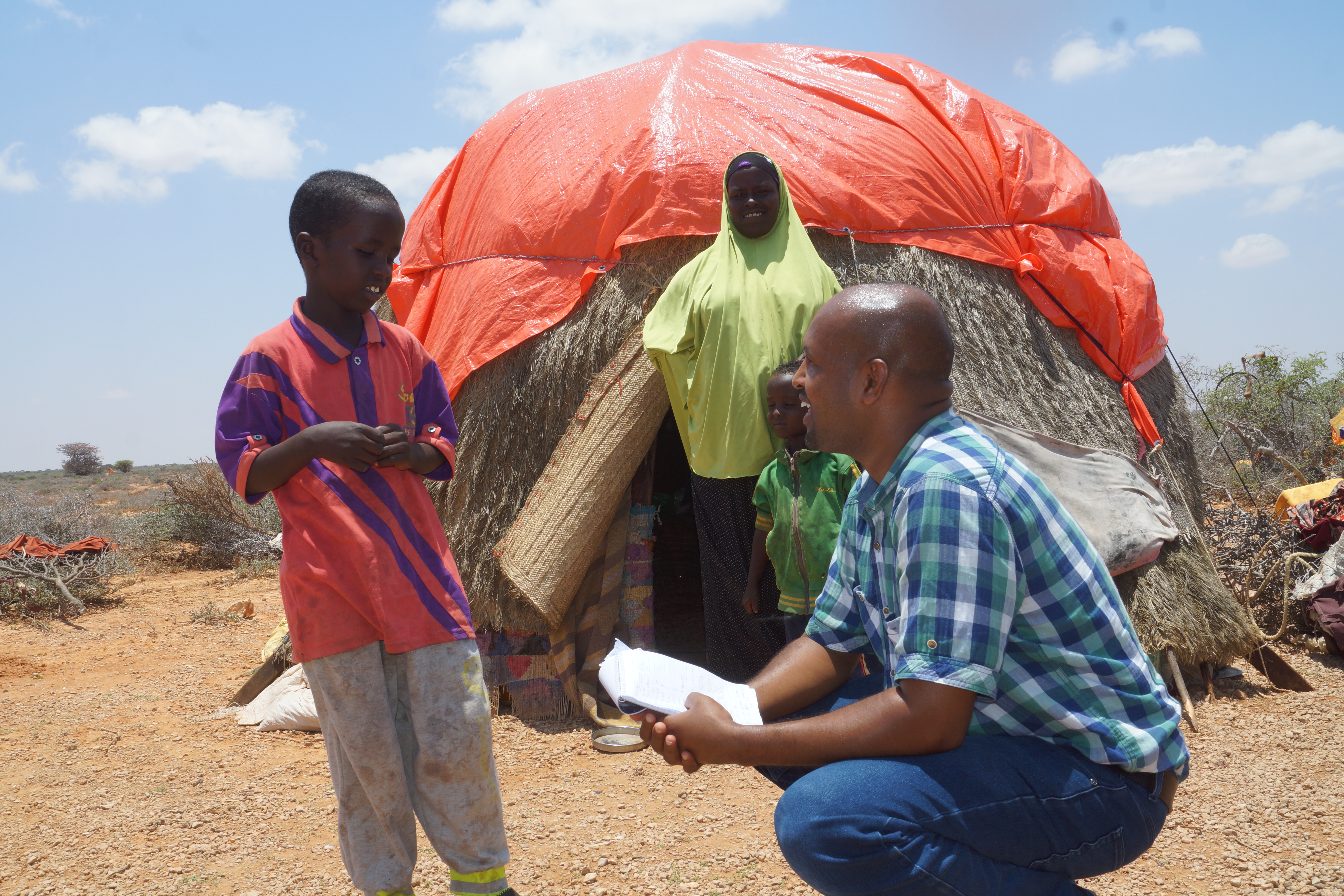
Ahmed (10 years old) Nuur's son shares his sentiments on the impact of the drought to Osman Nuur, WASH Coordinator, Puntland
Nuur is also delighted about having water once again and he doesn’t have to go by the roadside to beg for water. Their way of living has also improved and he is grateful to Allah and World Vision.
“Praise to Allah and World Vision, who provided this water. The water has refreshed our lives. We now have enough water for washing our hands, bathing, cooking and have enough for drinking. We now can cook three meals a day for the children,” he says.
Not far from Boomas, resides Mohamed Farah (45 years old), his wife Xalimo (25 years old) and their four children. Mohamed and his family live in Dhirwarabe, a pastoral community. Together with his family, they were delighted to be one of the beneficiaries’ who would get water.
“I am happy about the water distributed to my family by the implementers. The water has changed my family from the ordeal and stress caused by the drought. Getting water is no longer a problem as we now have clean water available. We use the water for bathing, washing clothes, for drinking and cooking. We also give some to livestock as this is our livelihood,” he says.
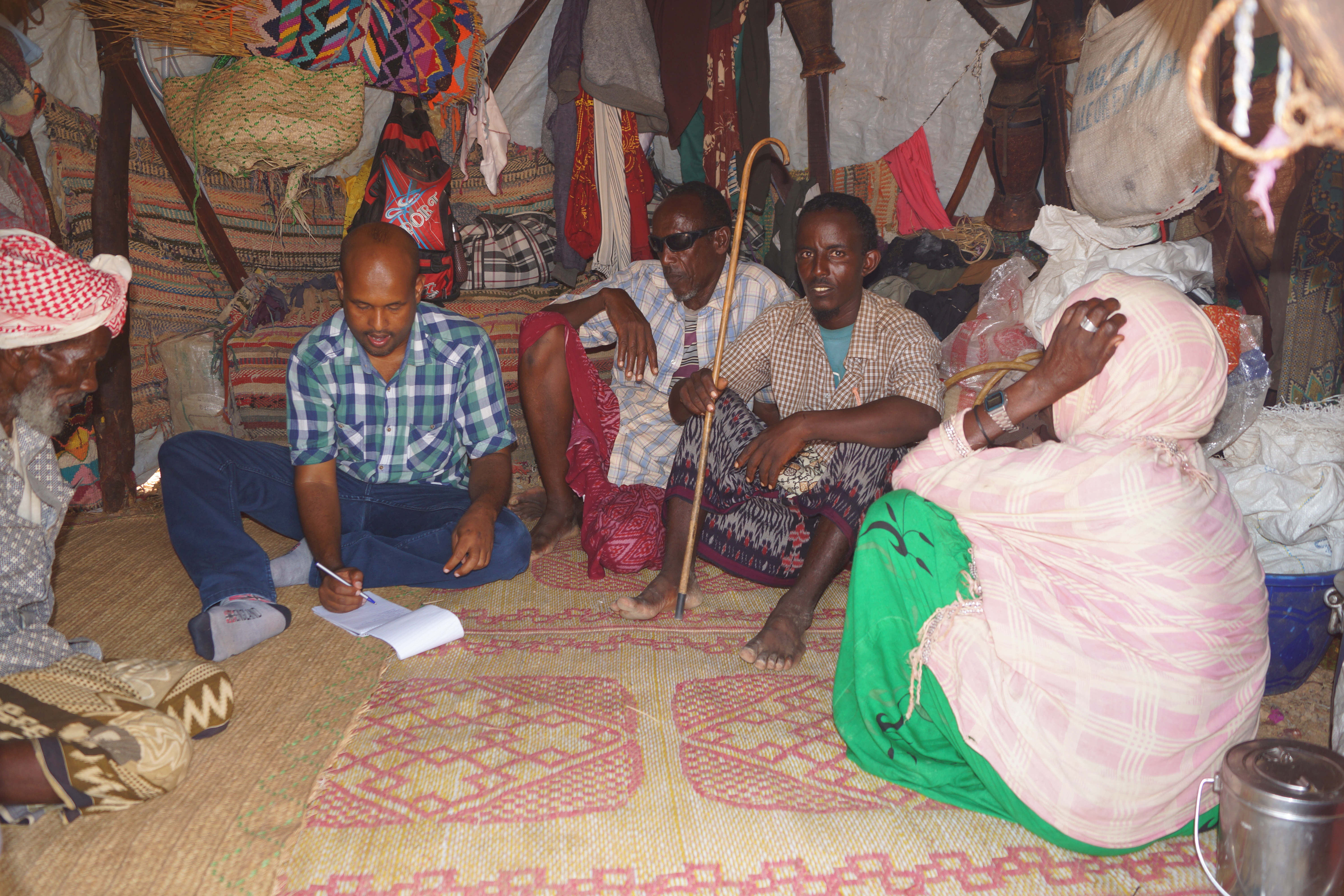
Mohamed Farah, with eye glasses, recounts his ordeal during the drought and his delight in having water nearby
World Vision, together with Humanitarian Affairs and Disaster Management Agency (HADMA), and the drought committee established during the crisis, selected the beneficiaries. The beneficiaries were identified by the district administration and endorsed by the drought committee. The beneficiaries were selected based on their vulnerability and lack of water. Each household would get 8 litres per person every day. The water was distributed to the households on a daily basis from the 17th to 29th of April 2016.
World Vision through the funding of ADH Germany, were able to provide water, through water trucking to the community in Boomas and Dhirwarabe. The water trucking project served 60 households, with a provision of 130, 000 litres of water in Boomas. In Dhirwarabe, 110 households received 230,000 litres of water.
In January 2016, the government of Puntland declared a drought stating that 213,000 people had been affected by the drought due to the poor performance of the most recent rains. World Vision’s area of operations that were adversely affected by the drought in Puntland are Dangorayo and Eyl. World Vision has been responding to the people’s needs through Water Sanitation and hygiene (WASH), livelihood and nutrition activities.
Story written by
Osman Nuur Mohamed
Water Sanitation and Hygiene (WASH) Coordinator
Puntland