
Sufia: The Woman Who Refused to Stay Silent for Children and Her Community

Story By Lipy Mary Rodrigues
Communication Specialist – Impact Storytelling, World Vision Bangladesh
In a village shaded by rows of litchi trees in Dinajpur, Sufia’s mornings often began before sunrise. While the village still slept, she walked muddy roads searching for work sometimes in paddy fields under the burning sun, sometimes in dust-filled rice mills, sometimes crouched for hours breaking corn in the monsoon rain.
By evening, her hands ached, but beside a dim light she still counted coins carefully, thinking only of the next meal for her children.
“I never thought about whether the work was hard,” she says quietly. “I only thought about how my children would eat.”
Sufia left school after class eight and married young. Her husband worked as a day laborer, but the income was never enough. Poverty, uncertainty, and survival filled the years that followed.
But slowly, life inside their home began to change. From the money she saved, Sufia bought her husband a truck in 2018. They leased land, worked side by side, and rebuilt their lives. Today, her son holds a bachelor’s degree, and her daughter studies in college. Watching them step toward futures she once could not imagine, Sufia smiles quietly. Her dream was never wealth only that her children grow into good human beings.
Around the same time, Sufia began attending community meetings through her daughter’s sponsorship activities. At first, she sat silently at the back, pulling the edge of her scarf tightly around her face whenever attention turned toward her. But she kept coming back.
She listened as people discussed child marriage, school dropouts, and the hidden struggles families carried behind closed doors. Slowly, the silence around her began to loosen. Then one day, she stood up and spoke.
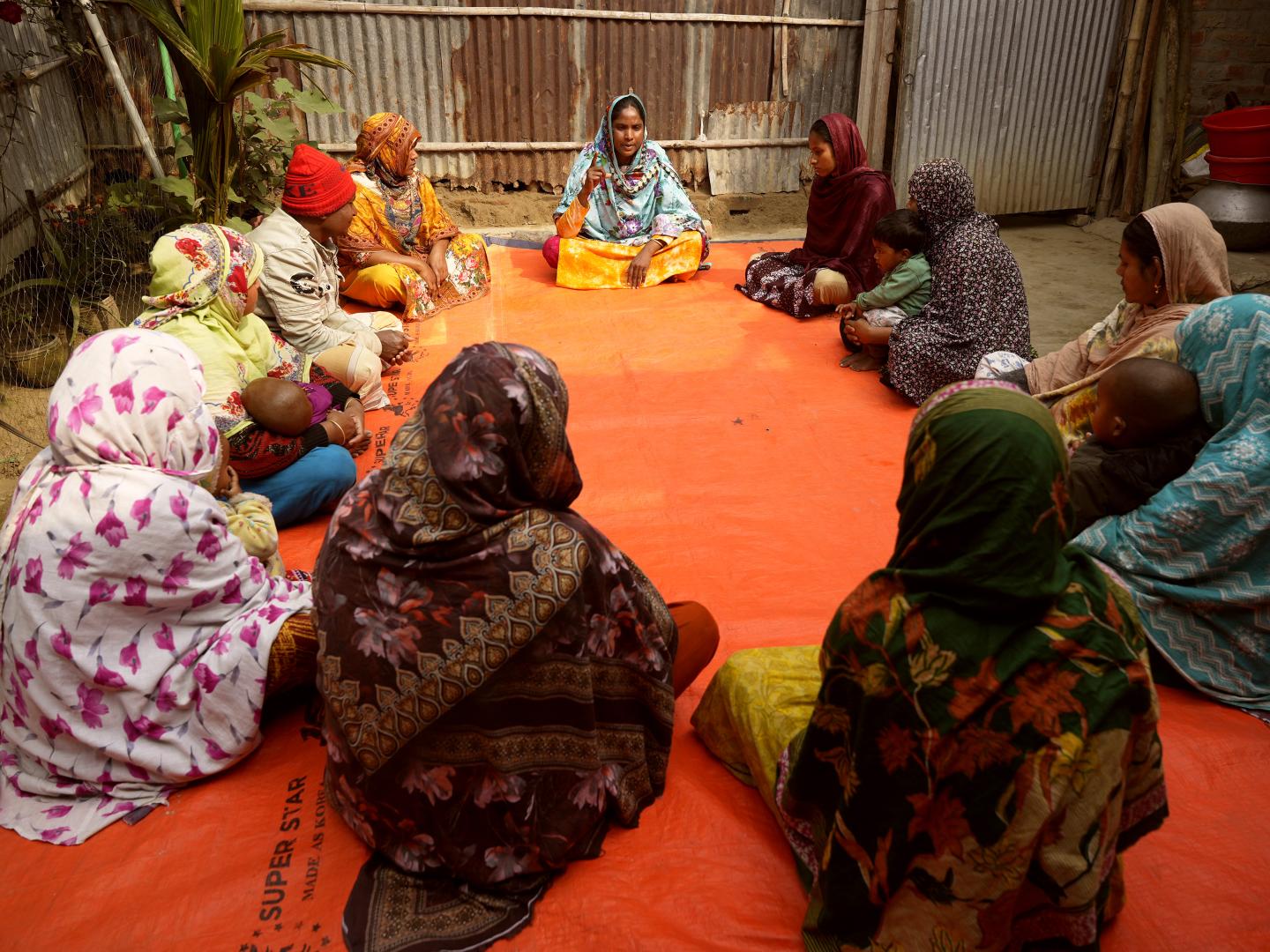
After that, people started knocking on her door. A family reconsidered marrying off their daughter after Sufia visited their home. A child returned to school because she refused to stop persuading the parents. Women gathered around her, sharing worries they had never voiced aloud before.
In 2024, the woman who once sat silently in the corner was elected reserved women’s councilor for wards 7, 8, and 9 of Brahkshapur Union.
Now, when meetings begin, people wait for Sufia to speak first. “I once thought I was insignificant,” she says. “Now I know I can bring change.”
Some women do not change the world with loud voices. They do it softly through every sacrifice, every long day, and every dream they refuse to let go.