
A Basic Need Still Unmet

For Meseret, the memory of giving birth at Dembeli Health Centre begins with rain, mud, and fear. “It was raining. It was the rainy season when I gave birth. The ground was very muddy. It was my sixth child. I was scared. I had a difficult pregnancy, and I did not know if the baby or I would be fine. When I finally gave birth to a healthy baby girl, I was relieved. The nurses who helped me were very kind. I was happy and thankful to God.”
She still remembers the long hours of labour and the care she received. But she also remembers what the health centre could not provide: enough clean water for her, her newborn, and the staff supporting them.
Dembeli Health Centre is about 105 kilometres from Addis Ababa, within World Vision Ethiopia’s Abichu Area Programme. It serves about 20,000 people and supports 30 to 40 deliveries each month. At first glance, the facility appears to be working: patients wait outside, staff move between rooms, and mothers come seeking safe care. Yet one essential condition for that care is still missing.
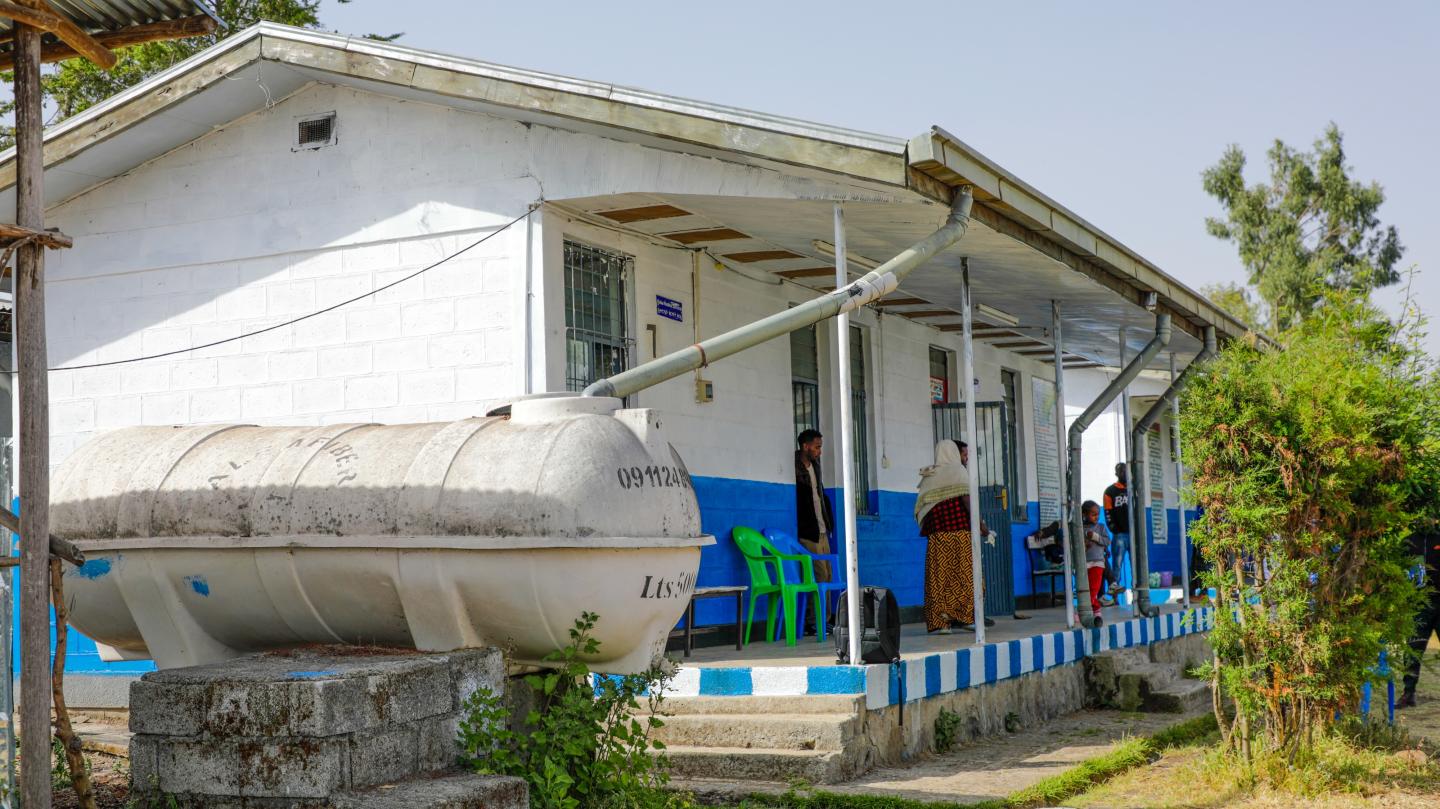
Beside the building, a large tank connected by a pipe to the roof suggests an effort to collect and store rainwater. The arrangement is not a backup system; it is part of the centre’s survival strategy because Dembeli has no reliable access to clean, consistent water.
The gap is stark. The centre needs around 5,000 litres of water each day to maintain basic services, but it usually manages only about 500 litres, brought from a distant source by donkey and cart.
Water is not an extra service in a health facility. It is part of safe delivery, infection prevention, dignity, and recovery.
For mothers and newborns, the shortage turns routine care into a daily challenge. Delivery rooms must be cleaned, hands must be washed between patients, newborn surroundings must be kept safe, and equipment used for services such as cervical cancer screening must be cleaned and sterilised after use. With too little water, staff are forced to ration, improvise, and work with constant concern that basic hygiene cannot be maintained as it should be.
In families like Meseret’s, children also carry part of the burden. While she recovered, her 17-year-old son walked to the water point, filled a jerrycan, and carried 20 litres back through rain and mud. The care Meseret and her newborn received depended partly on that effort. Even simple needs after birth, such as washing, cleaning clothes, or keeping the baby’s surroundings clean, became difficult decisions shaped by how much water remained.
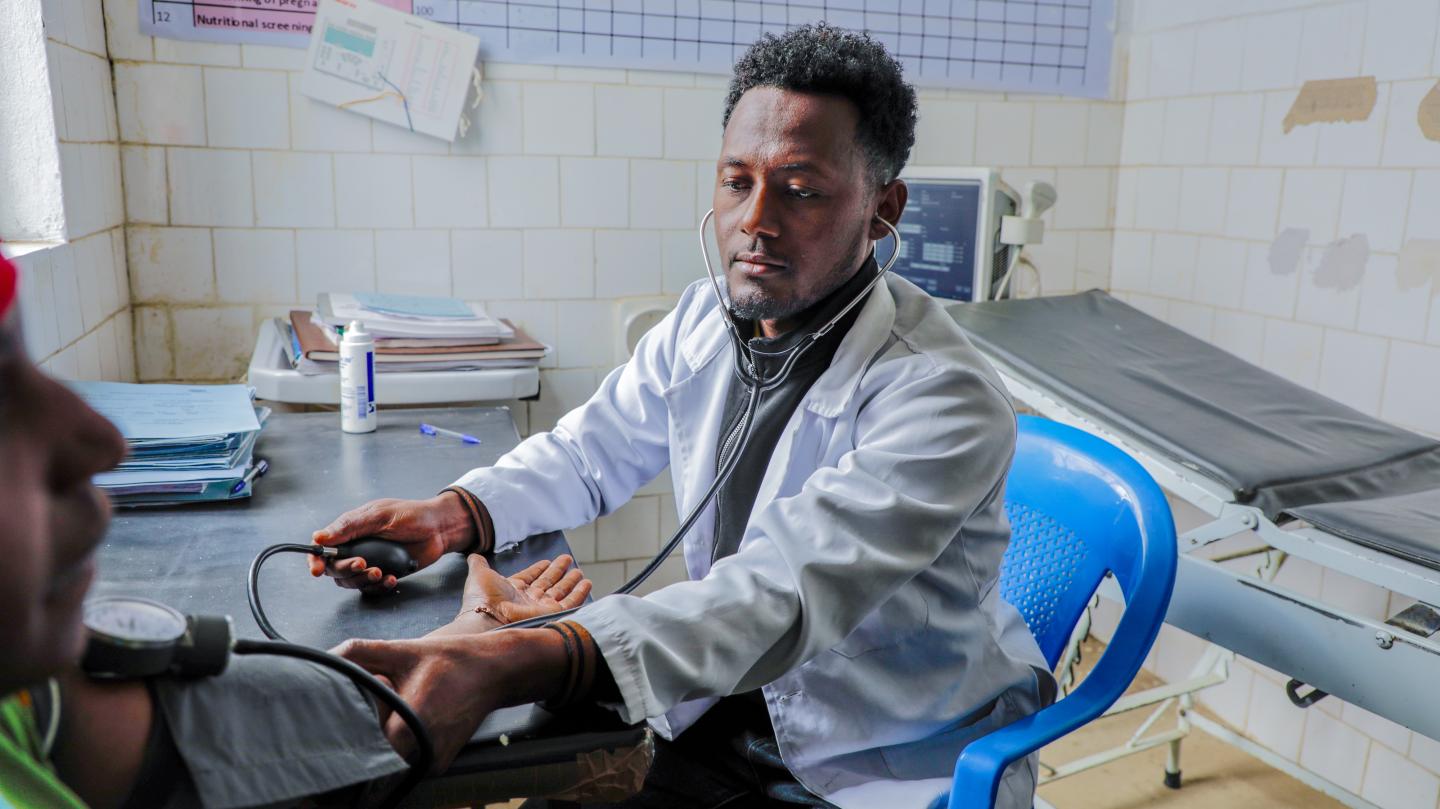
"More than medicine and equipment, water is the primary need in a health centre," says Geleta, the centre’s director and maternal and child health focal person. "We are suffering because of this. People come here to be treated, but there is a risk that they could get infections. It is difficult to clean equipment and the facility with such a shortage of water."
The only regular water source is a public point about a 20-minute walk away. The path crosses a small river and becomes muddy when it rains. The same source is shared by more than 2,000 people, so the health centre’s needs compete with the daily needs of the wider community.
That pressure was visible on the day Meseret went into labour. She had to make a 30-minute walk to the health centre, with family members and neighbours helping her along the way as the pain made each step harder.
At the centre, health workers helped her deliver safely. They provided medicines, a room to recover, and basic items for preparing food and hot drinks. But the one thing she needed again and again could not be provided by the facility itself.
"I couldn’t clean myself," Meseret says. "I did not want the water to run out, and I did not want my son to go again to fetch water. It was very difficult. I wanted to go home, but I was told I had to stay for 24 hours. I was anxious, thinking the water might finish."
Dembeli Health Centre has already managed to install solar power to address the lack of electricity. Water remains the unresolved gap, affecting not only patients but also the staff expected to provide care under difficult conditions.
"People do not want to work here. When new staff arrive and see the conditions, many try to transfer or leave." Geleta says.
World Vision Ethiopia’s Abichu Area Programme is aware of the challenge and is working to identify funding to improve the water supply. Efforts are ongoing, but a permanent solution has not yet been secured.
"We have tried many times, but there is no change so far," Geleta says. "I know it will be solved eventually. God will answer repeated prayers."
Until that solution comes, mothers like Meseret will continue to arrive at Dembeli seeking safe care in a place where commitment is strong, but one of the most basic requirements for health remains unmet. World Vision Ethiopia continues to seek partners and donors to help address this need so mothers, newborns, and the wider community can access reliable, safe healthcare.
By Tigist Taye, Corporate Storytelling Coordinator, World Vision Ethiopia