
A Meal That Keeps Dreams Alive

I woke up before sunrise, around 6 a.m., preparing for the journey to Nygunyyiel Refugee Camp in Gambella. Travelling to the camp requires more than planning. It demands coordination and patience. Due to security challenges in the area, humanitarian vehicles cannot travel alone. Every movement to the camp must happen in a convoy escorted by the government military. At the convoy assembly point, white humanitarian vehicles lined the roadside as armed soldiers coordinated the route ahead. Staff from different humanitarian organisations waited quietly beside their vehicles, some checking phones, others sharing conversations as they waited for clearance to move. No organisation travels this road alone.
We arrived early and waited for other humanitarian organisations travelling in the same direction. Delays are common, but movement without escort is not an option. These are the day-to-day realities staff face to reach refugee camps and deliver assistance.
As a storyteller with World Vision Ethiopia, I have the privilege of meeting and telling the stories of the children whose lives we’re impacting. In the stifling heat and the prospect of security challenges, I shifted in my seat, anxious, but equally excited about how the day would unfold.
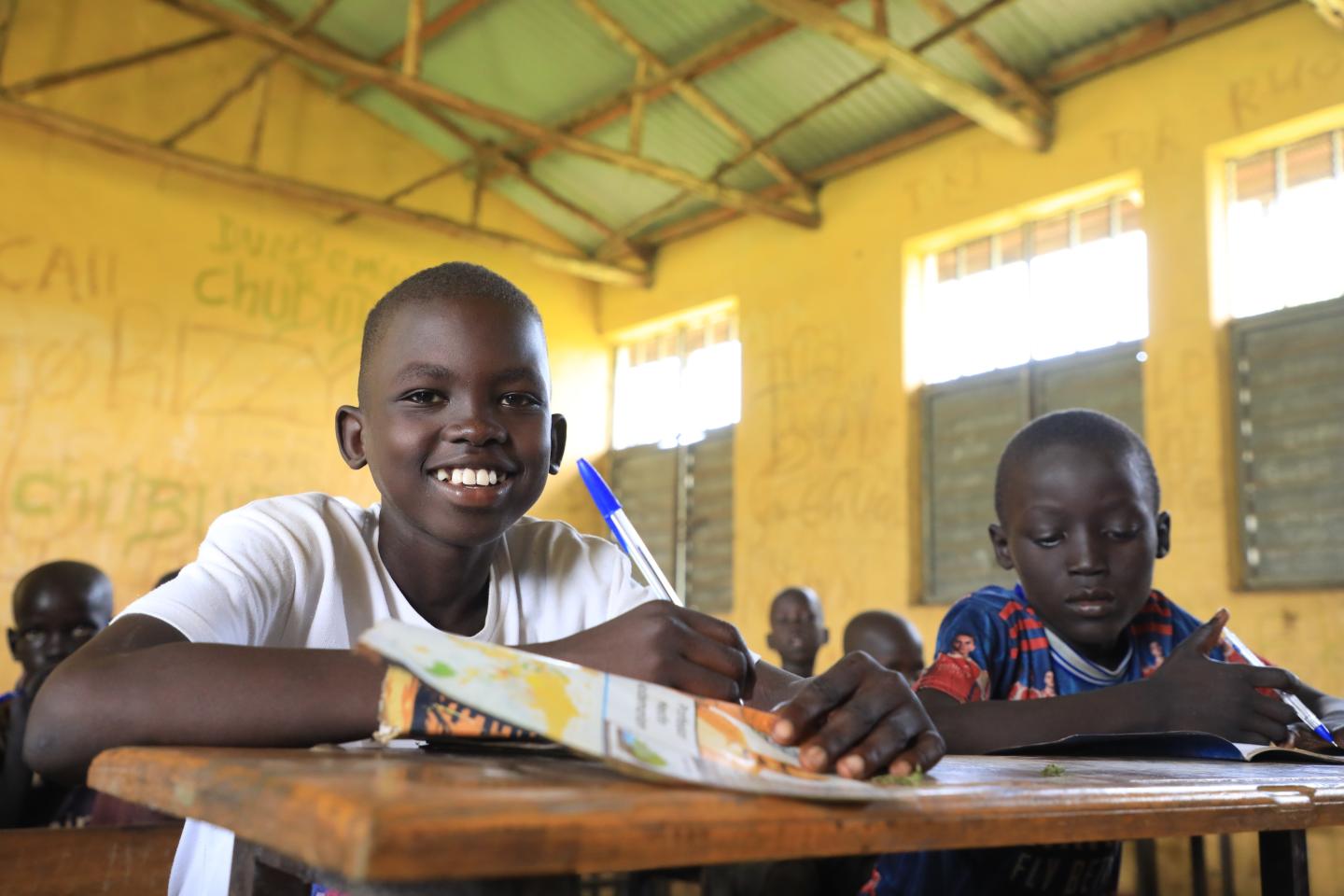
By 8:30 a.m., the convoy finally began moving. The road stretched for nearly 50 kilometres, taking about an hour and a half under careful escort. After an hour, I arrived at a primary school inside Nygunyyiel Refugee Camp. On one side of the school compound, cooks prepared the daily meal over open fires. Lessons were underway inside crowded classrooms, but every so often, children glanced toward the feeding area, waiting for the lunch bell. At exactly 10:30 a.m., the school bell rang. Children lined up outside the feeding area, among them was Gatwech, a 14-year-old grade 6 student, standing quietly with patient anticipation but also glancing at me, the newcomer, in their midst.
I walked over, greeted him and his friends, lined up to receive food in a calm and friendly way, and asked him his name and what grade he is in. He quickly told me his name and grade, and kept focusing on waiting for his turn.
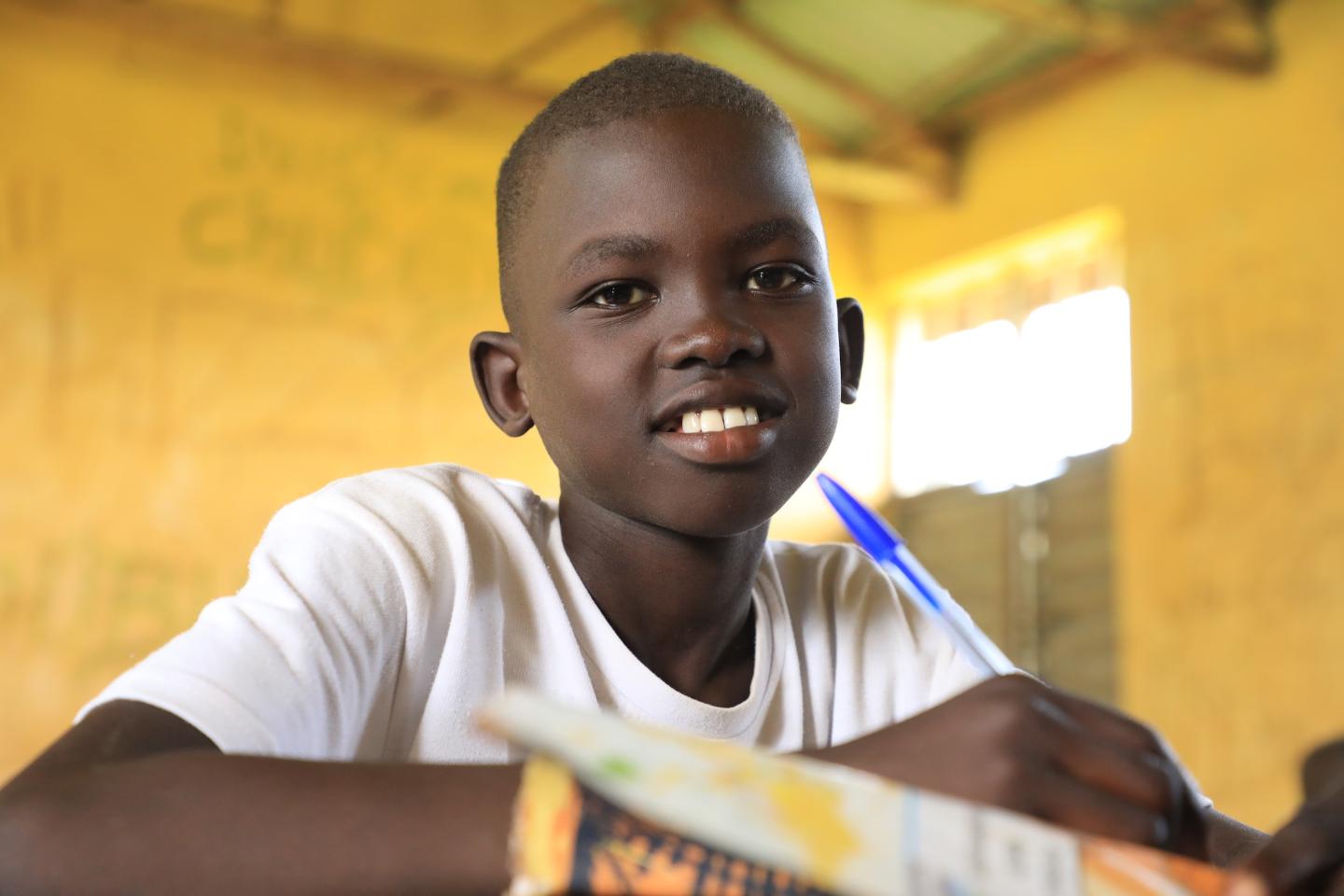
For Gatwech, the meal he receives at school is more than food on days when meals are served; he rarely misses school. It gives structure to his day and one less worry to carry into the classroom. The feeding programme gives him the energy to stay in class, concentrate on his lessons, and participate with his classmates. “I have the school meal every day during school time. I like the food in the school. The school feeding makes me stay at school, learn, and participate in my class,” he says.
Life began to change for Gatwech and his family when food assistance from the World Food Programme, in partnership with World Vision, reached his family. Through general food distribution and school feeding programmes, households like Gatwech’s started receiving essential food items, including cereals, pulses, vegetable oil, salt, and fortified blended food.
Inside their home, the family uses the food assistance to prepare simple traditional meals called walwal. Simple but filling, the meals have brought a sense of stability that was once missing from their daily lives. “When there is food, we eat twice a day. When there is no food, we eat only once,” Gatwech explained.
Before food assistance reached his family, hunger was a constant presence. Meals were irregular, and the family depended heavily on the kindness of neighbours, relatives, and the host community. Even then, the food shared was never enough. “Life was difficult when there was no food assistance. People living outside of the camp and relatives shared some food with us. We used to divide the food,” Gatwech says.
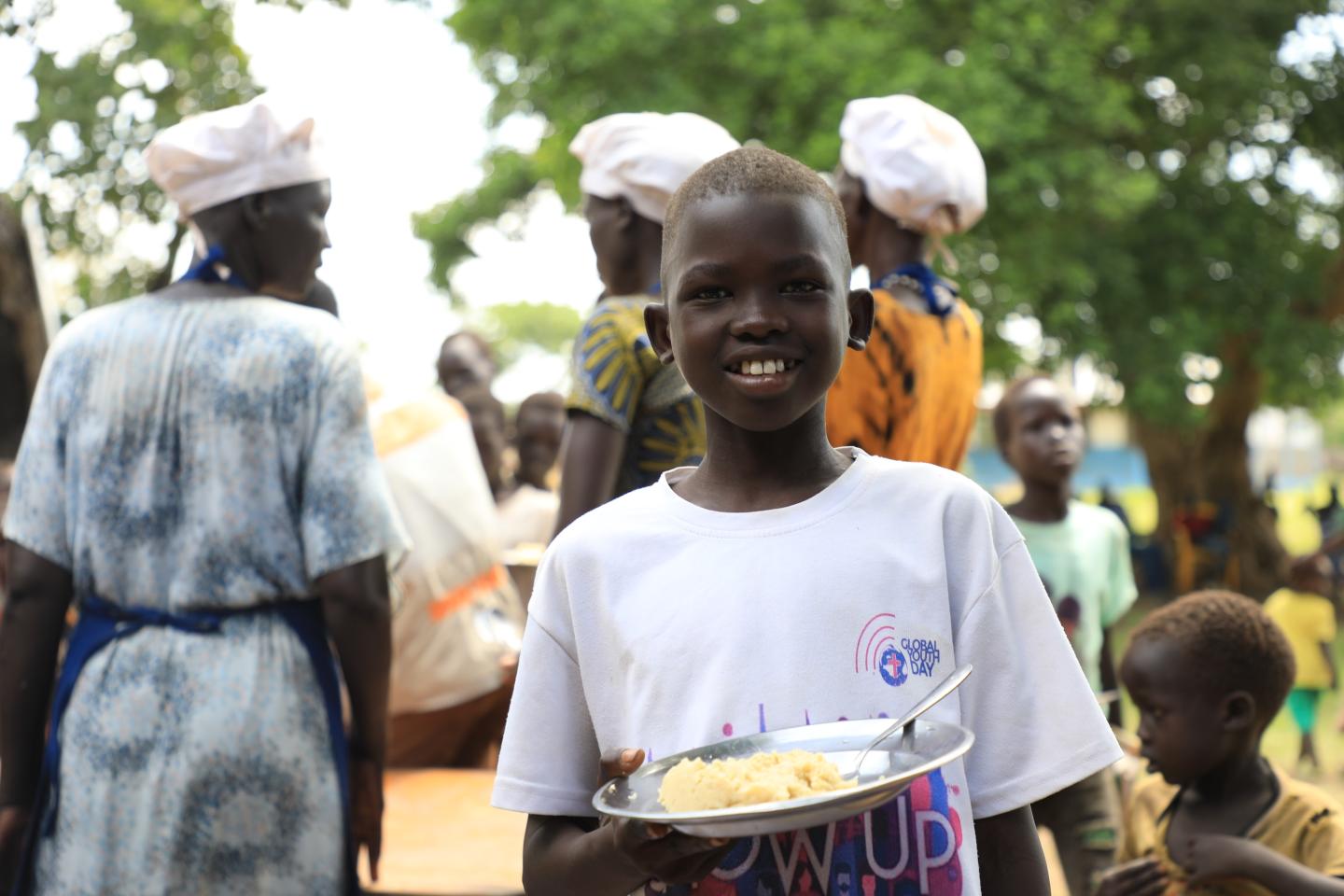
Once, for Gatwech, the effects of hunger extended beyond the home and the classroom. Like many children his age, Gatwech wanted to play and spend time with friends after school. But hunger often took away even the simplest joys of childhood. “Due to hunger, I couldn’t play with my friends because I felt tired and stressed. Even while I was at school, I kept thinking about whether there would be food at home when I returned.”
At home, Gatwech’s father, Dengguech, carries the responsibility of supporting a family of seven. For Dengguech, food assistance determines whether the family eats at all. “When there was no assistance, there was no food. Starvation was our biggest challenge,” he said.
Despite efforts to grow food during the rainy season, the harvest is never enough to sustain the family year-round. “I try to grow a small garden in the summer, but it is not enough to feed my family,” he explained. Now, with consistent support through general food distribution and school feeding programmes, the family’s situation has improved. In a refugee camp where opportunities to earn income or produce food remain extremely limited, food assistance has become essential for survival. “Food Assistance is helping our lives. Without it, life would be very difficult. Here in the refugee camp, there is no way to get food except through assistance,” he said.
The impact, he notes, is visible. “Now we can eat twice a day. If there is no food, people will suffer, and some may even leave in search of it,” he added. Despite the challenges he faces, Gatwech still dreams about the future. “When I grow up, I want to be a doctor. I want to help my community, who are suffering from different diseases,” he said.
As the convoy prepared for the return journey later that afternoon, children were still gathered around the school compound, laughing between classes with full stomachs. For families like Gatwech’s, the meals served that morning offered more than temporary relief.
I felt a mix of emotions throughout the visit, anxious during the journey, deeply moved by Gatwech’s story, and quietly hopeful as I watched the children eat and return to class. Witnessing the impact filled me with gratitude and a strong sense of responsibility. I left carrying not only Gatwech’s story, but the shared reality of many of the most vulnerable children whose futures depend on continued support.
By Samuel Zerihun, Storytelling Specialist (Food and Cash), World Vision Ethiopia