
Once Invisible, Now Standing Tall: Gadise’s Journey

Gadise, a 40-year-old mother of three, still carries the heavy memories of her hardest years. Every morning began before sunrise with a punishing routine: brewing areke (a traditional distilled drink) over a smoky fire just to survive.
“I was always sick and exhausted,” she recalls. “By midday, my chest burned, my eyes watered, and coughing fits left me dizzy. Some days I could hardly stand.” Yet, knowing her children depended on her, she pushed through.
Farming offered little relief. Sharing a small plot of land with her husband and owning only one ox, ploughing took days. They were trapped in subsistence farming, limited entirely to maize. Vegetables and fruit felt like luxuries meant for other families. Most days, they ate once or twice if they were lucky. It was never enough.
Schooling was another heartbreak. Gadise’s firstborn had to drop out for a year because she couldn’t afford a uniform or school supplies. “It broke me as a mother,” she whispers.
The turning point came after the birth of her youngest. With no time to heal or anyone to care for her, Gadise returned immediately to the smoky areke fires. Her body eventually collapsed under the strain of constant pain and deep fatigue, leading to a lengthy hospitalisation.
“I had to leave my children with relatives,” she says. “Two of them dropped out of school to work for them. I cried every day.”
At home, they found little comfort; their dilapidated cottage exposed them to the elements, with wind whistling through broken seams and bare feet resting on cold, old floors.
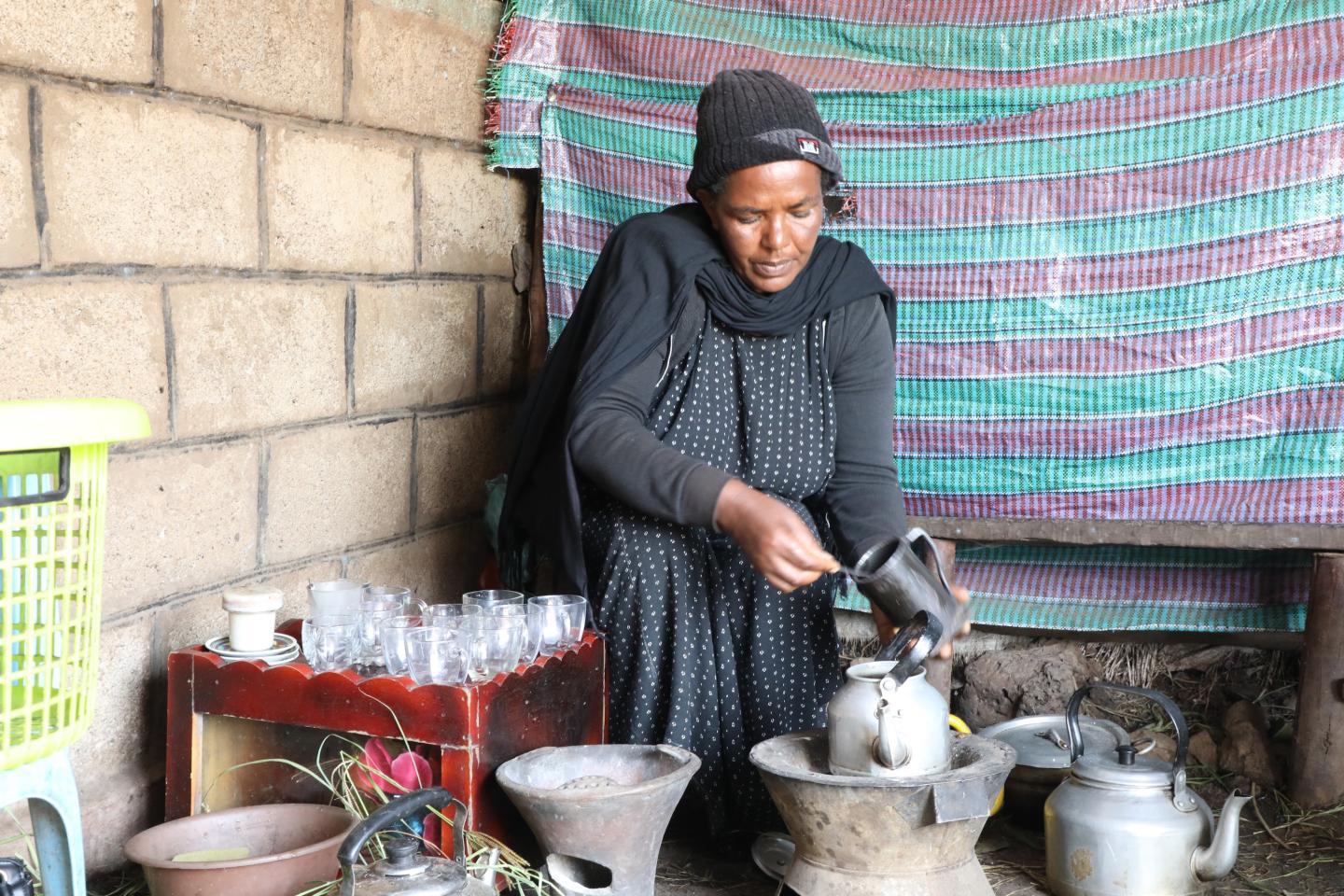
Change began quietly when Gadise joined a World Vision group, uncertain but hopeful. She learned foundational skills: how to save, plan, and manage a household. When she planted her first backyard garden of beetroot, onions, and carrots, her perspective shifted.
“I didn’t know vegetables could change a family,” she says. “But that training opened my eyes.”
Her financial evolution started small, saving just 10 birr a week. Today, that habit has grown to 700 birr weekly. Capitalising on her momentum, she took out a 50,000 birr loan to open a small restaurant near town, which now nets her 1,000 birr a week.
Her farm transformed alongside her business. The once-barren plot now features rows of vegetables and thriving banana, orange, and avocado trees. The family eats well, sells the surplus, and enjoys a steady, reliable income.
The starkest contrast of Gadise’s success is visible in her 12-year-old daughter, Ayantu. Unlike her older siblings, who bore heavy burdens and dropped out of school, the fifth-grader is growing up in a completely different reality.
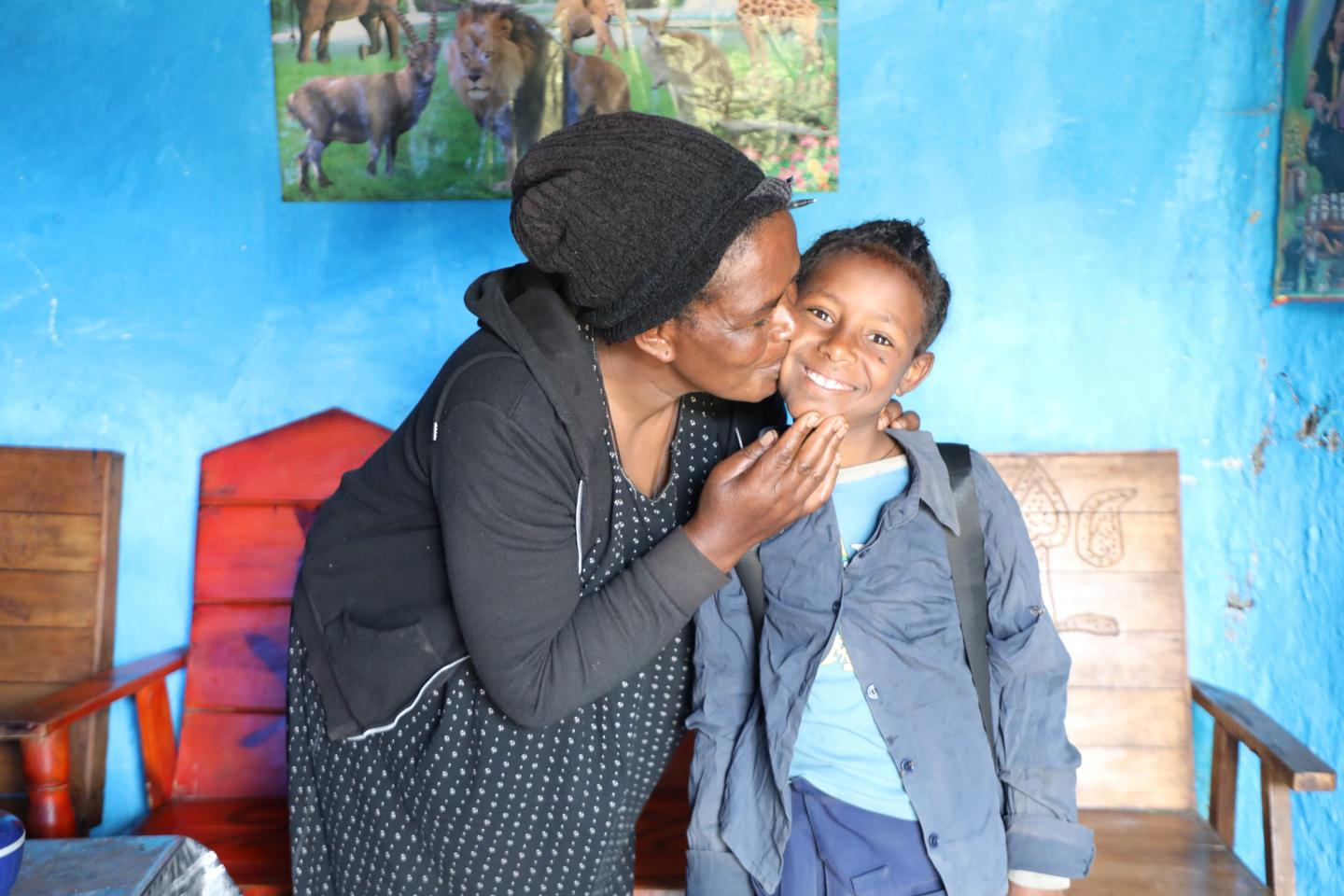
“I am not challenged on educational material, clothes, or food,” Ayantu says with a shy smile. “I have no household burden. My focus is on my education. My mother gives me a variety of food and takes good care of me.” She adds with pride, “I want to be a doctor. I want to cure my mother one day.”
The shabby cottage of the past is gone, replaced by a main house and a separate kitchen, together valued at 140,000 birr. Furthermore, Gadise is currently anticipating an onion harvest estimated to bring in half a million birr.
“When I look at my home now, I feel peace,” Gadise says, her voice trembling. “I feel human again. My life is organised. I am happy, my children are happy. God has changed my story.”
Though the formal programme has ended, the impact remains. Gadise no longer hides in the smoke of survival. She stands tall, providing for her children with confidence, pride, and a future she can finally believe in.
By Hilina Hailu, Field Storytelling Coordinator, World Vision Ethiopia