
Restoring the mountain, restoring a child’s future

On the jagged slopes of Megaramo Mountain, Central Ethiopia, a gathering storm didn’t mean life; it meant destruction. Without trees to hold the earth, the rain would transform into a brown, roaring wall of water. For 16-year-old Jatudin, the "before" was defined by the sound of floods fierce through his father’s plots, leaving behind a graveyard of mud where wheat should have been.
“Every rainy season, I watched my father’s shoulders slump,” Jatudin recalls. “The land was leaving us, and I thought my dreams of school were leaving with it.”
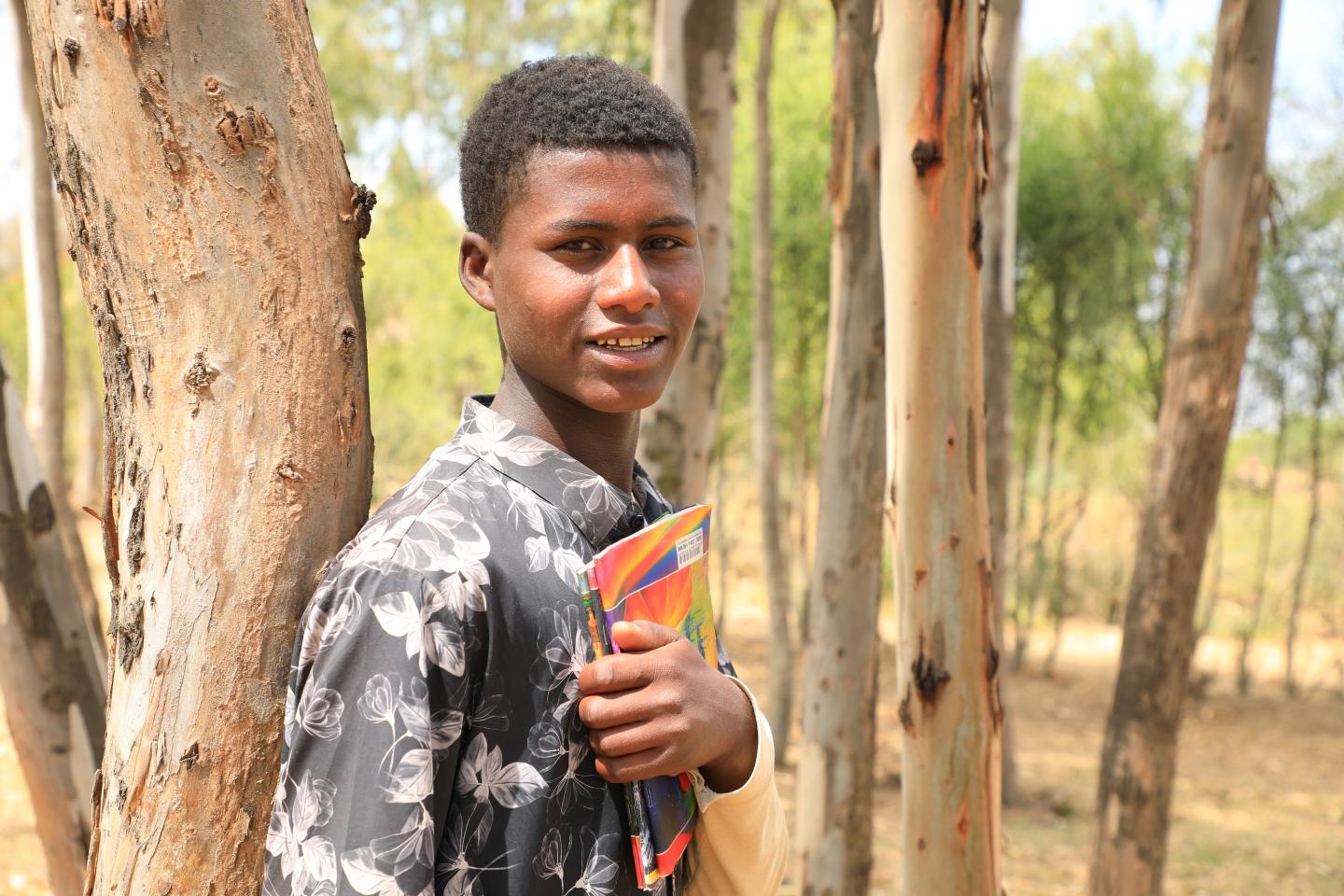
His father, Basero, lived in the direct path of this devastation. “We were working for the mountain, but the mountain wasn’t working for us,” Basero says. On his small plot within the Megaramo catchment, he would sweat for an entire season only to harvest five insufficient quintals of wheat, hardly enough to survive.
The change began when the community united with the government and partner organisations to manage the degraded land and restore the area's biodiversity. The community realised that to save their farms, they had to save Megaramo, the mountain surrounding the village. The mountain was closed to interference, and the community, including Basero, became its guardians.
Through our training on Farmer Managed Natural Regeneration (FMNR), the community implemented a full suite of watershed activities and carved deep terraces into the slopes to break the water’s fall. Instead of planting new saplings, they nurtured the "underground forest" of living stumps already in the soil. The air has changed; it is cool and moist now, held close to the mountain by the thick, green lungs of the regenerated trees that Basero and his neighbours helped awaken.
Basero points to straight-growing trees he once pruned as tiny shoots. “When we protect nature, nature begins to protect us,” he says.
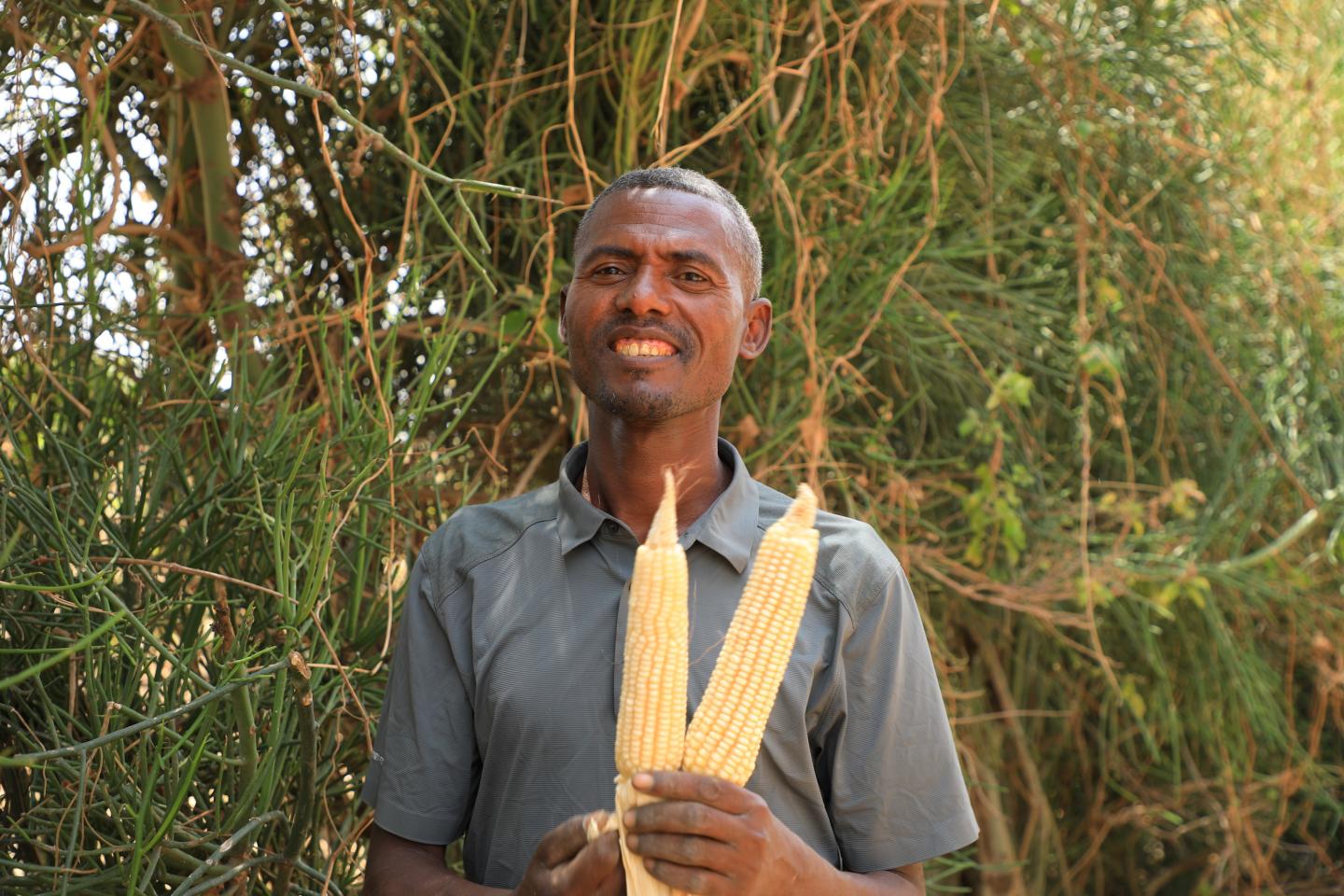
The soil erosion that once bled the land dry has stopped. For Basero, this improved land management has been changing lives. His wheat harvest has tripled, jumping to nearly 20 quintals. His fields are now vibrant with maize and high-value chilli peppers, a single harvest of which earned him $641 USD per year. But the greatest yield isn't measured in money; it’s measured in Jatudin’s eyes.
"My father and people living in this area helped restore this mountain,” Jatudin says with quiet pride. “It made me realise I want to be a doctor. I want to heal people the way we healed the land. Because our farm is productive again, I can stay in school. I can become the person I was meant to be.”
In the shadow of a green Megaramo, the journey from floods to flourishing is complete. With over 5,400 hectares already restored in the Mareko district, stories like Jatudin’s prove that when we restore the earth, we provide a foundation for a child’s biggest dreams.
By Bitima Milkessa, Advocacy & Communication Coordinator, World Vision Ethiopia