The Chickens I Once Disliked Now Sustain My Family: Fatima’s Journey to Resilience

For years, drought stripped Fatima Ahmed of everything she had worked for. The livestock that once sustained her family disappeared, forcing the mother of 11 to flee her home and seek refuge in Jeexdin IDP Camp in Galkayo.
There, survival became a daily struggle, culminating in the heartbreaking reality of watching three of her children including her grandchild become malnourished.
“It was painful to see Three of my children, including my grandchild, suffer from malnutrition,” Fatima recalls.
Recovery began at a Health and Nutrition Centre supported by World Vision’s Joint Resilience Programme, funded by World Food Programme and KfW. Fatima’s children received nutritional supplements and treatment until they recovered and graduated from the program, healthy and strong.
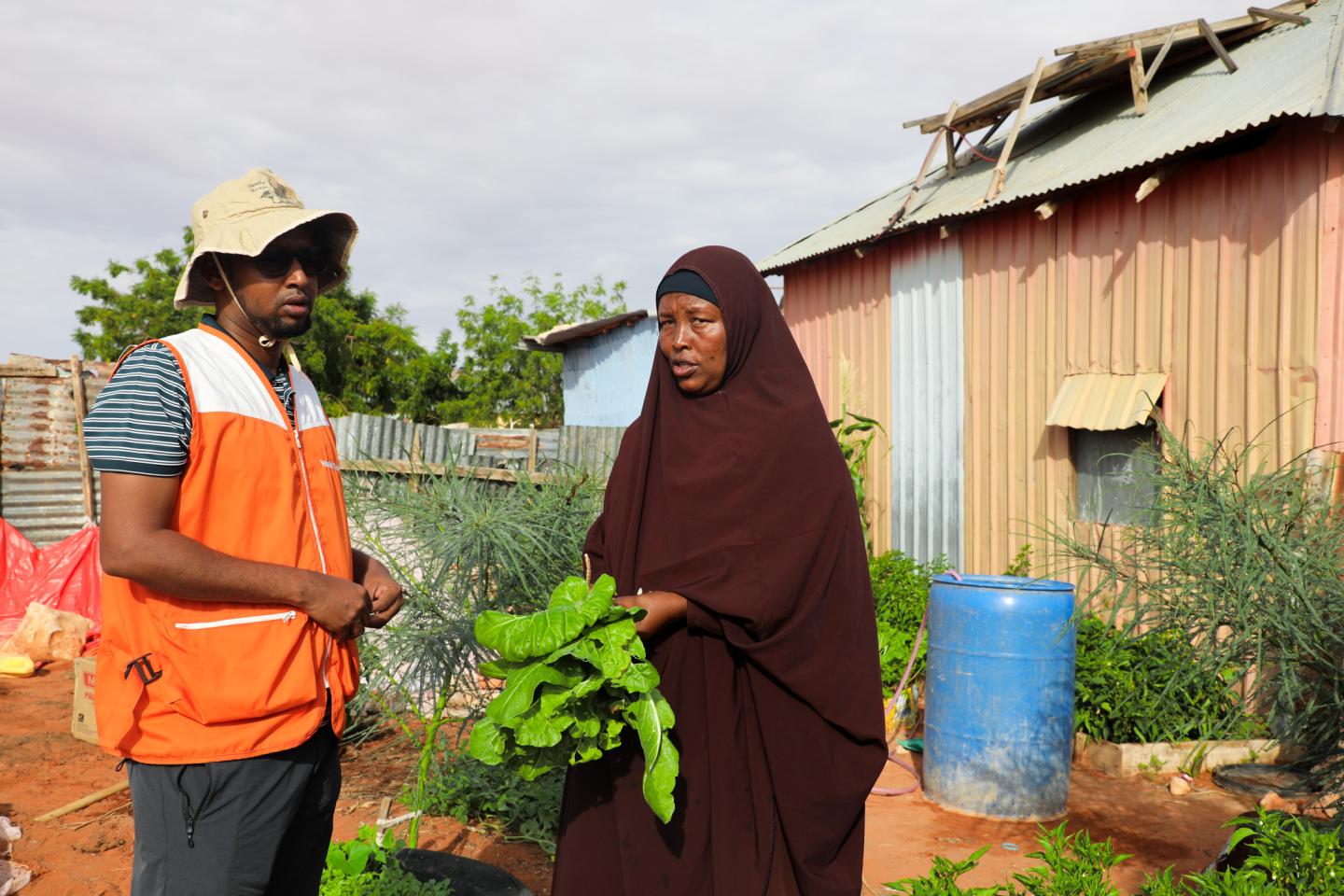
But food aid alone wasn’t enough. To break the cycle, Fatima became one of 183 female-headed households supported to establish kitchen gardens. She was also among 30 women who received 10 chickens each to kickstart a new livelihood. Along with poultry came training, seeds, tools, fencing, and ongoing technical support.
In addition to poultry, she received agricultural training, seeds, farming tools, fencing materials and ongoing technical support to help her build a sustainable source of food and income.
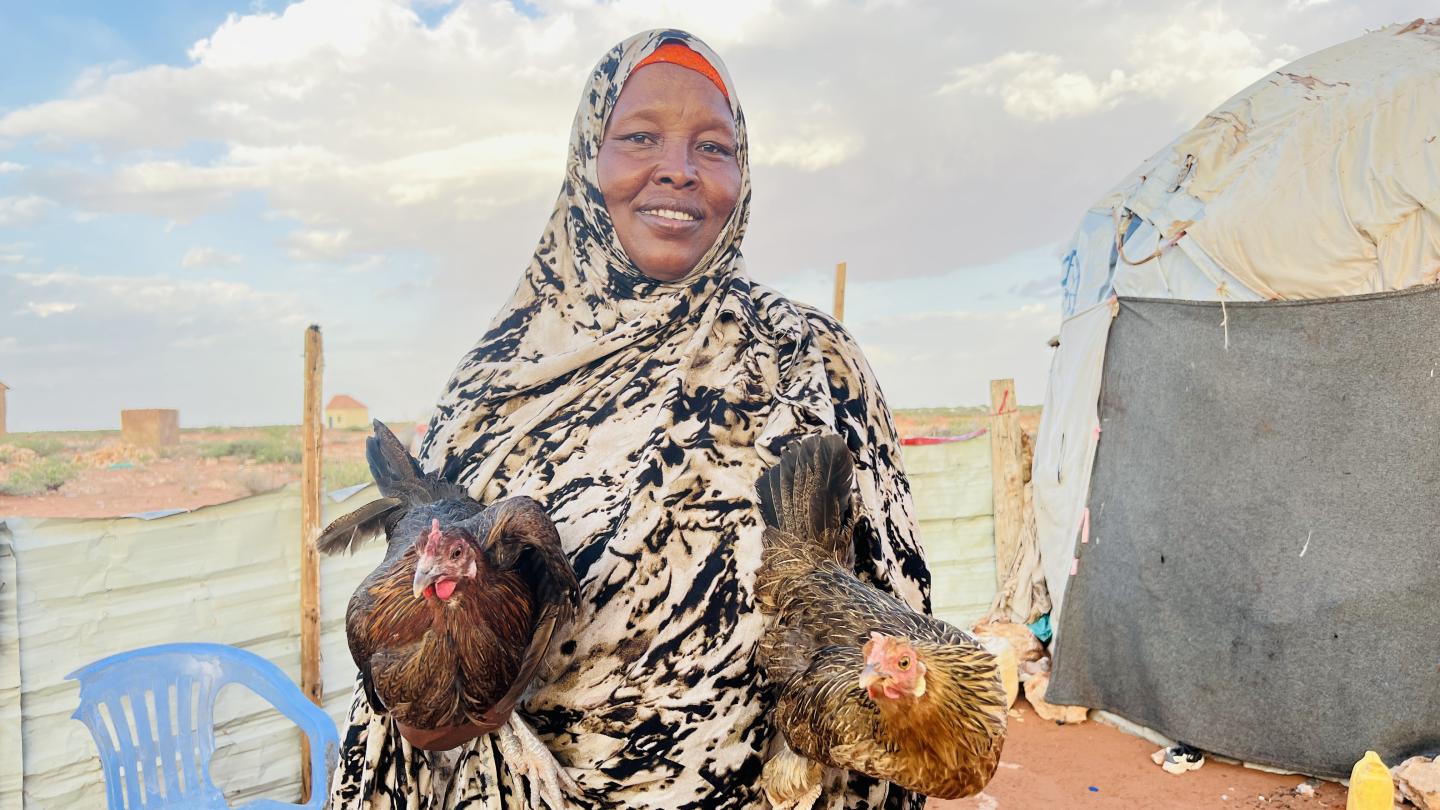
Initially, Fatima was uncertain about keeping chickens and never imagined they would become a cornerstone of her family’s recovery.
“I used to dislike chickens, but today they are a source of food for my family and a pathway to financial security,” Fatima said with a laugh
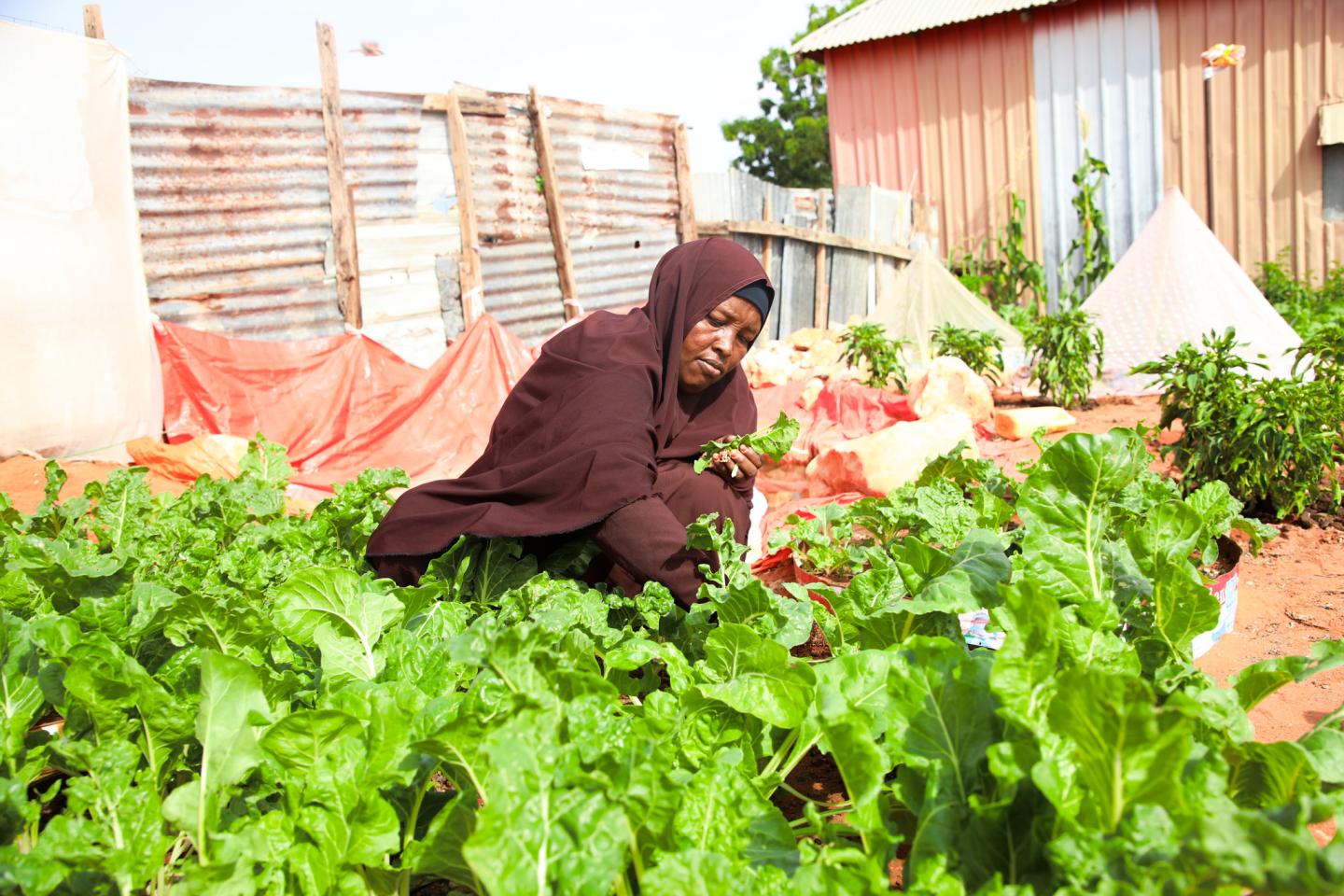
With her new skills, Fatima started growing spinach, melons, tomatoes, beetroot, peppers, and other vegetables, while her chickens provided eggs for household consumption and sale. The combination transformed her family’s diet and income.
The results were life-changing. Her children recovered from malnutrition, and surplus vegetables now earn her between $10 and $20 each week, helping cover household expenses.
“Today, my farm is productive. The chickens provide eggs that help feed my family, and I sell vegetables twice a week, earning between $10 and $20 to support household needs,” she said gratefully.
Beyond farming, Fatima joined a Village Savings and Loan Association (VSLA) made up of 15 members. With support from the programme, the group launched a village shop that quickly became profitable. Additional investment allowed them to expand the business and install solar-powered refrigeration, creating another source of income for participating families.
Today, Fatima’s kitchen garden, poultry farm and VSLA business have restored her ability to provide for her family and invest in her children’s education.
“My children have overcome malnutrition through access to healthy food, and I am now able to support their education.” Fatima added with gratitude.
Today, the woman who once said she disliked chickens smiles as she gathers fresh eggs from her small poultry flock. Combined with a thriving kitchen garden and a growing small business, those chickens have become the foundation of her family’s recovery.
Fatima’s journey is a powerful testament to how integrated nutrition, livelihood, and financial inclusion support can help vulnerable families move beyond crisis, restore their dignity, and build a more resilient future.