Seeds of Change: A Mother’s Path to Recovery in Baidoa

The blazing Somali sun claimed Nishey's last goat, a devastating blow to the mother of five. As the beast succumbed to exhaustion, Nishey's hopes crumbled too. The parched earth, cracked and barren from years of failed rains, offered no solace. With her livelihood gone, she was forced to abandon her home, embarking on a desperate quest for food, water, and a lifeline to save her family.
Exhausted and relieved, Nishey and her family finally settled into a makeshift shelter at ADC1 camp, Baidoa, after their arduous journey. The camp, a sea of tattered plastic and scorching sand, offered little respite from the unforgiving sun. With no income, assets, or support systems, Nishey's family struggled to survive, their vulnerability stark against the harsh reality of displacement. Her children were always on the brink, malnutrition a constant shadow hanging over them.
“When we arrived here at ADC1, we had nothing - no money, no clean water, no food. My children were malnourished, and life was hanging by a thread. It was extremely tough,” she recalled, her words filled with emotion.
Nishey's life took a turn for the better when she received support through the Regional Humanitarian Response Expansion in Somalia project, funded by GFFO and implemented by World Vision. This initiative provided a comprehensive response to her family's vulnerability. Her youngest child was enrolled in the Outpatient Therapeutic Program (OTP) to address health concerns, while Nishey began receiving Multi-Purpose Cash Assistance (MPCA) to help meet her family's basic needs.
This life-changing support enabled them to access essential resources and services, marking a significant step towards stability and recovery.
With her child on the mend, Nishey joined a training programme and got seeds and tools to start her own kitchen garden. She began growing nutritious veggies at home, taking a step towards self-sufficiency.
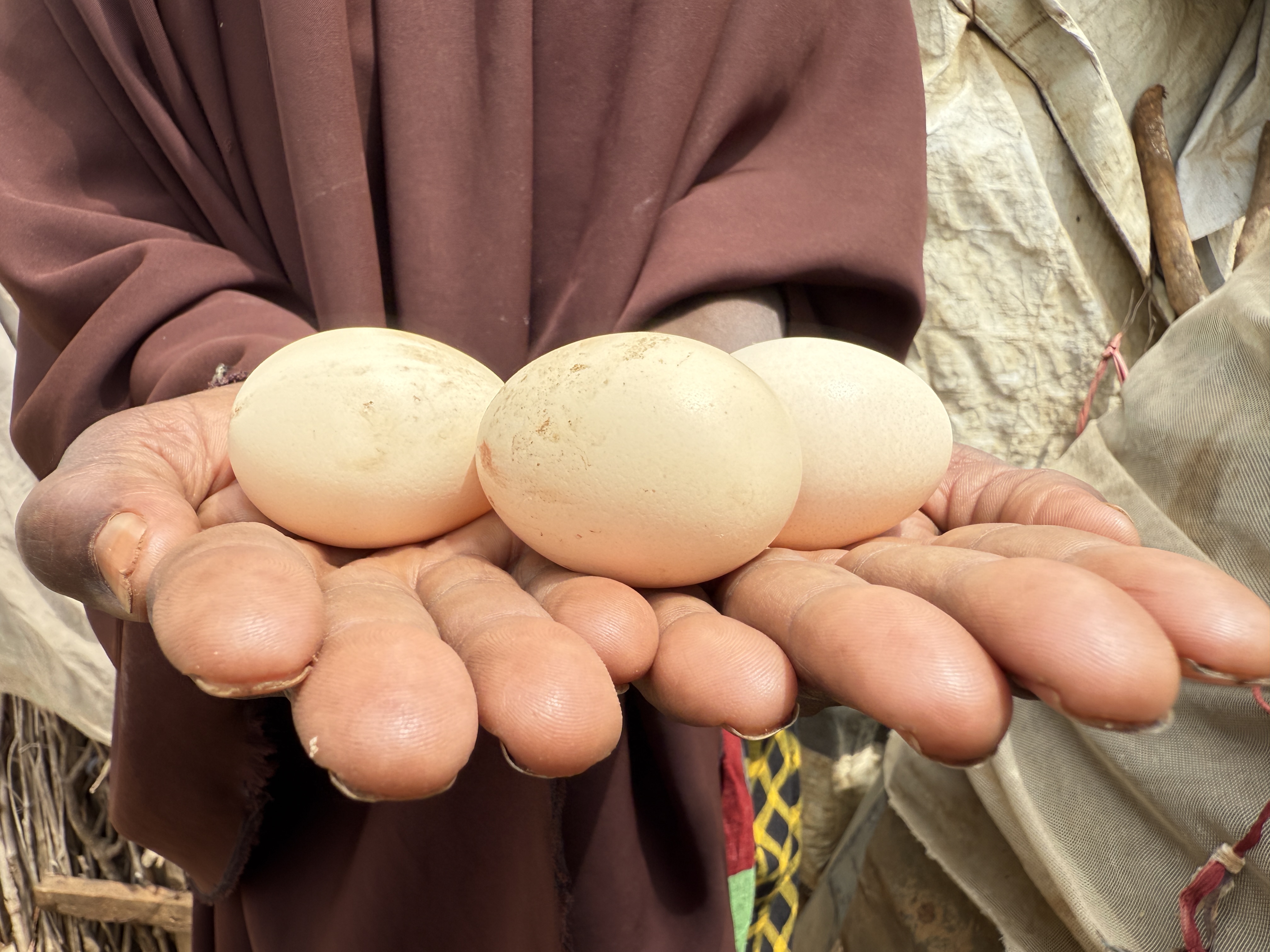
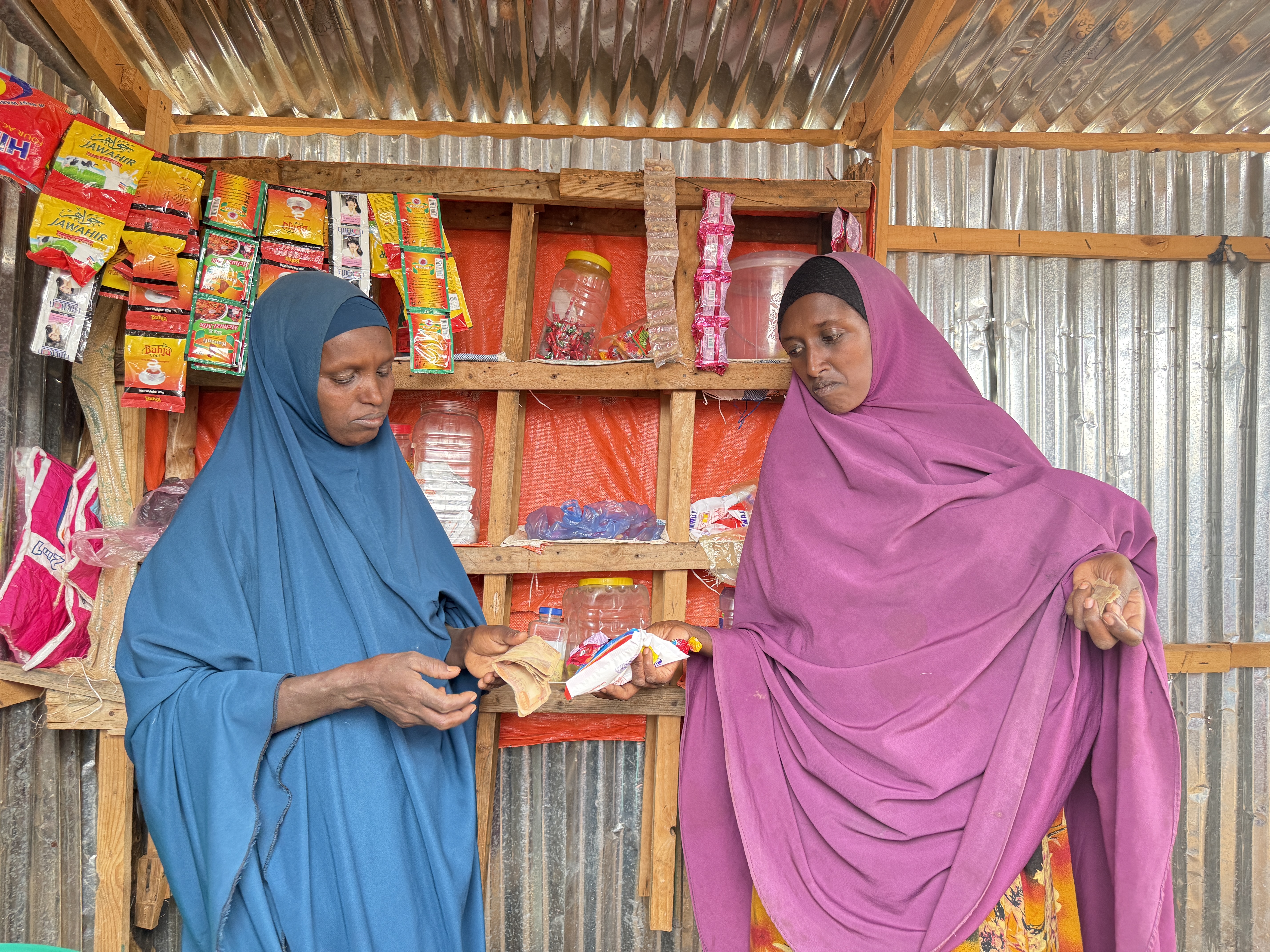
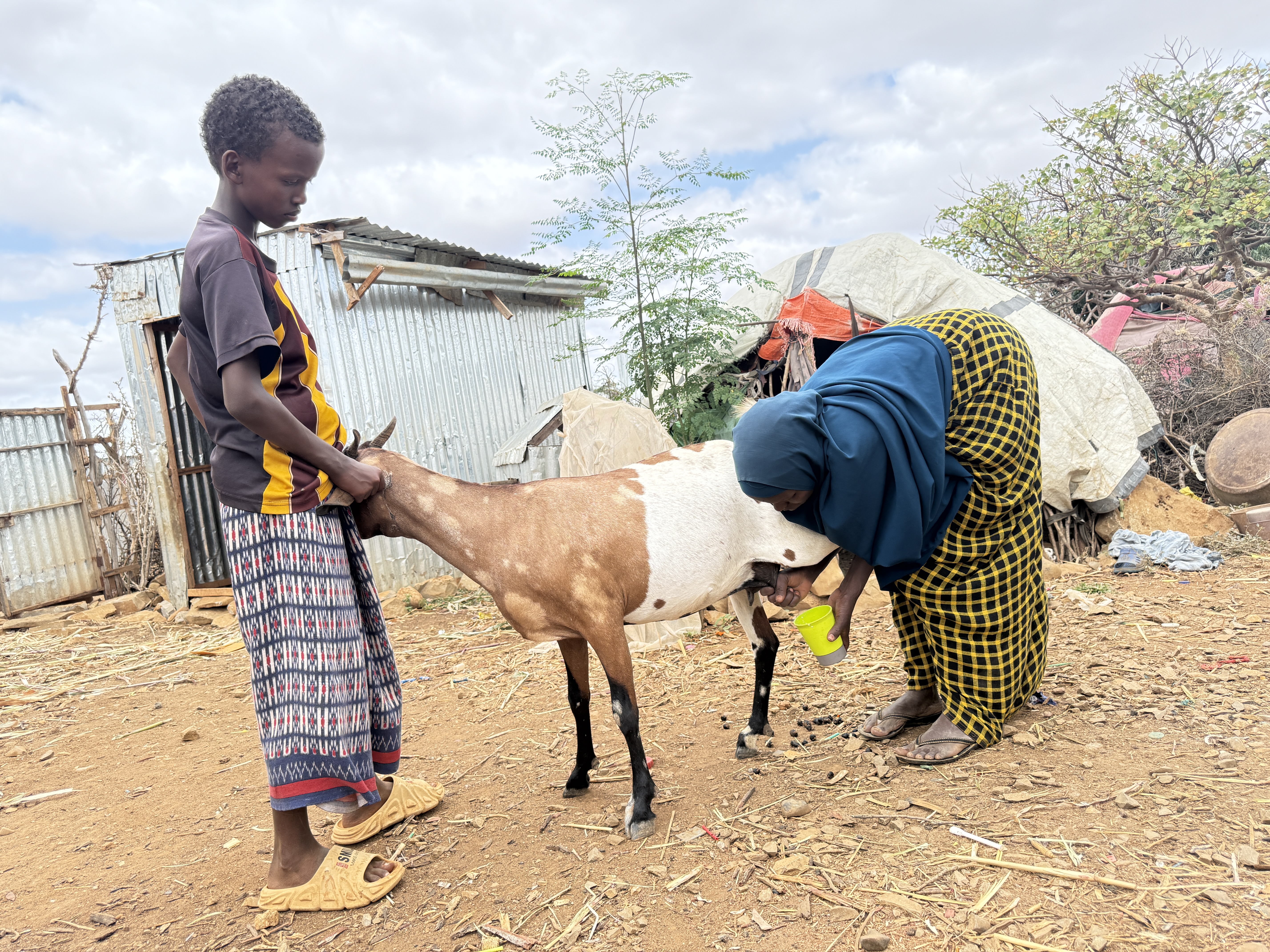
For six months, she received $100 per month, which she used to purchase a goat for milk, chickens for eggs, and to open a small neighbourhood shop. Now Nishey and her children have achieved a better quality of life and significantly reduced vulnerability.
“Our life has changed a lot from before. Now I have goats, I can get milk for my children, chickens that lay eggs to feed them, and I can give them spinach and salad from my home. The income from the shop helps me cover education fees and buy clothes for my children” she beamed with pride.
Today, Nishey and her children are thriving. Her garden bursts with green spinach- a symbol of recovery They have access to nutritious food, a source of income, and three of her children are going to school.
"Now I have hope that I can move forward and achieve even more." She smiled, a sense of possibility unfolding before her
Nishey’s story is a powerful example of how coordinated humanitarian support can break the cycle of vulnerability and foster lasting hope and self-sufficiency among displaced communities.
With support from German Federal Foreign Office (GFFO), vulnerable families like Nishey’s are recovering and rebuilding their lives.