
Mary’s mission: Empowering women and protecting children in Munuki

In South Sudan's Munuki Payam in Juba County, where hardship often hides behind closed doors, one woman is quietly transforming her community. As a Child-Friendly Space volunteer facilitator, Mary Laku is reaching the most vulnerable—supporting women in crisis, and ensuring children are not left behind. Grounded in her own life experiences, her work is restoring dignity, strengthening families, and challenging harmful norms.
“Women and girls are not property. When we see them as human beings like everyone else, our whole community will change for the better,” says Mary Laku, 37, a mother of two from Munuki Payam in Juba County, who has become a quiet force for change.
With support from the Joining Forces for Child Protection in Emergencies Project, Mary received training in child protection, gender equality, and disability and social inclusion. She now volunteers as a Child-Friendly Space (CFS) facilitator at Libya One Primary School, where she is transforming lives—one child, one woman, and one household at a time.
Mary’s work comes from the life she has lived and the struggles she sees around her every day. She knows that many families are suffering quietly, behind closed doors, in homes that may look fine from the outside, or in places that are hard to reach.
In Munuki, when the rains come and the roads turn to mud, it becomes almost impossible for vulnerable children, especially those with special needs, to reach the CFS. Instead of waiting for them to come, Mary goes to them. She walks door to door, checks on families, identifies children who need support, and helps connect them to the services that can make a difference.
“I believe that every child deserves protection, and every woman deserves dignity and equal opportunity,” Mary says.
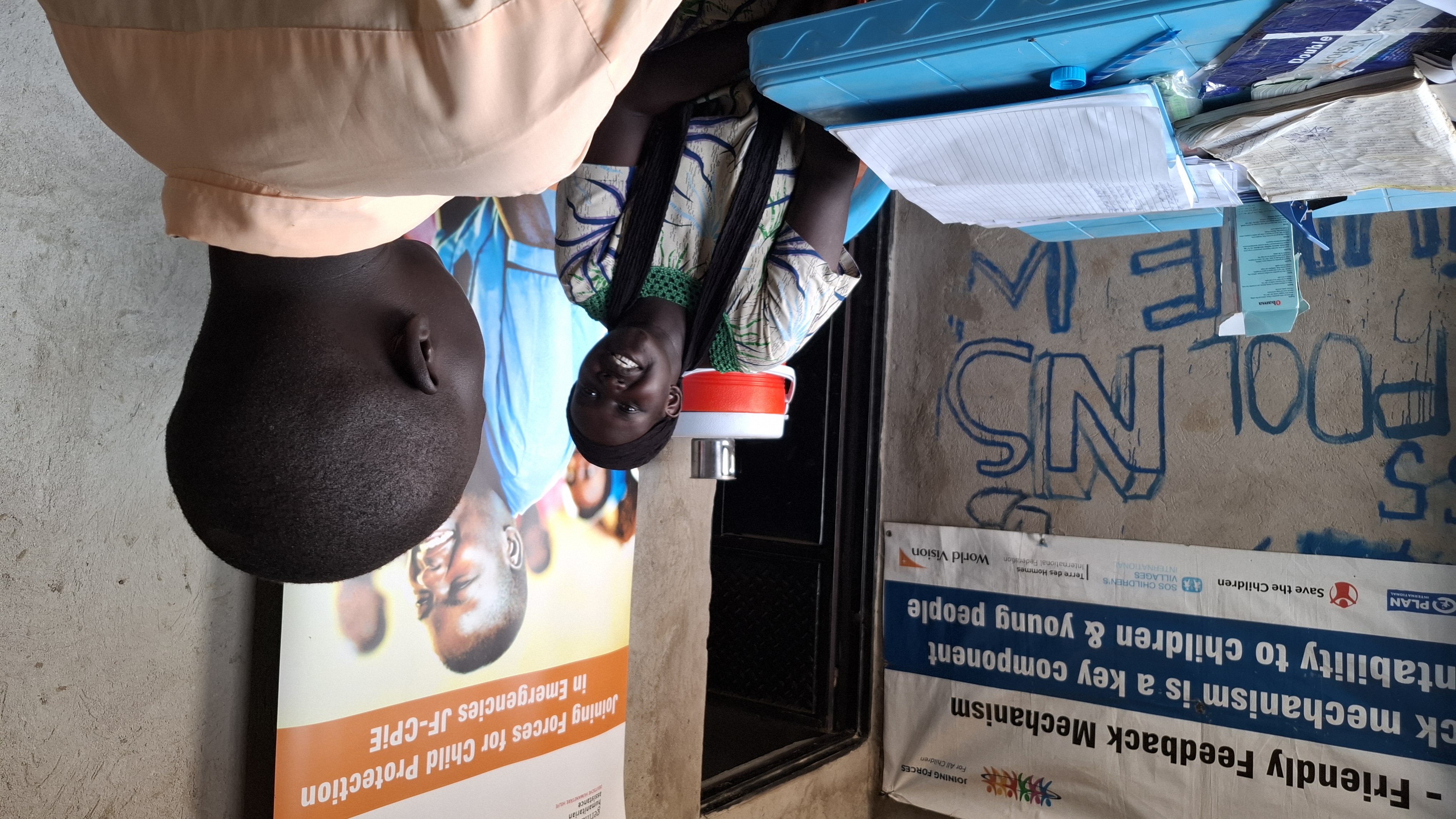
Much of her work focuses on women facing family conflict, insecurity, and worsening economic hardship. With high levels of illiteracy in the community, many women lack access to information and support that could transform their lives and improve their children’s well-being.
One story remains especially close to her heart.
In 2024, a widowed mother of four from Munuki 107 was referred to the CFS after losing her husband and all support. Life with her in-laws had become unbearable, and she felt completely alone. After a community leader connected her to Mary, she began receiving regular counselling.
“When a woman feels heard and supported, she can rise again,” Mary says. “My job is seeing someone regain strength and rebuild their life, even after losing everything.”
With Mary’s guidance and referrals to additional programmes, the woman slowly rebuilt her confidence. She formed new friendships, opened up about her struggles, and received steady peer support. Today, she runs a small business and supplements her income with laundry work, providing for her children with renewed independence.
“Stories like these touch my heart and give me strength to continue my work,” Mary reflects.
Not everyone understands how humanitarian programmes select participants. When some community members are not chosen, frustration can be directed at Mary personally, creating tension and misunderstanding. Yet she remains steadfast, believing that true service demands courage and compassion—even when it is not fully understood.
Mary is also outspoken about harmful traditional practices that continue to put women and girls at risk. She advocates for abandoning negative customs and strengthening cultural values that protect and uplift.
“Stop the harmful practices against women and girls. Promote the good practices that uplift them and bring equality.”
For Mary, change begins with respect—and grows through action.
Story and photos by Jemima Tumalu and Alan Leju/World Vision