
The prayer Gebila no longer needs to say

Every school day, for as long as she can remember, Gebila would feel it coming that familiar tightening in her stomach and her heart would sink with it. It meant leaving her classroom and the lesson half-finished, and setting off on the walk back home, just to find a private place to ease herself.
Gebila is 18 years old and in Primary 8 at Wunlem Primary School in Panam payam, Panyikang County of South Sudan’s Upper Nile State. She has been walking that same path since Primary One.
“Right from Primary One, I used to circle around, walking the distance from school to home just to ease myself,” she says. “Sometimes I prayed not to feel pressed, because of how far I needed to walk.”
It is a strange kind of prayer for a child to have to make not for good grades, not for success, but simply to not need the toilet during school hours. Yet for years, that was the quiet, private burden Gebila carried alongside her books.
The problem was not hers alone. Wunlem Primary School had no latrine at all. Without one, children did what they had always done, they went into the surrounding bush, in full view of one another, a practice that slowly became normal simply because there was no alternative.
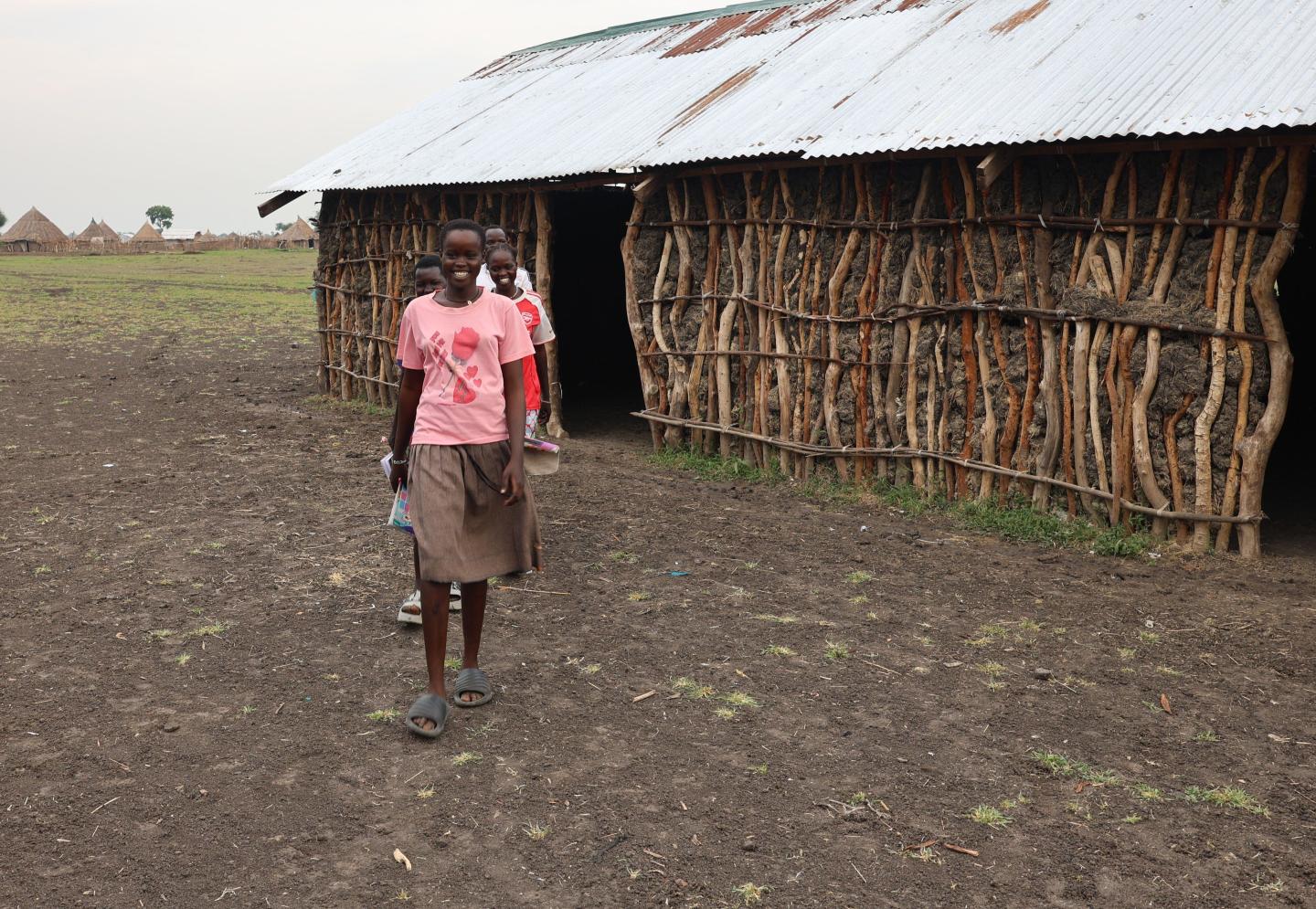
“The school atmosphere didn't make it easy, because children practiced open defecation since the school never had a latrine,” Gebila explains.
Learning, she says, was tough over the years not because the students lacked the will to study, but because something as basic as dignity and comfort was missing from their days.
For girls like Gebila, the burden carried extra weight. Once a month, an ordinary school week becomes something to dread and often something to avoid altogether.
“Missing school, especially for girls during our monthly cycle, was easy, since we didn't have a private area to change our sanitary pads,” she says quietly.
There was no door to close, no private corner, no dignity in the process so many girls simply stayed home, and with every missed day, the gap between them and their male classmates quietly widened.
“Finally, God smiled on us, bringing World Vision,” sha adds.
With support from the South Sudan Humanitarian Fund (SSHF), World Vision constructed two blocks of five stance each semi-permanent latrines at Wunlem Primary School one for the boys, and one for the girls.
Simple structures, built of little more than timber, iron sheets and concrete slabs, yet for the children of Wunlem, they represent something far larger, a return of dignity to daily learning.
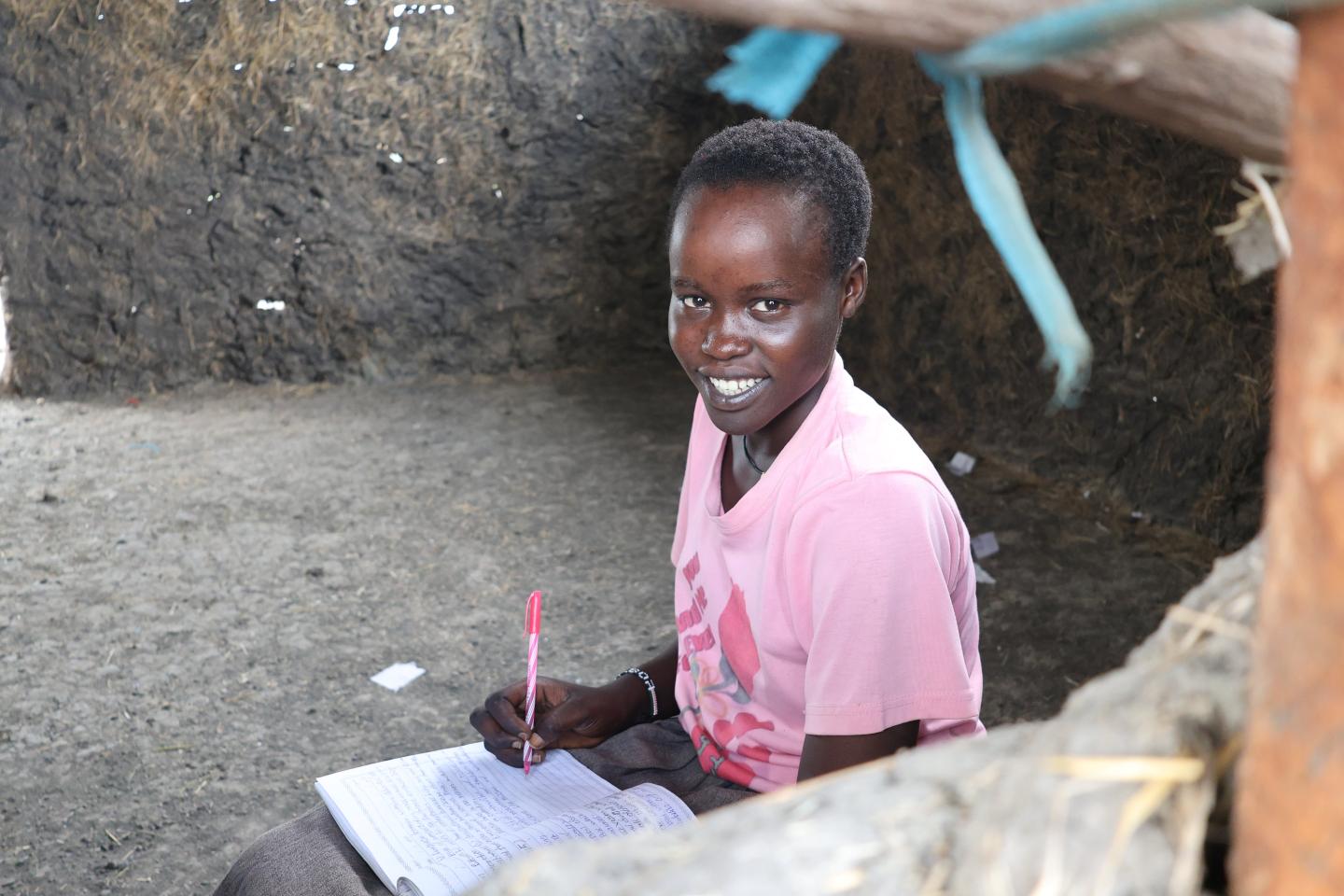
Gebila no longer has to circle around, pray silently, or plan her school day around the location of the nearest bush. Girls now have a private space of their own, one where they can manage their monthly cycle without shame and without needing to disappear from class for days at a time.
And there's another change too, one she notices the moment she steps onto the school compound each morning.
“Latrines are a very important part of a school," she reflects. “At least now, the air is fresh, compared to before the latrine.”
It is a small sentence, but it says everything. Fresh air. A simple phrase that speaks to years of relief finally realized for a school, for a community, and for one 18-year-old girl in Primary 8 who, for the first time in her school life, no longer has to pray just to make it through the day.
Story and photos by Scovia Charles, Communications Officer/World Vision South Sudan