
The window of hope in South Sudan’s Renk Transit Centre

When Mary sees the small window at the health facility open, there is hope for her children's survival.
“It is only when we see the window is open that we run,” she says. “Many times, facilities are open, but there are no medicines.”
For Mary, a 32-year-old mother of six, that window has become more than a place where medicines are dispensed; it has become a symbol of hope in the middle of a crisis.
Mary fled the conflict in Sudan in 2024 with her four daughters and two sons. Now living in the Transit Centre in Renk, Upper Nile State, she faces the daily reality of raising her children alone. When the family first arrived in February 2024, her husband immediately left for Juba in search of work. Since then, a year has passed without any communication.
“With no one to support us, everything is difficult,” Mary uttered. “For school, I have no money. All the children are at home. But what I fear most is when they fall sick, there is no money for treatment. Food we can share, but sickness needs medicine.”
In the past, Mary would move to Renk County Hospital. There, she would receive a diagnosis and prescription but rarely the medicines she needed.
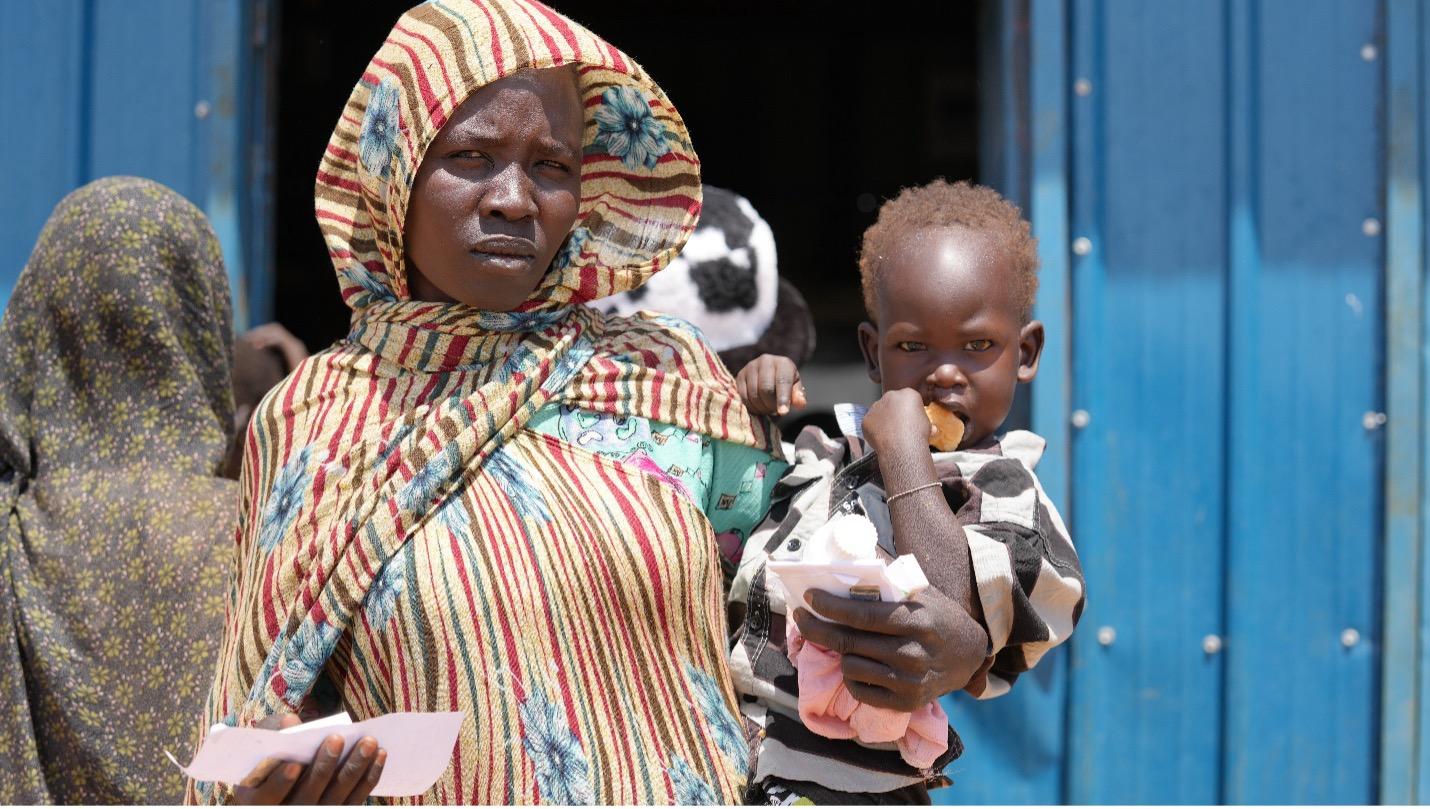
“There were no medicines,” she recalls. “It was better than nothing, but we still had to go home without treatment. And buying from clinics is very expensive.”
Everything changed last year when a friend told her about the health facility inside the Transit Centre, operated by World Vision South Sudan with support from the European Commission's Civil Protection and Humanitarian Aid Operations (DG ECHO The facility offered consultations, referrals, emergency services and medicines – a lifeline for families who cannot afford private care.
“One day, my twins were sick, and my friend said, ‘Go to World Vision. They give medicines.’ I went, and the whole process was quick. After consultation, they sent me to the window, where I received the medicines. That window has given me hope.”
Since then, Mary has brought her children there whenever they fall ill. She watches other mothers gather at the window too, women who, like her, carry the weight of displacement, loss, and uncertainty.
“This window is not only a hope for me", she also says. “It is hope for many women who are vulnerable in the transit centre."
Despite funding reductions that have forced humanitarian agencies to scale down operations across South Sudan, the health facility continues to serve thousands of people every month. For mothers like Mary, it remains the only accessible and reliable source of healthcare, a place where their children can be treated, and where dignity is restored.
As Mary reflects on her journey, she chooses resilience over fear. “With medicine, my children can get better,” she says. “That is what keeps me strong.”
Story and photo by Alan Leju/World Vision South Sudan