
Private Latrines Project provides Safety and Opportunity in Azraq Camp

“We were isolated with no doctors, no communication, and bombs above us.”
46-year-old Noura* once lived in Aleppo, surrounded by family, memories, and the home she worked hard to build with her husband. But her reality since the crisis in Syria is far from the life she once knew. She now lives in Azraq Refugee Camp, Jordan, with her four children and her grandson, who she's raising as if he were her own child.
When violence swept through her neighbourhood, safety disappeared overnight. With bombers overhead and nowhere left to hide, the family made the difficult decision to flee to Jordan in 2015. After getting transferred to the camp, they hoped for stability. But life in the camp brought its own challenges.
Housing was limited, services were scarce, and daily life felt exhausting. “We were grateful for the safety offered in the camp, but even simple needs were difficult to meet due to lack of work opportunities and limited support”, shares Noura, reflecting on her years in the camp.
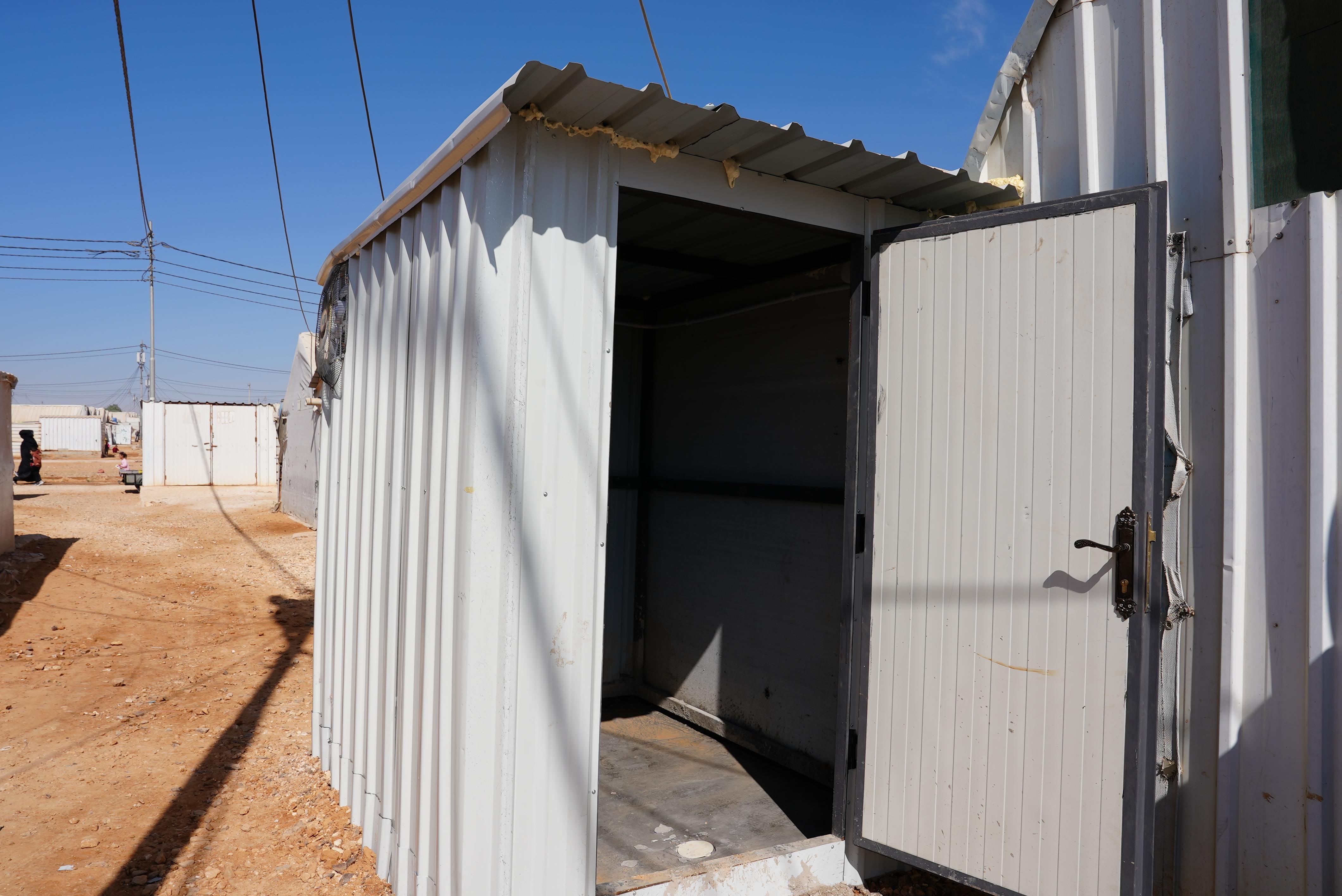
This year was a turning point for Noura's family. Through community outreach in the camp, they learned about World Vision Syria Response’s Private Latrines project. Funded by the Austrian Development Cooperation (ADA), private latrines have been installed for families in Azraq camp, prioritising families with special needs, while also providing incentive-based volunteering (IBV) opportunities.
This came at a crucial moment for Noura. Her husband was ill, and taking care of so many children without proper facilities had become a heavy burden. Noura's family shared crowded bathrooms with many other families, facing difficulties every day.
“We used to wait our turn, sometimes in the dark, worried about safety, for our daughters, for our children. Also, the bathrooms were often unclean, there was no privacy, and the threat of harm, even from strangers or stray animals, loomed constantly”, she recalls. “Now all these worries vanished away, thanks to your project”, she says.
Once the new latrines were built, the family finally experienced privacy, dignity, and a sense of safety. Filled with relief, Noura no longer needed to worry if her children were safe when they used the bathroom.
More doors yet to open
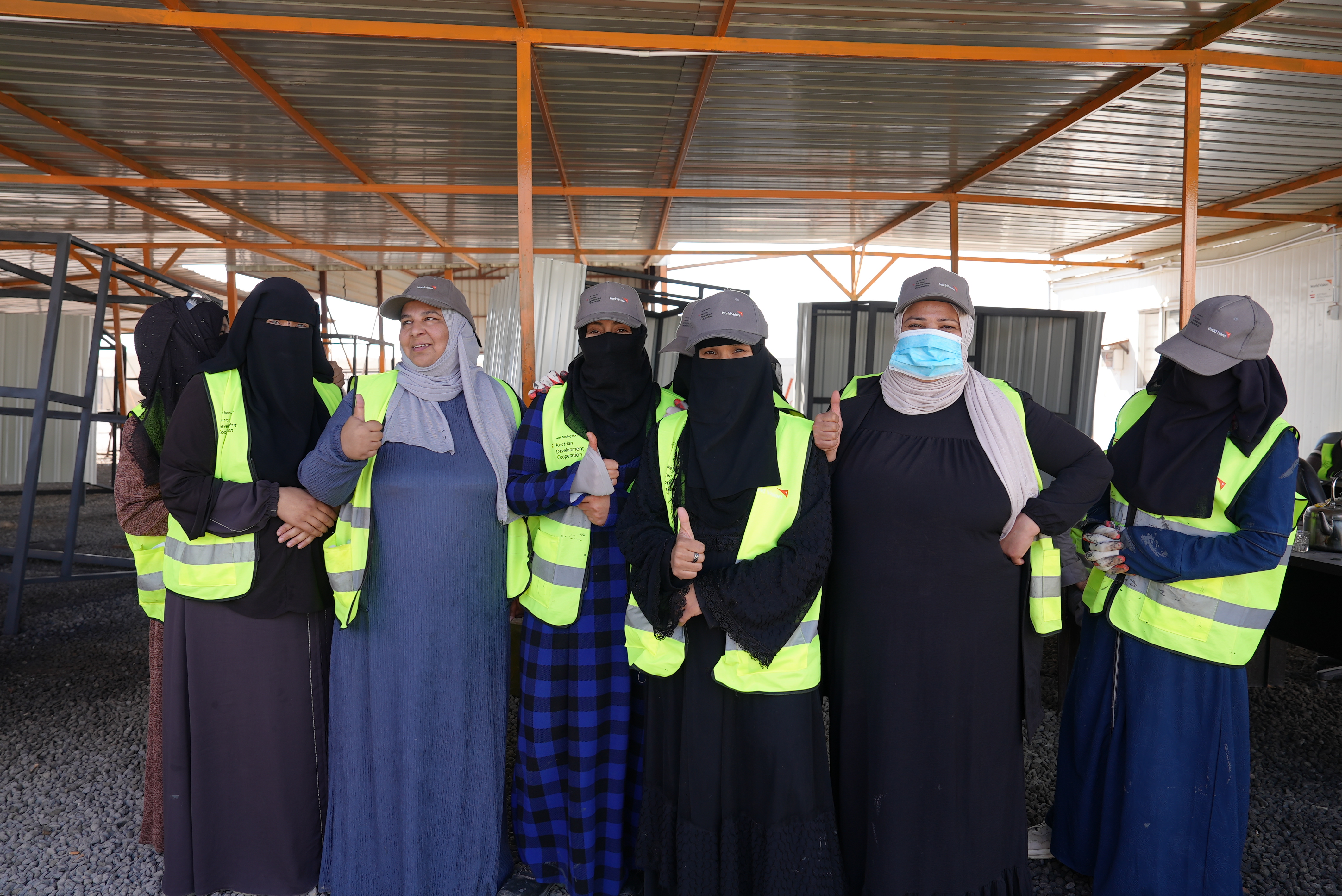
Beyond better sanitation, World Vision offered a lifeline for Noura, the chance to work. She discovered about the IBV opportunity through links shared on social media and signed up, hoping to get the chance to finally support her family financially while contributing to her community.
Noura was interviewed by World Vision and soon joined the project as a painter. She received practical training, learned new techniques and was given high-quality materials to work with.
“Working felt empowering. My husband couldn’t work due to his illness, knee joint friction. So, for the first time in a long while, I could contribute financially, pay for medicine my husband needed and help cover my grandson’s expenses. All I could feel was relief and security”, she said.
Noura wasn’t the only woman supported. Through the project, 79 other women received opportunities. “For many in the camp, especially for women heading households alone, widowed, divorced, or caring for sick family members, this opportunity gave them the chance to stand on their feet again. Thank you, WV, for your fantastic support. Your projects are creating real tangible impact on our lives, and I hope you continue your wonderful impact," added Noura.
Through the project and ADA funding;
- Over 1,000 latrines are set to be installed.
- Over 400 IBV opportunities will be provided.
- Hygiene dignity kits will be provided for all of the camp.
World Vision is here to support the most vulnerable communities amid hardships. For families like Noura's, a private latrine is not a luxury, but a step towards a dignified life. This work opportunity is not just income; it’s a chance to provide basic needs and feel empowered.
*Name changed to protect identity