
New Classrooms: New Hope for Kayihang’a Primary School

In the heart of Mwinilunga, a promise took shape on February 19, 2026. For the 502 learners at Kayihang’a Primary School, the handover of a new 1x3 classroom block by World Vision Zambia marked a critical step toward improving access to safe and dignified learning spaces.
For years, many pupils studied in overcrowded classrooms and temporary structures. The new block now offers space, protection from harsh weather, and an environment where learning can take place with greater focus and dignity.
A Legacy of Partnership
The handover reflects a long-standing partnership between World Vision Zambia and communities in Mwinilunga District. World Vision has worked alongside this community for 18 years, contributing to education, health, water, sanitation, and child protection. This effort forms part of the organisation’s more than 45-year commitment to improving the well-being of children in Zambia.
During the ceremony, World Vision Zambia National Director Marc Nosbach reaffirmed this commitment.
“When we invest in education, we invest in the future of children, families, and the nation,” he says. “Our vision remains clear. For every child, life in all its fullness.”
The project supports Zambia’s Eighth National Development Plan and contributes to Sustainable Development Goal 4, which calls for inclusive and equitable quality education. It recognises that children in rural communities must have equal opportunities to learn and succeed.
Overcoming the Hurdles of Rural Education
Across Zambia, schools continue to face major infrastructure challenges. Many rural classrooms remain overcrowded, and some children still learn under trees or in unsafe structures.
National statistics show that pupil-teacher ratios in some schools exceed 60 learners per teacher. These conditions place pressure on teachers and limit the attention each learner receives.
“When children learn in difficult environments, it affects concentration and learning outcomes,” says Mr. Nosbach. “Providing proper classrooms is one step toward strengthening education in rural communities.”
The Mwinilunga Council District Commissioner Mr. Harrison Kamona, represented by District Administrative Officer, Mr. DAO, Pius Polina Kamona, also noted that Zambia’s Free Education Policy has increased school enrollment across the country. While the policy has opened doors for many children, it has also placed greater demand on school infrastructure, teacher accommodation, and learning materials.
"For children in rural areas, access to a proper classroom carries deep meaning. It means learning without disruption from rain or wind. It means sitting at a desk rather than on the ground. It means studying in a safe environment that supports concentration and confidence," says Mr. Polina.
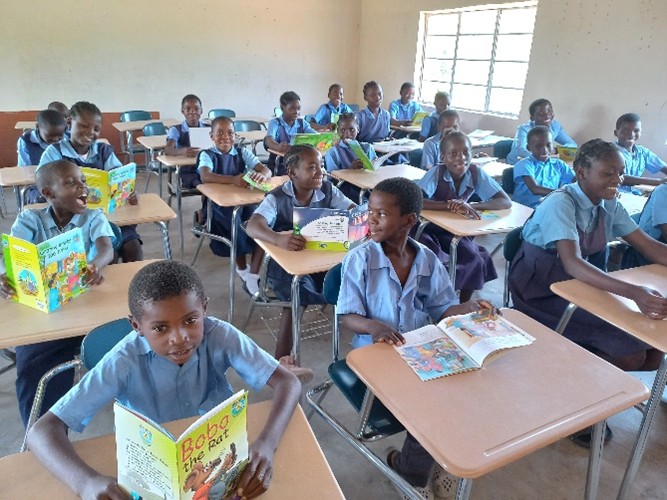
Community leaders stressed that investments in education shape the future of the district. Learners in these classrooms will grow into professionals who will contribute to Zambia’s development.
A Call to Ownership
Community members were encouraged to protect and maintain the new infrastructure. Parents, teachers, and local leaders all play a role in ensuring that the classrooms serve learners for many years.
Leaders also called on families to keep children in school and support equal access to education for girls and boys.
To the pupils, the message was simple and direct. The classrooms belong to them. They are spaces for learning, growth, and ambition.
As the day closed in Mwinilunga, the new classroom block stood as a symbol of partnership between the community, government, and World Vision Zambia, and as a reminder that when communities invest in education, they invest in the future of their children.