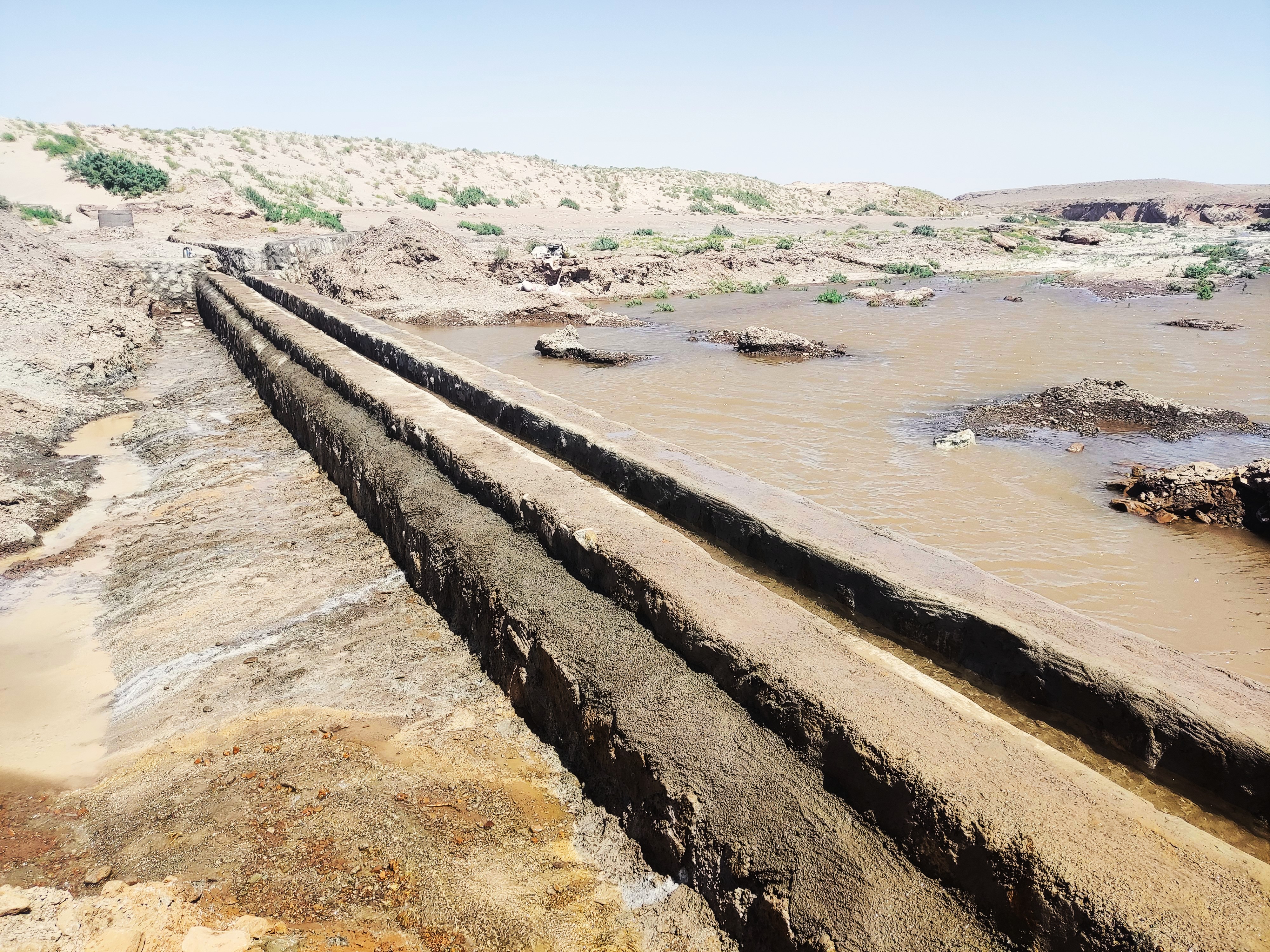
Restoring Water, Reviving Agriculture: Construction of a Water Passage in Cheshma Ghori Village, Zindajan District

By Ainuddin Hazem
Additional reporting by Abdul Zaher Joya
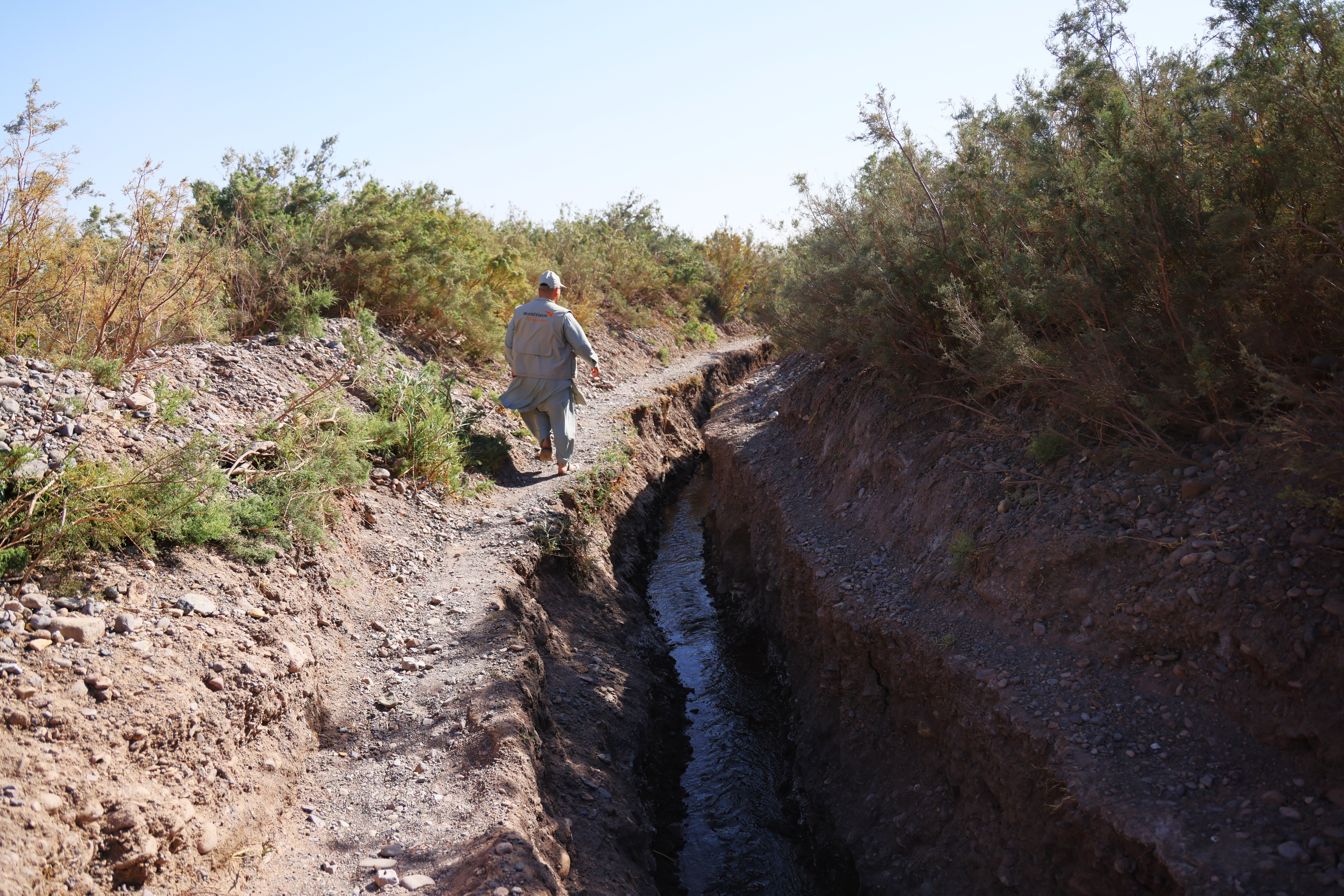
Access to water has long been one of the most pressing challenges for rural communities in Zindajan District. Successive years of drought and declining groundwater levels have severely affected traditional irrigation systems. In Cheshma Ghori village, farmers depend largely on the Kariz system, an underground water channel that has historically sustained agriculture in the area. However, due to water scarcity and damaged water pathways, much of the Kariz water was being lost in gravel and sandy areas before reaching farmland.
As a result, agricultural productivity declined significantly. Farmers were unable to irrigate their crops properly, leading to reduced harvests, lower household income, and increased economic vulnerability. Some families were even forced to leave portions of their land uncultivated due to lack of reliable irrigation.
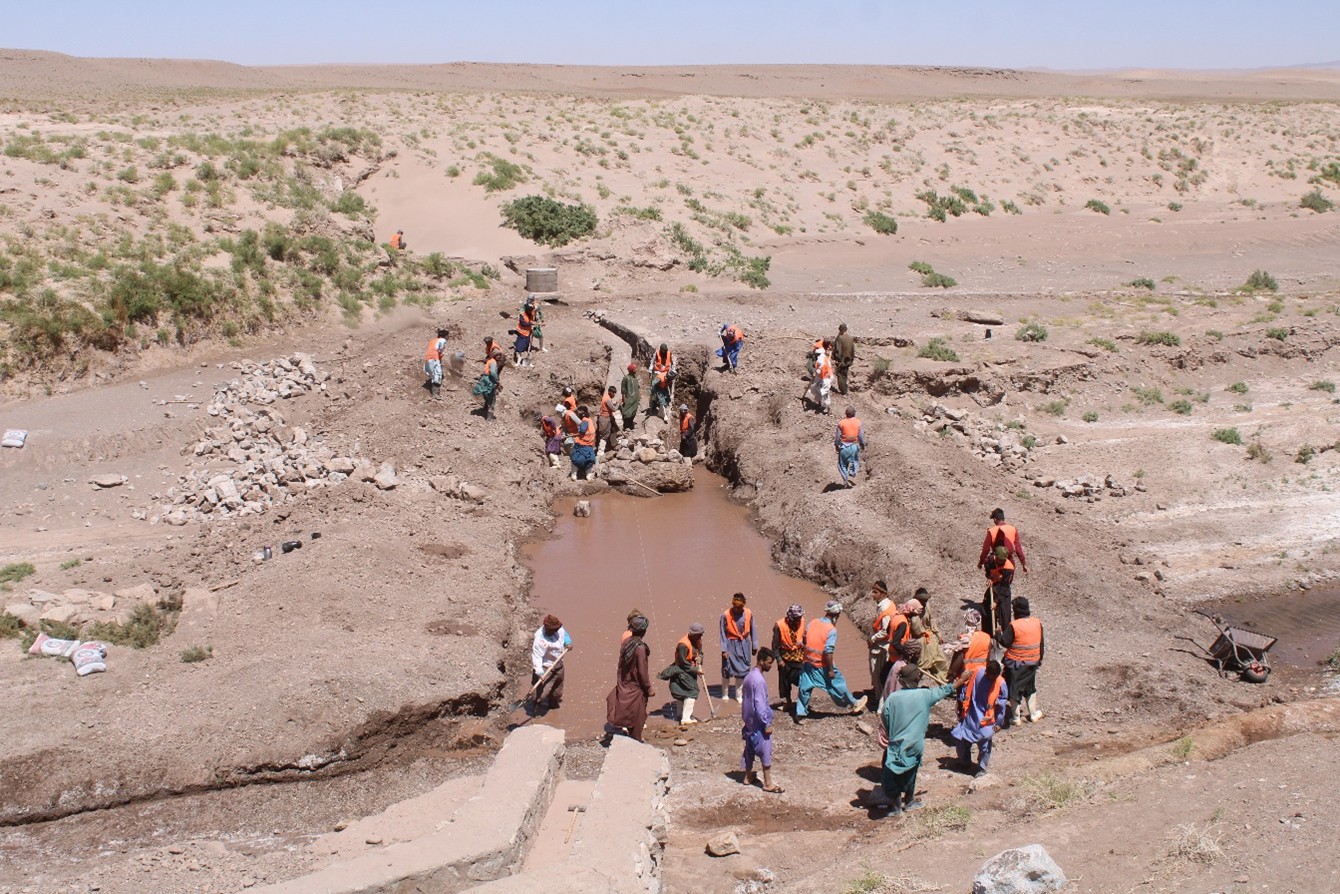
As part of the community’s efforts to tackle this challenge head-on, World Vision Afghanistan, under the Nexus Accelerator Fund (NAF) Project, constructed a durable water passage system in Cheshma Ghori village. The newly built structure prevents water seepage and ensures that Kariz water is efficiently channeled directly to agricultural fields. To maximise community benefits, the support was provided through a Cash for Work (CfW) activity, providing short-term employment opportunities to vulnerable households in the community and enhancing community members’ sense of investment in the project. The project was coordinated closely with the Community-Based Disaster Risk Management (CBDRM) committee, which played a key role in identifying priorities, selecting beneficiaries transparently, and supervising the work. Through this approach, community members actively participated in the construction process, earning income while contributing to an asset that directly benefits their village. This not only strengthened local ownership but also enhanced community resilience and social cohesion.
25 hectares of agricultural land are now fed by reliable irrigation water. Water that was previously wasted is now productively used, enabling farmers to cultivate their land effectively and improve crop yields. The rehabilitation of the water passage has strengthened community resilience against the impacts of drought and climate variability.
A local farmer said:
“For many years, we watched our water disappear into the gravel before it reached our fields. During drought, every drop of water is valuable. Now, thanks to this project, our land receives water properly, and we can grow crops with confidence again.”
Another community elder stated:
“This water passage has changed our situation. We were struggling to irrigate even a small portion of our land. Today, 25 hectares are green again. This project has restored hope to our village.”
The construction process not only reduced water wastage but also created temporary income opportunities for vulnerable families through Cash for Work support. The combination of livelihood assistance and sustainable infrastructure development has contributed to improved food security, increased household income, and long-term agricultural productivity in Cheshma Ghori village.
The Nexus Accelerator Fund (NAF) Project’s intervention demonstrates how community-driven, climate-resilient infrastructure—implemented through participatory mechanisms such as CBDRM and Cash for Work—can generate immediate economic relief while building lasting resilience in drought-affected rural communities.