
Joy, the “Pakhi Bondhu”: A Young Changemaker Restoring Nature and Voices in Rural Bangladesh

Story By Lipy Mary Rodrigues
Communication Specialist – Impact Storytelling, World Vision Bangladesh
In many parts of Bangladesh, people are familiar with the “Pakhi Bhai” , a matchmaker who connects people and builds families. But in one quiet village of Biral Upazila, Dinajpur, there is another kind of connector—one who rebuilds the bond between humans and nature.
His name is Joy. And people now call him the “Pakhi Bondhu” means, the Friend of Birds.
Born into a marginalized family, Joy grew up witnessing daily struggles of life, how his parents worked tirelessly, yet even basic needs were difficult to meet. As a child, he observed everything in silence, the exhaustion, the uncertainty, the resilience. Still, he held on to hope that life would change.
Nature became his refuge. Trees, open skies, and birds offered comfort in difficult times. But one moment changed everything. Joy saw a tree being cut down, with nests destroyed and helpless chicks falling to the ground. He wanted to stop it, but fear and silence held him back.
That silence stayed with him—until a sponsorship programme supported by World Vision Bangladesh opened a new path forward. With access to education support and greater stability at home, Joy was able to focus on his growth and future. Today, he is pursuing Economics at a college in Biral Upazila, steadily shaping a new direction for his life.
More importantly, he found his voice.
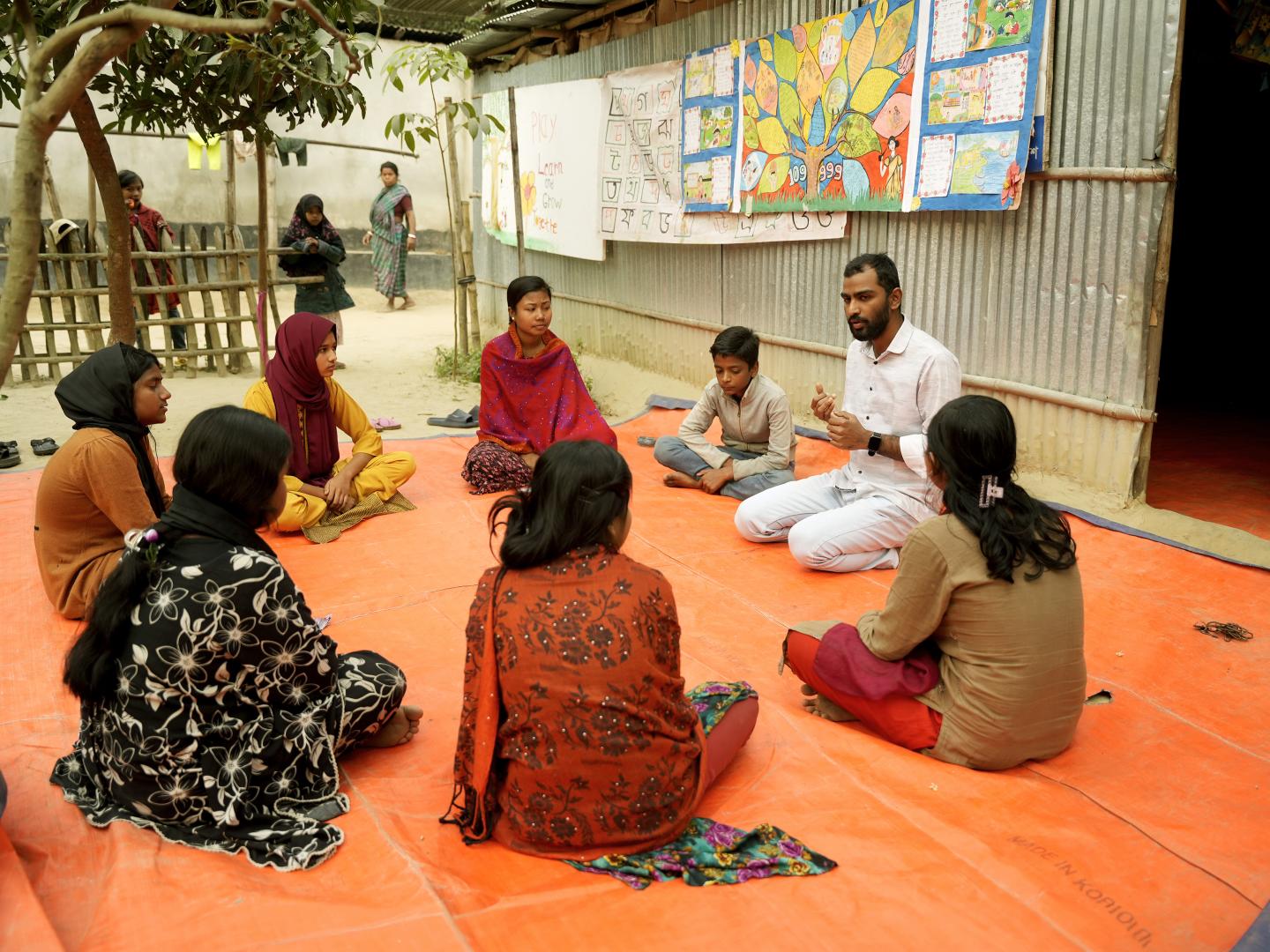
Through Child Forums and Youth Forums, Joy learned about environment, rights, and leadership. He and his friends began restoring bird habitats by placing clay pots in trees to create safe nesting spaces. Slowly, birds returned, trees came alive again, and nature began to heal.
But Joy’s journey didn’t stop there. He now speaks out against child marriage and child labour, plants trees across his village, and leads plastic clean-up efforts.
“I know what it feels like to be unheard,” he says. “That’s why I speak—for those who still cannot.”
Joy’s transformation is a reminder: even the smallest voice, when nurtured, can restore both nature and hope.