
A Mother’s Long Walk for a Glass of Water

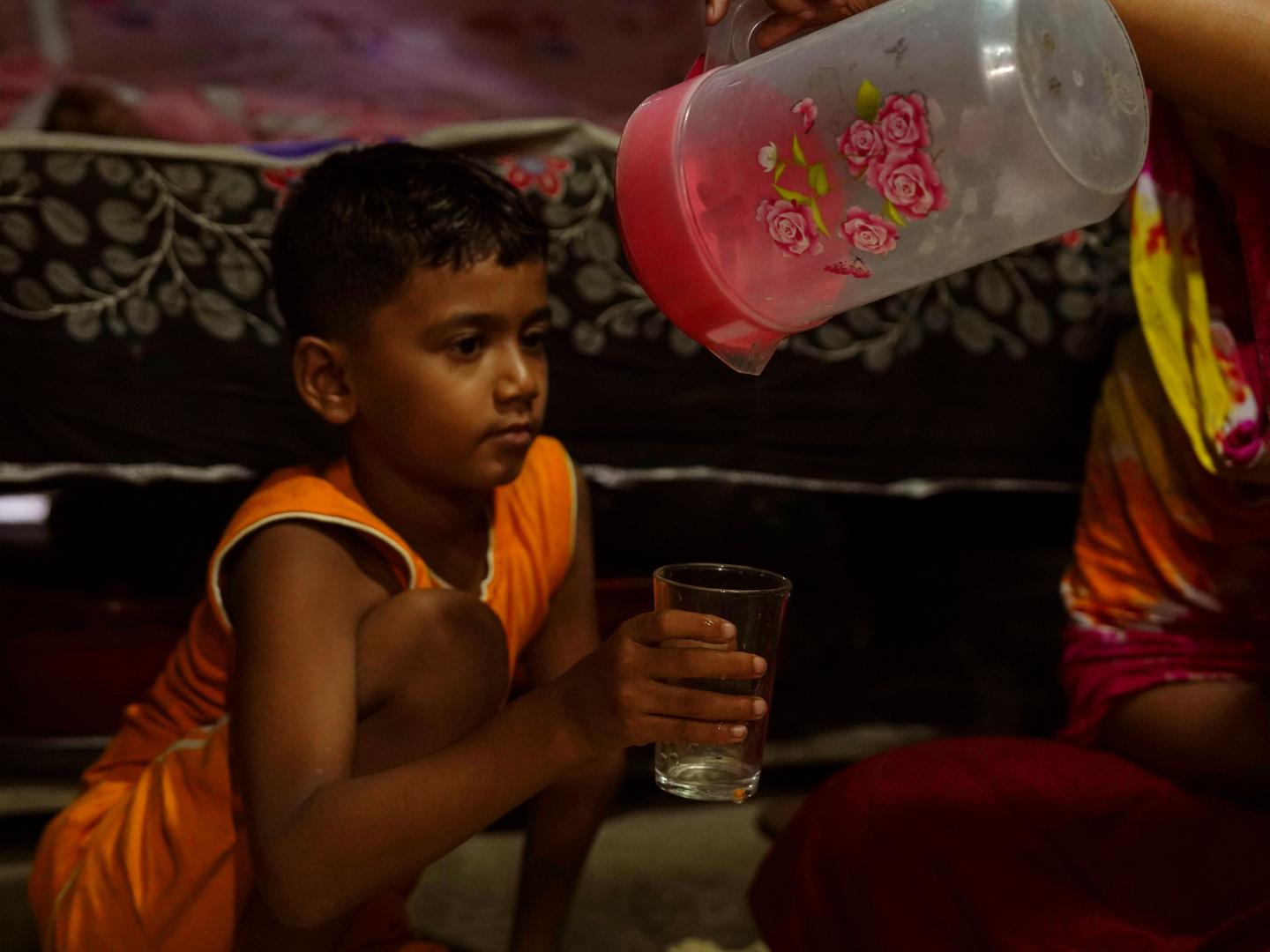
"Ma, can I have some water?" Six-year-old Imam Hossain’s simple question left his mother, Doly Akter, speechless.
It was a rainy afternoon in Nolbuniya village, Sharankhola. Doly reached for the family’s water jug, but it was empty. For a 23-year-old mother, the hardest part was not going without water herself. It was watching her young son ask for something so basic and having nothing to give him.
"When my son asks for water and I have none to give him, I feel completely helpless," Doly says.
For Doly and many families in her community, finding safe drinking water is a daily struggle. With no nearby reliable source, women walk around two kilometres to collect water from a distant pond. They often make the journey at night, when roads are quieter and queues are shorter.
Once home, Doly stores the pond water in containers and treats it with alum (fitkiri) before the family drinks it. One evening, heavy rain stopped Doly from making the journey. By the next afternoon, the family had used their remaining water. But when Imam asked for a drink, Doly could not bear to see him thirsty.
Despite the rain, she picked up the empty containers and set out alone. After walking two kilometres to collect water, Doly began the journey home. Then she saw a little human running towards her.
It was Imam, holding an umbrella in his tiny hands."He didn't complain that I had taken so long. Instead, he came to protect me from getting wet," Doly recalls with a smile.
That small moment captures the strength of their family and the hardship behind every glass of water.
Across Nolbuniya, women like Doly spend hours collecting water, time that could otherwise be spent caring for children, earning an income, or supporting their families.
"We only want water close enough that our children never have to wait for a drink," Doly says.
For families like hers, access to safe drinking water means more than convenience. It means healthier children, greater dignity for women, fewer daily risks, and more time to build a better future.
No mother should have to walk kilometres through rain and darkness for a glass of water.
Doly’s long walk reflects a wider water gap in Sharankhola. Through its Area Programme, World Vision Bangladesh’s WASH team is listening to communities, identifying these gaps and working towards solutions. Current efforts include school sanitation, MHM corners, household rainwater harvesting, and water purification support through the P&G project for families relying on ponds and rivers. The next step is to expand access to safe, reliable and sustainable water sources, so one day, a mother like Doly can answer her child’s call for water without having to walk two kilometres to find it.
Story written by, Tasmia Farhana, Coordinator - Field Communications, World Vision Bangladesh