
Harvests that Last: Empowering Women Farmers with Solar Drying Technology, in Shinyanga DC, Tanzania

In Shinyanga, Tanzania, many households rely on home gardens not only to provide nutritious food for their families but also to earn an income from selling surplus produce. However, like in many rural areas, farmers face serious challenges in handling, storing, and processing their crops. Due to poor post-harvest practices, a significant portion of their harvest is lost, reducing market value, limiting food availability during the off-season, and threatening household food security.
Recognizing these challenges, the Grow ENRICH project through the Federal Ministry for Economic Cooperation and Development (BMZ) funded programme, in collaboration with agricultural officers, introduced an innovative but simple solution: solar dryers. Unlike traditional open-air drying, the solar dryers protect food from contamination, preserve its nutritional value, extend the shelf life of food as well as ensure that households have constant food supply even during the off and lean season. This technology has the potential to transform household food security and boost their income
Among the beneficiaries of this innovative solution is Pili Shaban, a 54-year-old lead mother supported through the Nurturing Care Groups established under the project. Pili lives with her husband, Magesa, and their eight children five daughters and three sons. Due to her age and family responsibilities, her household also includes her elderly mother-in-law, who requires special care and attention.
Together with 1,526 group members, Pili received vegetable seeds to establish her home garden. But it was the training on the development and use of solar dryers that changed her story into a lasting impact.
The solar dryer technology has been a game-changer for Pili’s household, enabling her to preserve vegetables and sweet potatoes more efficiently, ensuring food availability and safety.
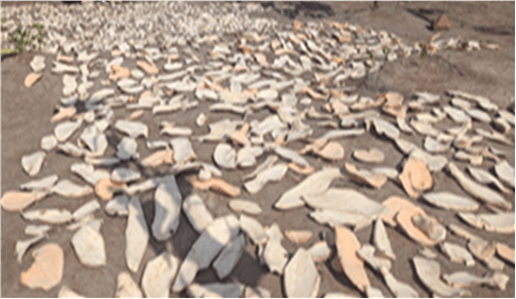
Before the training, Pilli relied on sun-drying her Orange-Fleshed Sweet Potatoes (OFSP) and vegetables. This method was time-consuming, unsafe, and unreliable. Rain often forced her to rush and remove produce, drying was nearly impossible during rainy months, and pests like birds and insects posed constant threats. Hygiene was also a concern, as the produce had to be handled repeatedly
After learning about solar dryers, Pili embraced the new technology with enthusiasm:
I was motivated by the training on drying technology and started drying Orange Fleshed Sweet Potatoes and vegetables for food and selling the flour. With the solar dryer, it now takes less time to dry, the colour and quality are improved, and the safety is acceptable for household consumption. I am saving time, and the products are more appealing for both family use and the market.
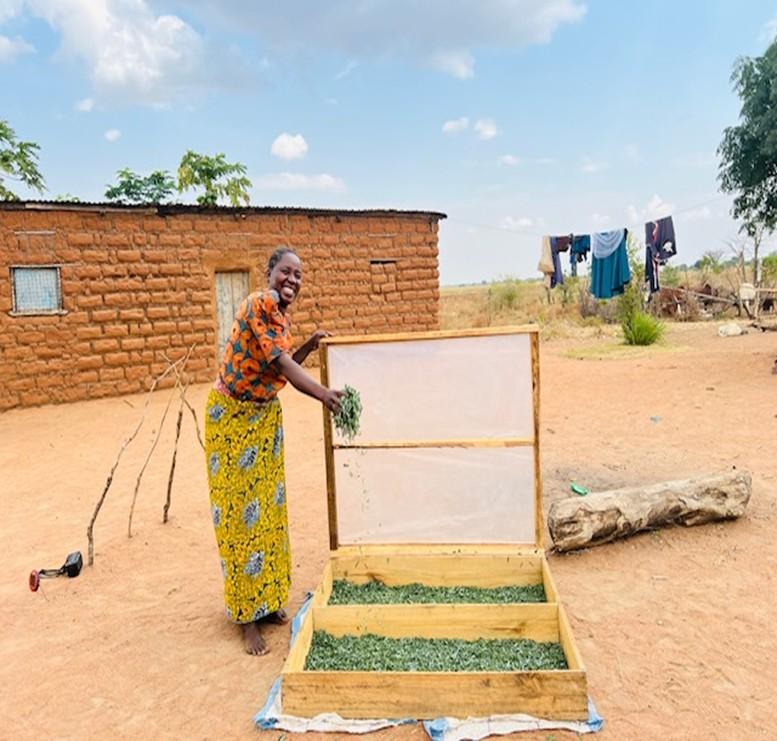
Pilli’s story is echoed by many across Shinyanga and reflects the broader impact of the Grow ENRICH project: farmers are now able to preserve their produce for longer, reduce harvest losses, and improve household nutrition. For women farmers like Pilli, the solar dryer technology is not just a tool, it is a pathway to greater nutritious food security, better income, and a more resilient future.