
THRIVE Phase II Conference Highlights Strong Results and Scales Up Impact in Malawi

The THRIVE Phase II start-up conference continued on Thursday 4th December 2025, in Lilongwe, bringing together key partners to deepen discussions on the role of Vision Fund Malawi (VFM) in expanding financial inclusion and resilience among vulnerable communities.
Presenting on achievements from Phase I, Vision Fund Malawi’s Head of Business Development and Innovation, Samson Mwalungila, highlighted strong growth across all key indicators. Demand for FAST loans increased by 104 percent, exceeding the original target of 3,236 to reach 3,357 borrowers.
Equally significant was the expansion of Savings for Transformation (S4T) groups with access to health insurance. Coverage grew from a target of 200 groups to 388 groups, now benefiting 6,540 members—a 194 percent increase. This success enabled Vision Fund Malawi to raise the maximum loan ceiling from USD 1,000 to USD 2,500, increasing access to capital for smallholder entrepreneurs.
“Demand for FAST loans increased substantially exceeding our 3,236 target to 3357. The period also saw increased number of Savings for Transformation (S4T) groups with access to health insurance cover from the targeted 200 to 388,covering 6540 members, which also made us increase the maximum loan limit from $1000 to $2500,” he said.
Mwalungila further reported a 100 percent loan repayment rate, which he attributed to integrated training in Gender Equality, Disability and Social Inclusion (GEDSI) and the Biblical Empowered World View (BEWV), demonstrating how values-based approaches strengthen financial accountability.
The conference also showcased digital innovation through a presentation by Galel Lopez from Honduras, who demonstrated the success of the Dream Save App in improving loan tracking and share calculations for S4T groups. His presentation was supported by Malumbo Kaunda, DreamStart Labs Country Representative, who confirmed sustained growth and high retention rates in several programme areas, including Likasi (Mchinji), Kasangadzi (Dowa), and Bwanje (Ntcheu).
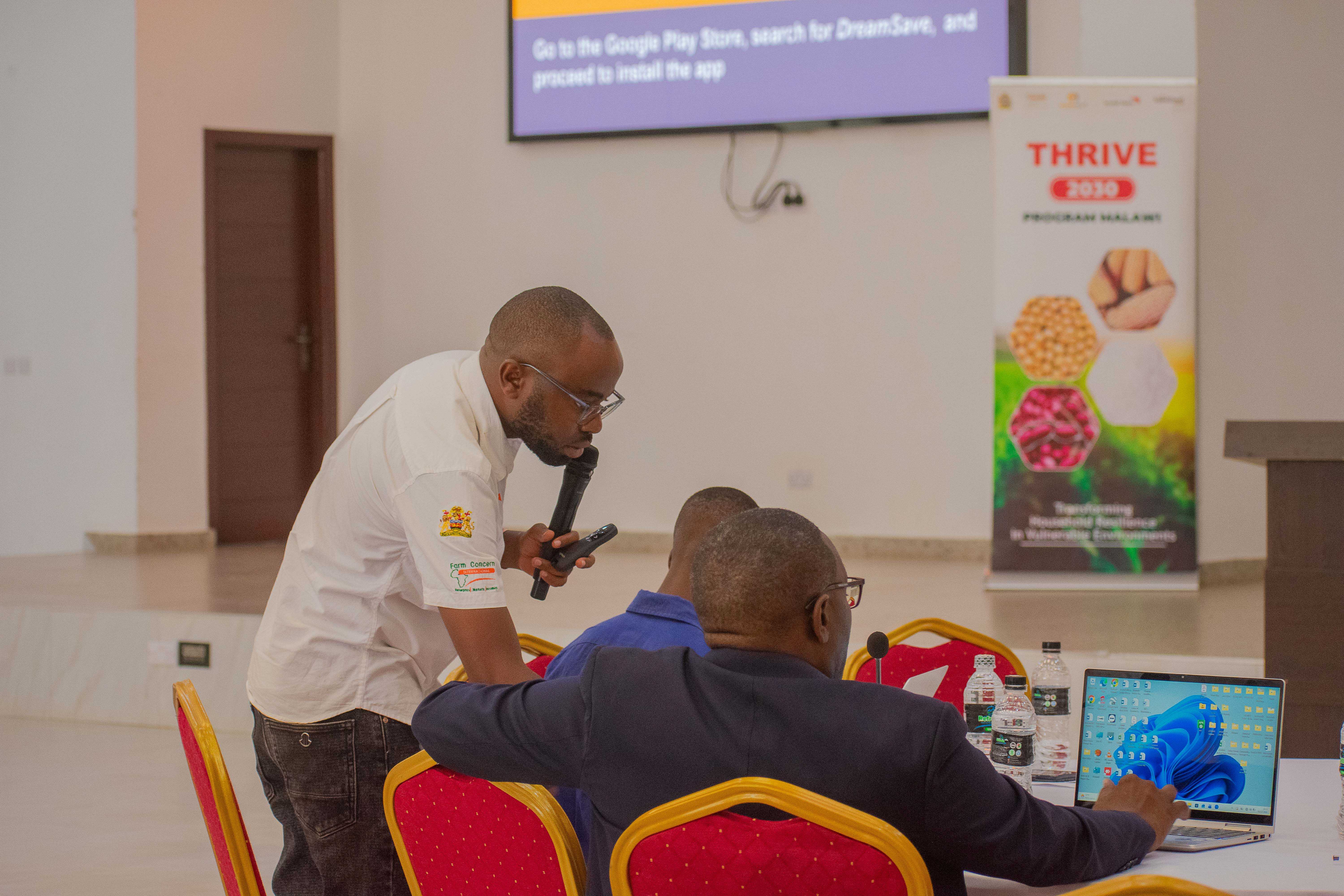
Malumbo has since acknowledged the increased number of S4T groups in some of the World Vision’s Area Programmes across the country.
“It is also worth noting that Likasi in Mchinji, Kasangadzi in Dowa as well as Bwanje in Ntcheu have had a higher S4T group membership retention rate among all the other area programmes we have been working in,” said Malumbo.
A key highlight of the day was a detailed session on the Inclusive Market and Knowledge Access (iMKA) model, a market linkage concept crucial in the THRIVE project, presented by Mwiza Chirwa, Programme Manager at Farm Concern International (FCI). The model strengthens market access through strategic partnerships with government ministries and private sector partners, including ETG, SeedCo, Bayer, TEVETA, and SMEDI.
“These partnerships are enabling farmers to make informed, market-driven decisions on production, sales, and access to quality inputs,” said Chirwa. “As a result, the project has generated over MWK 20 billion (USD 11 million) in total on-farm income, with an annual profit rate of 41 percent.”
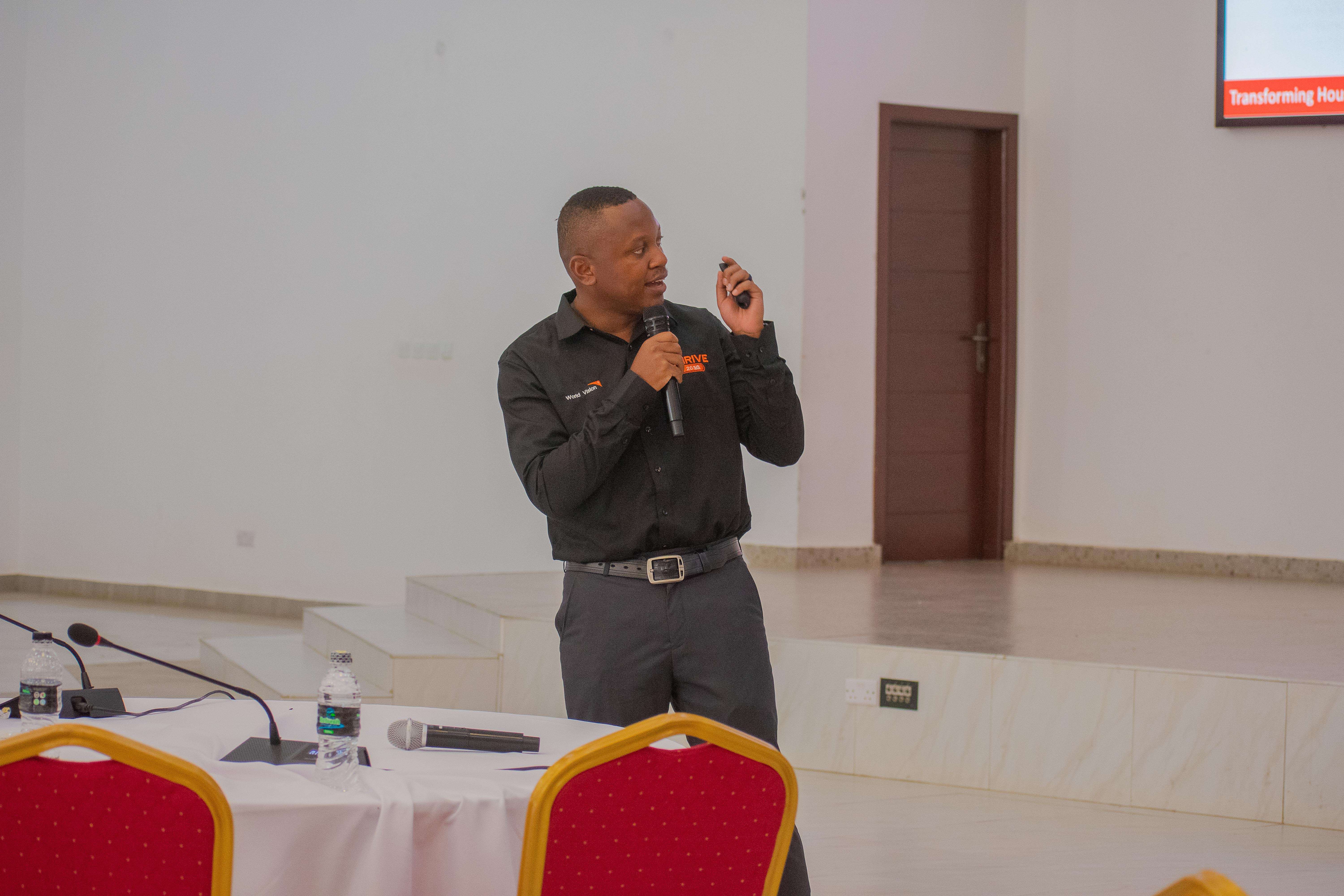
However, Chirwa cautioned that climate shocks, including prolonged dry spells, El Niño, and Cyclone Freddy—posed major challenges during Phase I. He emphasized that Climate-Smart Agriculture (CSA) will be a central pillar of Phase II to safeguard investments and build long-term resilience.
As THRIVE Phase II unfolds, partners reaffirmed their commitment to strengthening livelihoods, scaling financial inclusion, and accelerating climate-resilient growth for vulnerable households across Malawi.