
Early Childhood Education Transforms a Mother and Son’s Lives

Every morning, Asmaa watches her young son Rayan get ready for kindergarten with excitement. Once shy and hesitant around others, he now looks forward to walking into his classroom, seeing his friends and discovering something new.
For the 30-year-old mother of three, these moments are especially meaningful. Originally from northeast Syria, Asmaa saw her life and her dreams of continuing her education disrupted by conflict and displacement. After arriving in Jordan with her family in 2016, she eventually settled in Azraq Camp.
Through World Vision’s Road to Resilience project, kindergarten children in Azraq Camp are supported with quality Early Childhood Education and Development services, using safe, inclusive and play-based approaches to help them learn and grow. At the same time, teachers are equipped with training and practical experience to enhance their skills and strengthen their livelihoods. For Asmaa, the project opened a door to her long-held dream of becoming a teacher.
“It was one of my dreams to become a teacher. My son attends the centre, and I witnessed its impact on him and on the community. I wanted to challenge myself and change for the better, so I applied to become a teacher and was accepted. World Vision helped me accomplish one of my dreams,” Asmaa shares.
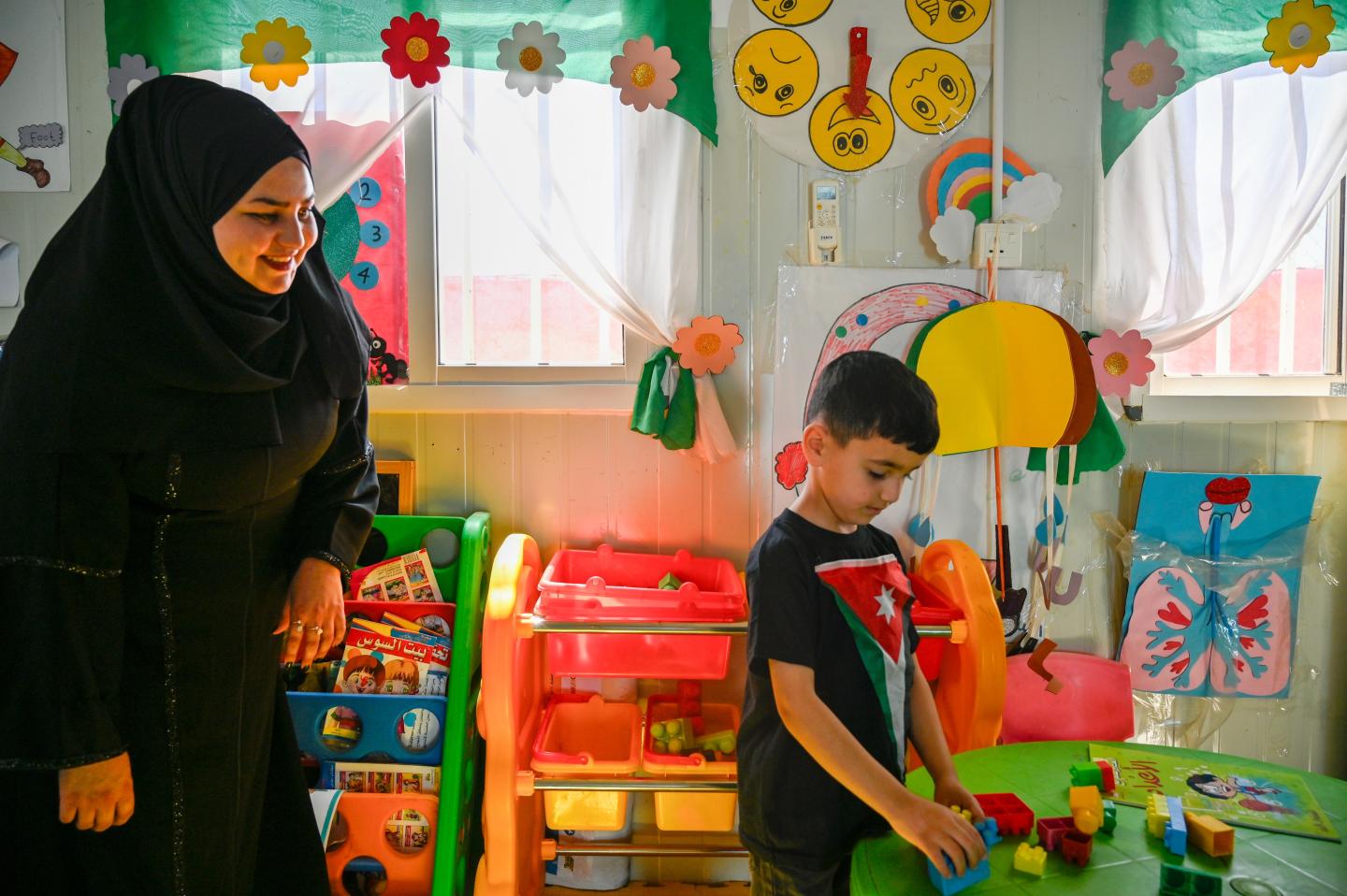
Asmaa joined specialised training as preparation to become of the teachers which strengthened her skills in child-centred, play-based learning. “The training changed how I interact with children. I learned to make learning enjoyable through play and activities,” she reflects.
For children and through Arabic and English learning, games, storytelling, role-play, music, movement and group activities, children build foundational literacy and numeracy skills while strengthening their confidence, communication, independence and social-emotional development.
For Asmaa, the impact became even more powerful when she saw the same transformation unfolding at home. “Rayan, my son, used to be one of the shy children, but after joining the centre, he became more social and engaged. Every morning, he is excited to go and learn something new,” she happily says.
The experience has transformed Asmaa, too, helping her become more patient both as a mother and a teacher, while strengthening her ability to understand and respond to children’s needs. “When I see the children happy, excited to learn and participating in the classroom, I forget all the tiredness,” she says.
From her perspective, early childhood education is about much more than preparing children academically. It is about giving them the foundations they need to grow with confidence and independence. “This project is important because it gives children the foundations they need at this age,” she explains.
Alongside early learning, children develop everyday skills such as independence, personal hygiene, communication and positive interactions with others. “The activities are enjoyable before they are educational. Children enjoy themselves and become excited before they even realise they are learning. I truly saw them blossom into a more confident, happy version of themselves,” she says.
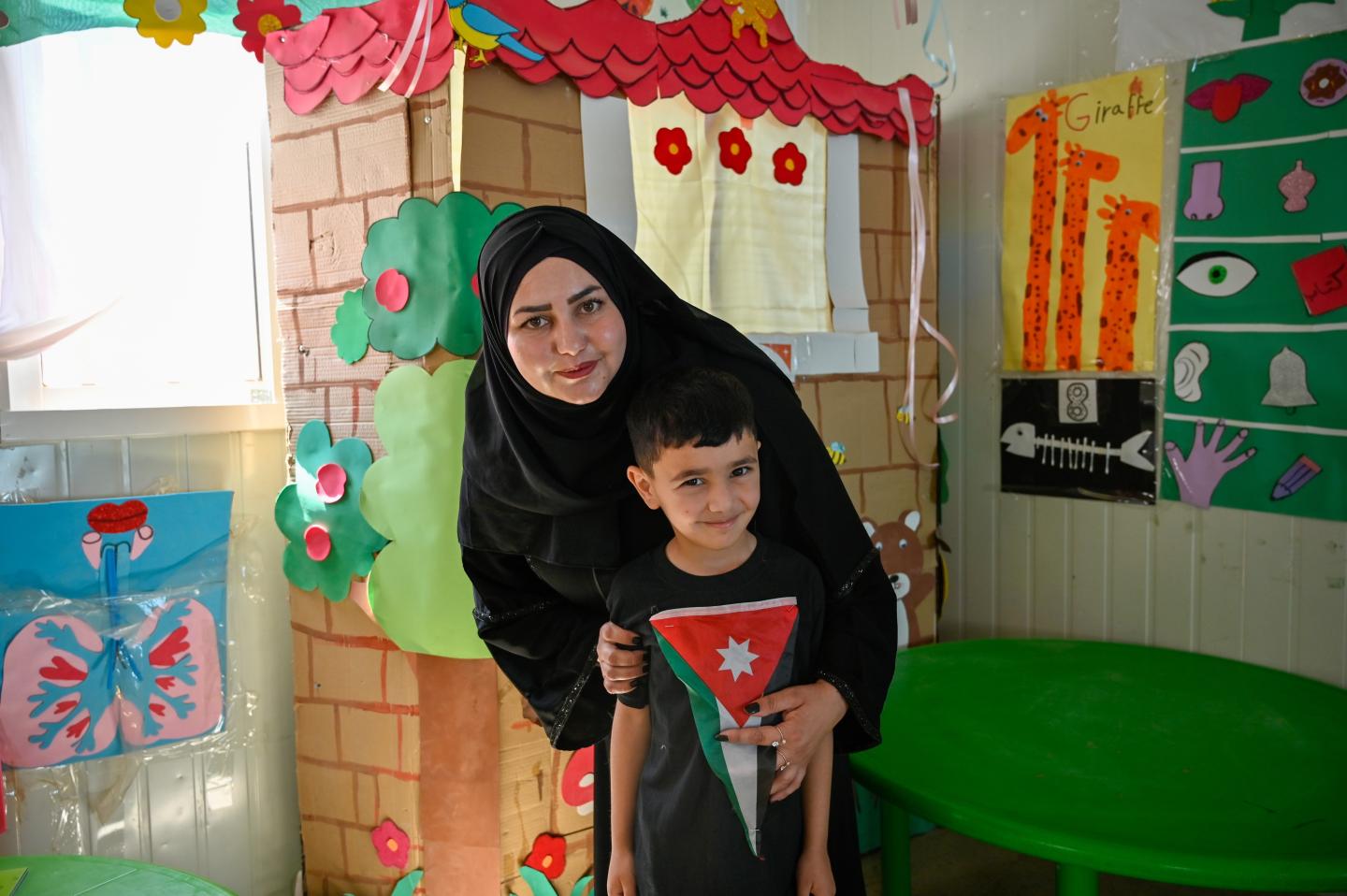
Asmaa’s experience is just one of many in Azraq Camp. Through the project, 500 children were reached through Early Childhood Development programming, creating opportunities for them to learn, play and develop essential skills during some of the most important years of their lives. The project also trained 29 teachers in child-centred and play-based teaching methods and engaged 50 parents and caregivers through Parent-Teacher Association sessions, strengthening the support surrounding children both in the classroom and at home.
Looking ahead, Asmaa hopes to continue developing her skills through further training and use her experience to continue working in education. “I always have hope to return to Syria. I want to keep learning and gaining experience so that I will have the skills to work when I hopefully return to Syria,” she says.
Together, these efforts help create safe and nurturing spaces where children can learn, strengthen their well-being and build foundations that can stay with them long beyond the classroom.