
School Meals Bring Children Back to School, But More Investment Is Needed

By Kambani Phiri, Communications, Zambia
For many children in Zambia, hunger once stood between them and an education. Classrooms were quiet because desks were empty. Many learners stayed home. Those who attended struggled to concentrate.
14-year-old Esther, a pupil at a school in Chongwe District, remembers those difficult days.
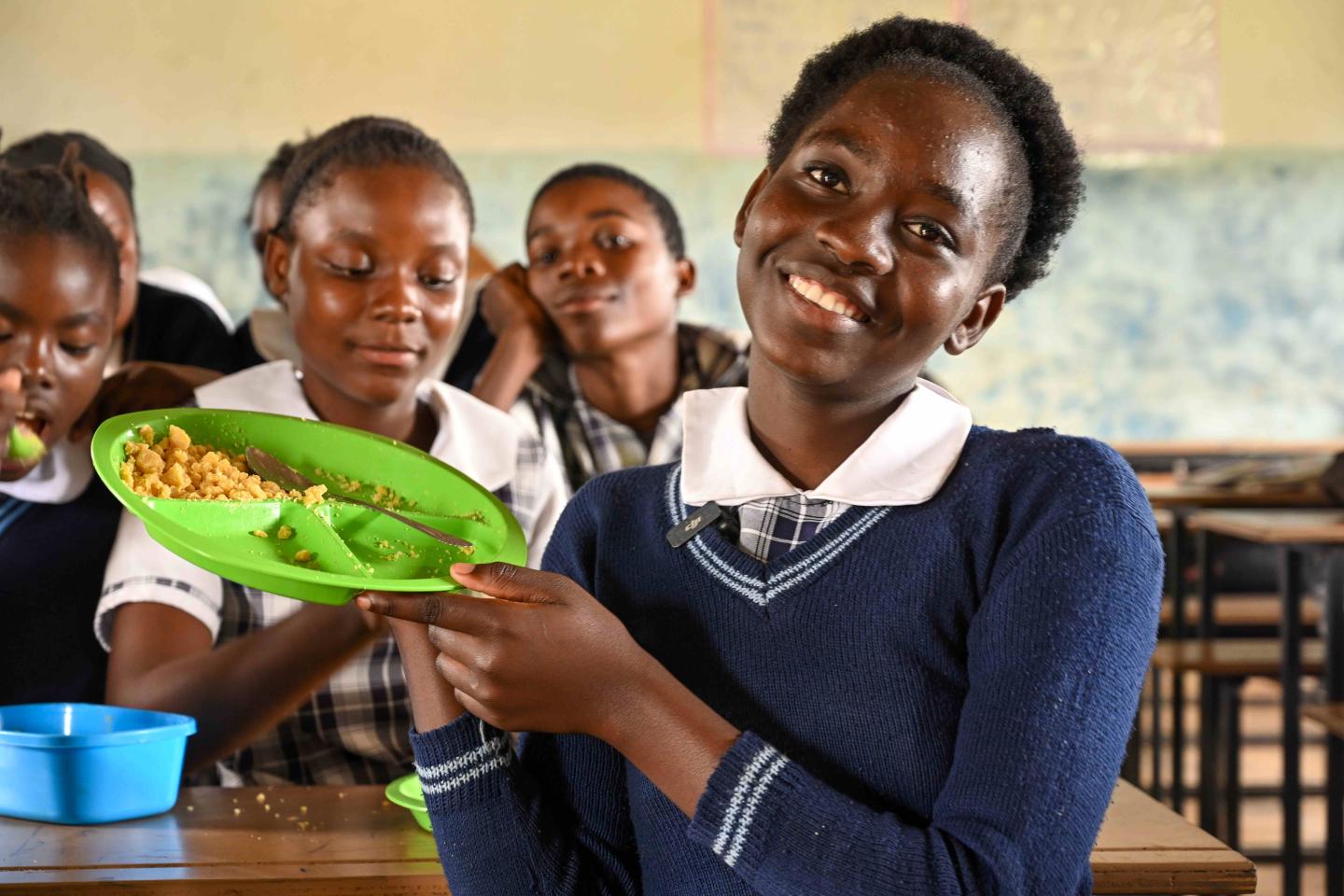
“Previously, before the school meals, we used to have challenges. I never focused on the lessons because of hunger. Others in school would even miss class, and the school results were very poor,” she says.
Her experience reflects a national reality that led the Government of Zambia to implement the Home Grown School Meals Strategy 2020 to 2024, aimed at removing hunger as a barrier to learning.
The programme initially targeted one million learners in 2,800 schools across 39 districts. By 2024, implementation expanded significantly, reaching 3,415,770 learners in 8,190 schools across 106 districts. This rapid expansion shows strong national commitment to education and child nutrition.
Government investment has steadily increased to sustain this growth. In 2020, K33.7 million was allocated to the School Feeding Programme. Funding rose to K34.7 million in 2021 and further increased to K38.7 million ($2,024,862 United States Dollars) in 2022. The allocation remained at K38.7 million ($2,024,862 United States Dollars) in 2023 despite growing beneficiary numbers. In 2024, the government significantly scaled up financing to K105.7 million ($5,530,438 United States Dollars) to respond to rising demand and programme expansion.
These increases demonstrate clear political will. However, the number of children reached has grown more than threefold from the original target. Funding levels have struggled to match the pace of expansion and rising food costs.
At Esther’s school, learners receive meals such as beans, peas, and soya porridge that support concentration and energy for learning.
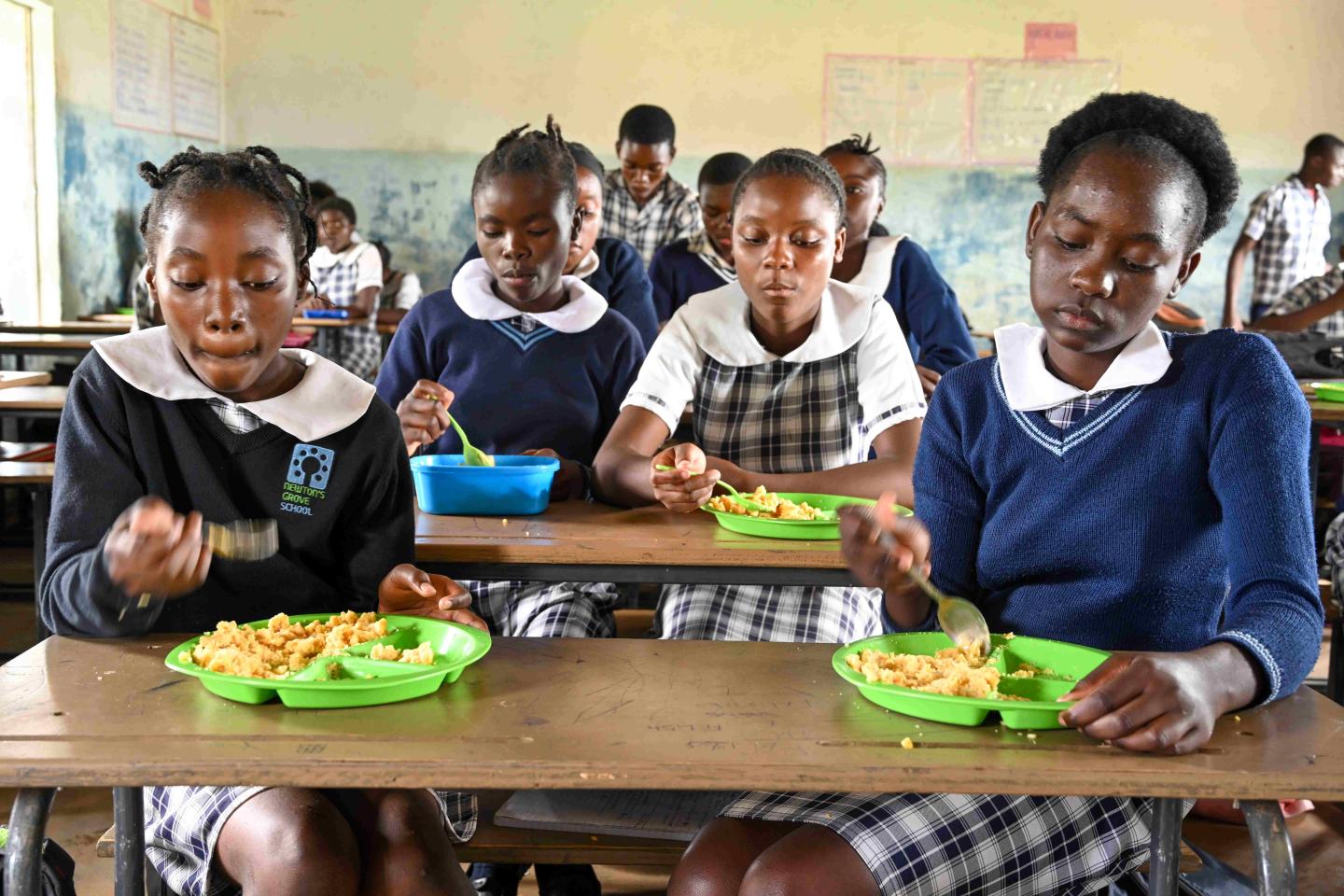
“Right now, we have a variety of meals, beans, peas, soya porridge and peas. This has helped us pay attention in class,” Esther says.
11-year-old Patrick recalls how hunger once pushed him away from school.
“Before they started cooking for us at school, I used to run away from class, and we would miss classes with my friend,” he says.
“But today, we are very happy. We no longer miss school.”
Teachers have observed measurable improvements.
“The school has seen an improvement in school performance since the introduction of school meals,” explains Ms. Chanda Mwila. “Right now, we only cook on Tuesdays and Thursdays, and on these two days, we observe high numbers of children in school.”
Limited food supplies mean meals are not provided daily. Many schools cook only twice a week. This reduces the full nutritional and educational benefits the programme can deliver.
“We have a challenge,” Ms. Mwila adds. “We are unable to cook for the pupils throughout the week because of the limited food rations.”
Parents understand the importance of the programme, especially during periods of food insecurity.
“The school meals have made children prioritise school now,” says parent Patricia Siamutinta. “Even when we have no food at home, we are comforted knowing that our children will eat at school.”
The success of the programme has created a new challenge. Zambia now feeds over 3.4 million learners, far beyond the initial one million target. Providing nutritious meals consistently to this growing number requires increased and predictable financing.
More funding is needed to expand food quantities, improve meal diversity, and move from partial feeding to daily nutritious meals. Adequate investment would allow schools to include cereals, legumes, vegetables, and fortified foods that support child growth and cognitive development.
“I would be very happy if they introduced more variety like rice, herps and sugar,” Patrick says.
School meals are increasing enrolment, improving attendance, reducing dropout rates, and supporting primary school completion across rural communities. The foundation is strong. Government leadership is evident.
Sustained and increased funding will now determine whether every child receives a nutritious meal every school day, ensuring hunger no longer limits learning or opportunity for Zambia’s children.