
Almost 10 Days to leave home: An eyewitness account from the Cambodia–Thailand border

This eyewitness account is shared by Malin Sun, Associate Director of World Vision Cambodia, who lives and works in one of the provinces affected by the current Cambodia–Thailand border conflict. Through direct encounters with displaced families, Malin bears witness to the fear, uncertainty, and difficult decisions faced by communities forced to leave their home villages.
The story reflects the lived reality of Cambodian families who waited in hope that the fighting would end, only to flee when violence escalated. It captures the deep emotional toll of displacement—families abandoning their homes, harvests, and livelihoods—while also highlighting their resilience, dignity, and care for one another even in crisis.
This eyewitness account offers an authentic, human perspective on the impact of the conflict, revealing how suddenly and unexpectedly it has disrupted ordinary lives, and underscoring the urgent humanitarian needs of children and families now living in displacement.
--------------------
It took this family almost days to decide to leave the home they loved.
For more than a week, they stayed hidden in a small bunker near their village, hoping the fighting would soon end. Like many families, they believed the violence would pass, as it had before. Leaving was not an easy decision. Their rice crop was ready for harvest—the result of months of hard work and careful tending. Staying meant protecting their only source of food and income.
When I met them, they were sharing sweet potatoes they had brought from their home village. They were unsure how long the food would last. The potatoes were shared carefully, divided among family members in silence.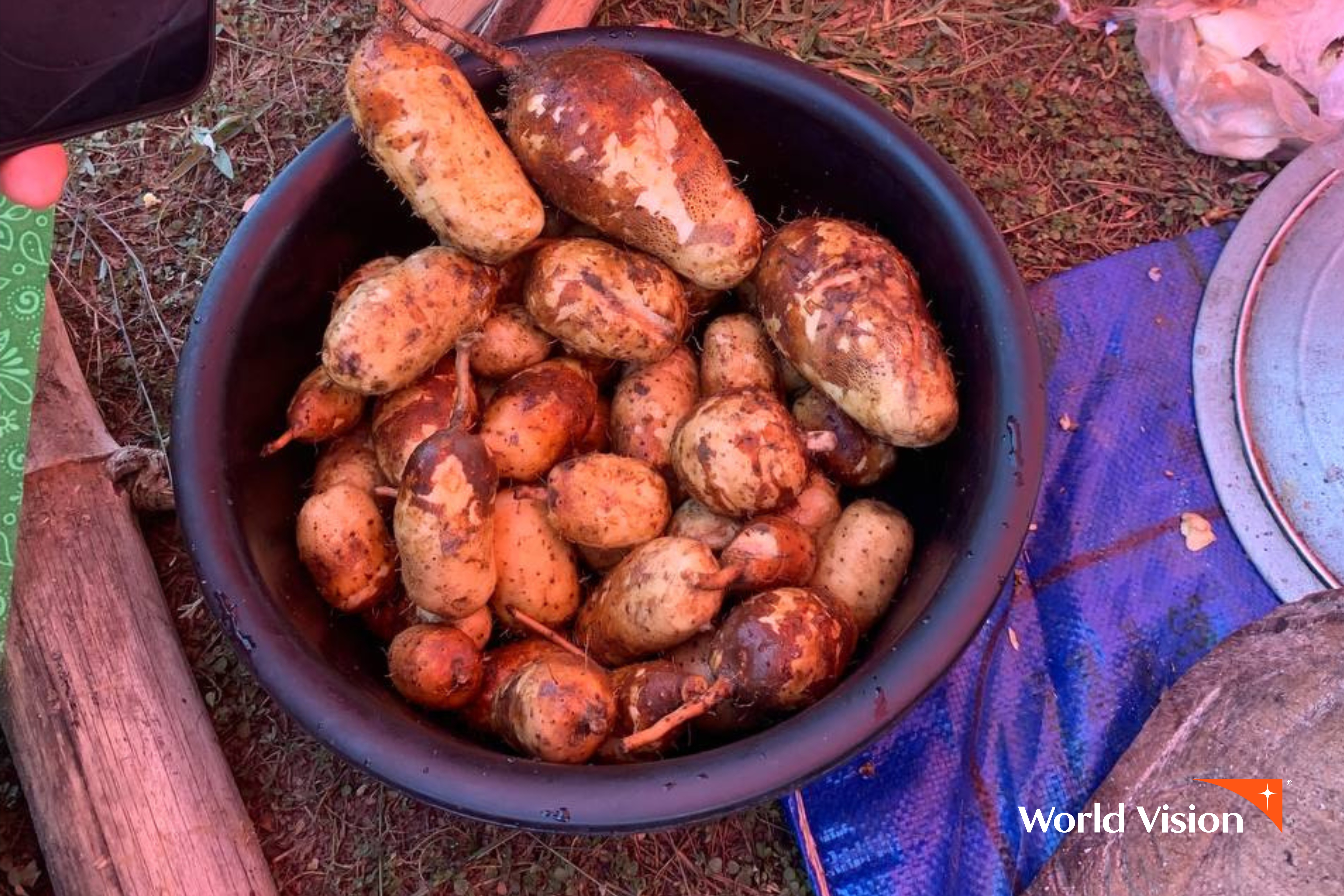
As the explosions continued and fear grew, the conflict did not ease. Eventually, the family made the painful decision to flee. They left their beloved village with almost nothing—only a few dried fish, some small smoked rats they had caught for food, and sweet potatoes gathered from their fields.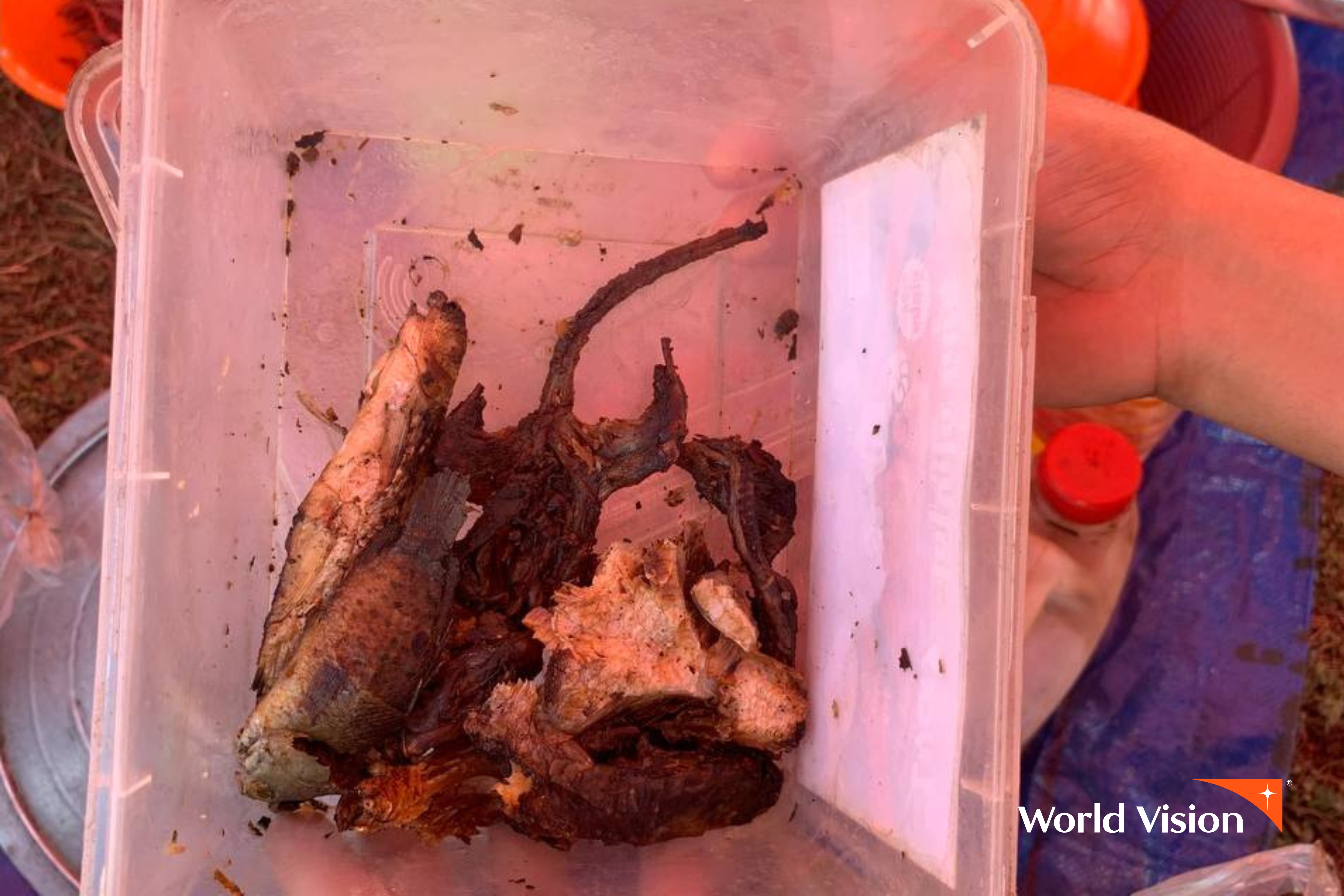
Now displaced, they share what little they have, uncertain how long their food will last or when they will be able to return home. My heart was torn by their hardship. Yet seeing them share their limited food with one another brought a quiet sense of warmth. Even in difficulty, they continued to care for and love each other. This is the reality of people facing crisis—living through hardship, yet holding on to dignity and family bonds.
This family’s experience reflects the reality facing many others.
Following the re-escalation of conflict along the Thailand–Cambodia border, nearly half a million people have been forced to leave their home villages across seven provinces. Families fled suddenly, abandoning homes, harvests, and livelihoods to protect their lives and their children.
World Vision’s Response
“Families forced to flee their homes are facing urgent and complex needs. Beyond food and clean water, children need safe and protective spaces, psychosocial care and a sense of stability in the midst of fear and uncertainty,” said Janes Imanuel Ginting, the National Director of World Vision International in Cambodia.
World Vision is responding to the urgent needs of displaced children and families by providing emergency food assistance, child-friendly spaces, clean water, sanitation, and protection services. As displacement continues, the needs remain critical. Families who have lost everything now depend on humanitarian support to survive and to begin rebuilding their lives.
“World Vision is actively scaling up child protection, emergency WASH and life-saving assistance, but needs continue to grow. Timely and flexible support from partners and donors is critical to protect children and save lives,” added Janes.
World Vision International in Cambodia is delivering a multi-sector humanitarian emergency response to address the urgent needs of people displaced by the Cambodia–Thailand border conflict. 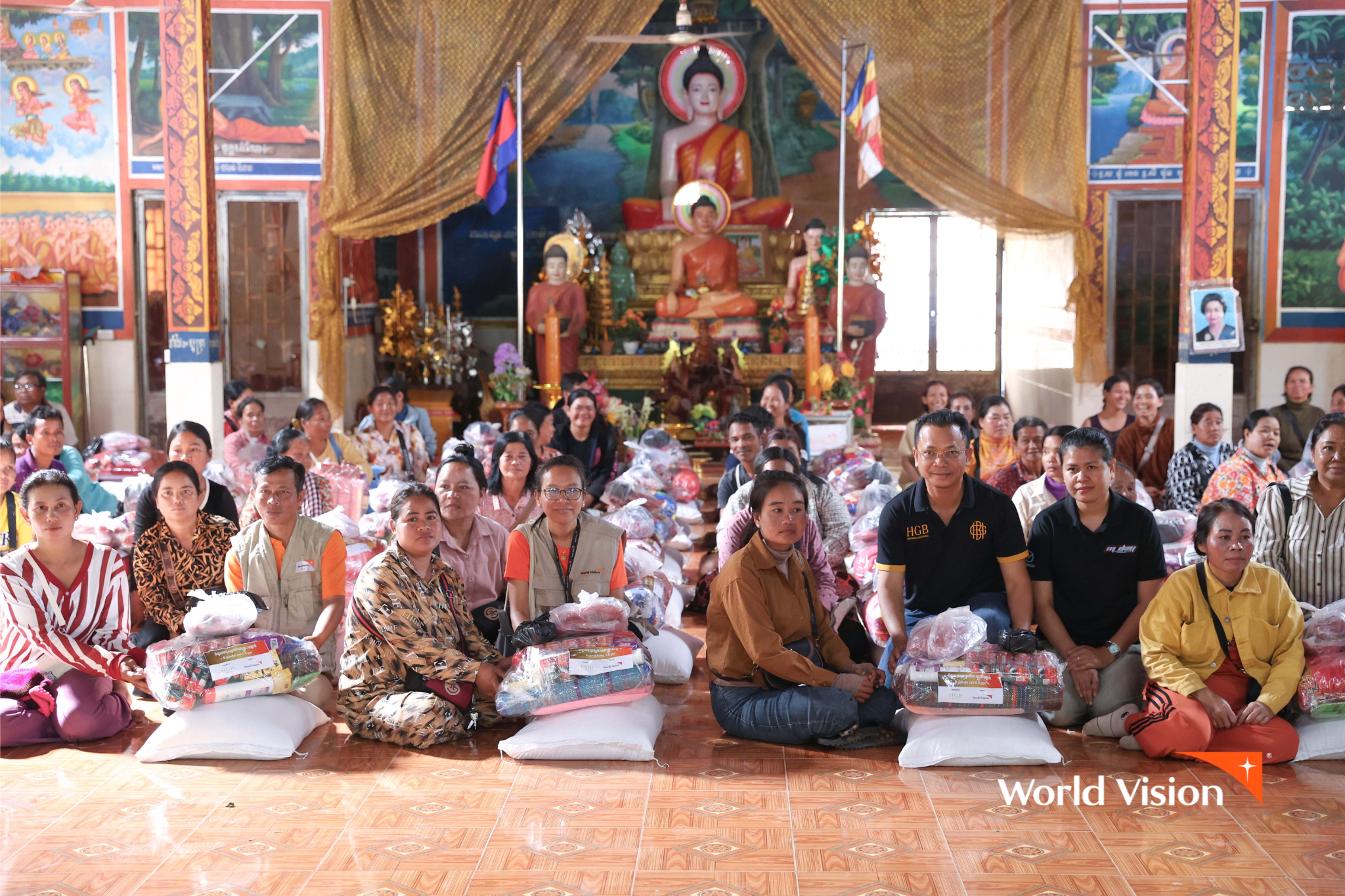
The response prioritises child-centred, life-saving assistance, focusing on Education, Child Protection, Health and Nutrition, Food Security and Livelihoods, Shelter and Non-Food Items, and WASH. Key interventions include the establishment of child-friendly spaces and temporary learning spaces; the provision of food assistance and essential household items; the distribution of nutrition supplies for pregnant and lactating women and young children; the installation of water and sanitation facilities; and the delivery of hygiene and protection services for vulnerable groups, including people with disabilities.
World Vision continues to work in close coordination with local authorities, humanitarian partners and the private sector to ensure timely, effective and well-coordinated assistance that protects children and supports displaced families during this emergency.